
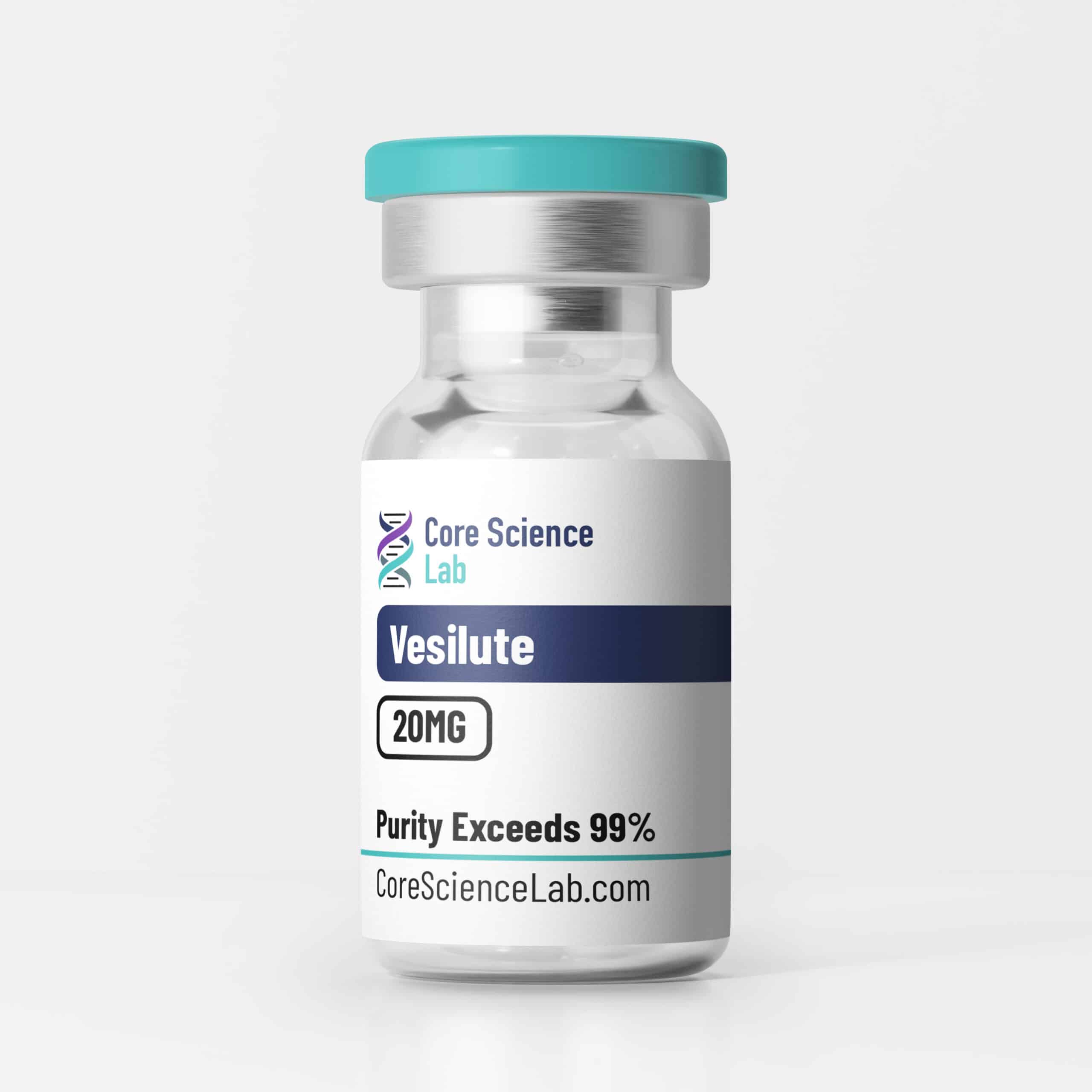
A high-purity, lyophilized synthetic dipeptide bioregulator (Glu-Asp) characterized for its tissue-specific regenerative properties, particularly investigated in the management of overactive bladder syndrome, scleral tissue cultivation, and muscle strength enhancement.
Trust & Quality Verification
Purity Standard
Verified Analysis
Available
Shipping
Vesilute (also known by its pharmaceutical equivalent Vezusten) is a synthetic dipeptide (Glu-Asp) research reagent. It is chemically distinct as a targeted peptide bioregulator utilized in laboratory settings to investigate the restoration of tissue function, particularly within the lower urinary tract and ocular tissues. Researchers employ this molecule to study the molecular mechanisms underlying the management of overactive bladder syndrome and detrusor overactivity, establishing it as a key tool in experimental models of urological and neurogenic dysfunction, as well as broader physiological enhancement.
Biochemical Characteristics
Chemical Properties
| Property | Specification |
| Molecule Name | Vesilute |
| Synonyms | Vezusten; L-alpha-Glutamyl-L-aspartic acid; Glu-Asp |
| PubChem CID | N/A |
| Molecular Formula | C9H14N2O7 |
| Molecular Weight | ~262.22 g/mol |
| Form | Lyophilized Powder |
| Purity | 99% (Verified via HPLC) |
| Solubility | Soluble in water and aqueous buffers (refer to SDS) |
| Documentation | COA and SDS available per lot |
Vesilute is strictly for laboratory research and is commonly employed in the following investigational areas:
Urological Dysfunction and Overactive Bladder
Research models utilize Vesilute (Vezusten) to evaluate its efficacy in the management of overactive bladder syndrome (OAB). Investigations focus on the peptide’s effects on detrusor overactivity, quantifying changes in urodynamic maximum cystometric capacity, daily urination frequency, and urge incontinence episodes to assess pathogenetic treatment approaches.
Ocular Tissue Cultivation and Regeneration
Experimental protocols employ this peptide bioregulator to characterize its influence on the sclera. Studies assess the application of the peptide incorporated into albumin-based cryogels during the model cultivation of a posterior eye segment, measuring its regulatory effects on ocular tissue integrity.
Neurological and Muscular Endurance Potential
In broader physiological research, dipeptides like Vesilute are used to study their diagnostic and therapeutic potential in neurological diseases. Additionally, related peptide extracts are investigated for their capacity to enhance muscle strength and exercise endurance in murine models.
Pathway / Mechanistic Context
The primary mechanism of action for Vesilute in research settings involves its function as a short peptide bioregulator, modulating cellular pathways associated with tissue-specific homeostasis and regeneration in the bladder and related systems.
Preclinical Research Summary
Published preclinical literature documents investigations of Vesilute (Vezusten) across various experimental models focusing on urological, ocular, and muscular applications.
Form & Analytical Testing
Referenced Citations
References are provided for informational purposes only and are not clinical claims.
RESEARCH USE ONLY
This product is intended strictly for laboratory research use only. It is not for human or veterinary use. It is not intended for diagnosis, treatment, cure, or prevention of any disease. All purchases are subject to our Terms of Service and Purity Guarantee.
No COAs available for this product.
RESEARCH USE ONLY
This product is intended strictly for laboratory research use only. It is not for human or veterinary use. It is not intended for diagnosis, treatment, cure, or prevention of any disease. All purchases are subject to our Terms of Service and Purity Guarantee.
Reviews
There are no reviews yet.