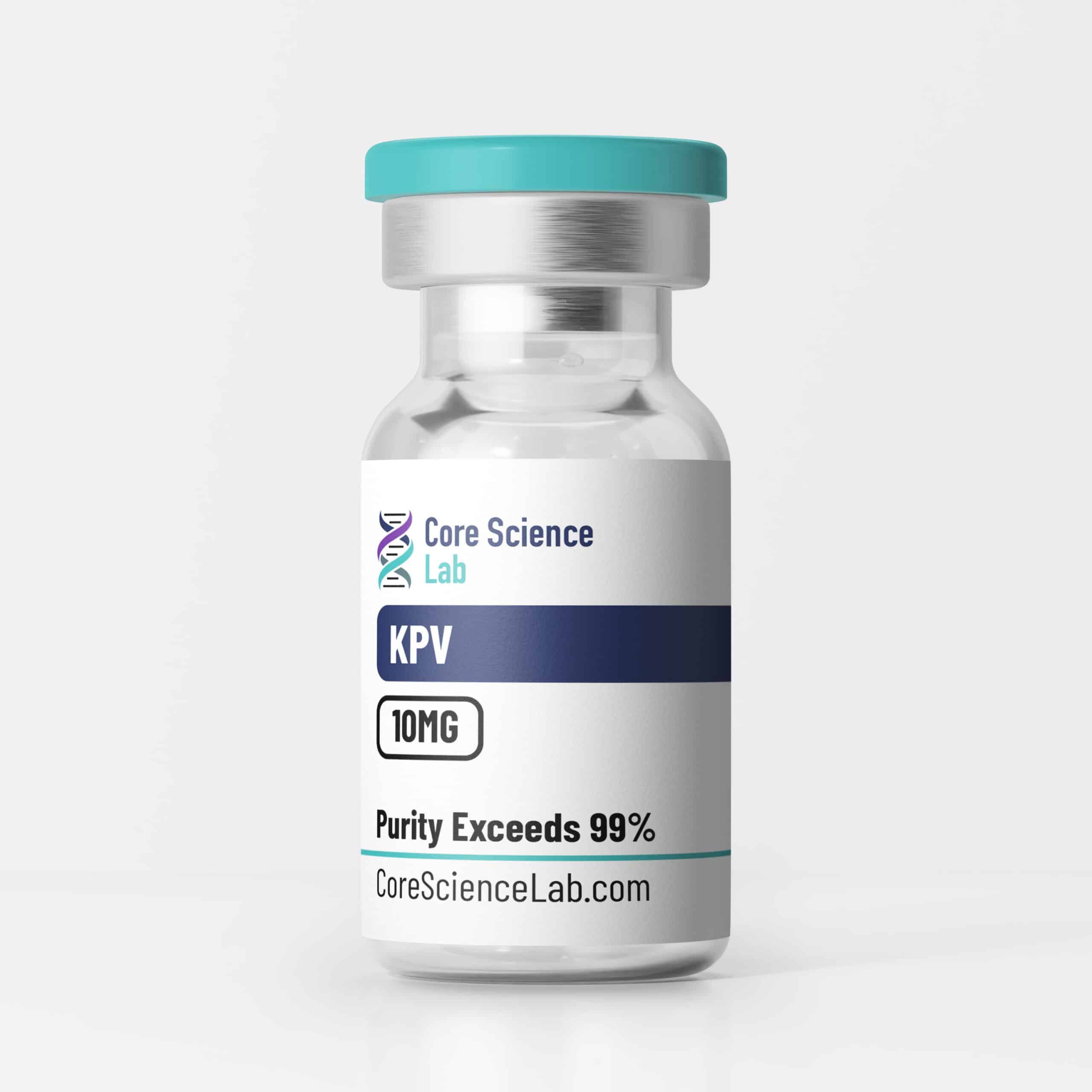
KPV (10mg)

A synthetic C-terminal tripeptide fragment of alpha-Melanocyte Stimulating Hormone (alpha-MSH), characterized for its potent anti-inflammatory and antimicrobial properties without the melanotropic (pigment-inducing) effects of the parent molecule.

Trust & Quality Verification

  • Research Use Only. Not for human or veterinary use.
  • 99% Purity Replacement Guarantee
  • Verifiable purity via HPLC & Mass Spectrometry
  • Supplied as lyophilized powder for stability during transport and storage
  • Certificate of Analysis (COA) available per lot
  • Safety Data Sheet (SDS) available

Email when stock available

SKU: V-KPV-10MG Category:

99%+

Purity Standard

HPLC

Verified Analysis

COA

Available

Free

Shipping

Description

KPV (Lysine-Proline-Valine) is the C-terminal amino acid sequence (11-13) of the endogenous hormone alpha-MSH. In research settings, it is valued for retaining the robust anti-inflammatory and immunomodulating capabilities of alpha-MSH while lacking the ability to stimulate melanocytes, thereby avoiding pigmentation changes.

The peptide is extensively studied in models of inflammatory bowel disease (IBD) and pulmonary inflammation due to its specific uptake mechanisms and intracellular activity. KPV is also investigated in dermatology for its potential to accelerate wound healing and modulate cutaneous immune responses.

Biochemical Characteristics

Chemically, KPV is a tripeptide designed to leverage the “message sequence” of alpha-MSH responsible for immune regulation.

  • Sequence: Lys-Pro-Val (KPV).
  • Permeability: Research indicates that KPV enters intestinal epithelial cells via the oligopeptide transporter PepT1, which is typically upregulated in inflammatory states.
  • Stability: Structural modifications, such as reductive glycoalkylation, have been explored to enhance the stability of KPV against proteolytic degradation.
  • Specificity: It exhibits specific anti-inflammatory activity by targeting intracellular signaling pathways like NF-κB, independent of the melanogenic pathways stimulated by full-length alpha-MSH.

Chemical Properties

Property Specification
Molecule Name KPV
Synonyms α-MSH (11-13); Lys-Pro-Val
Sequence Lys-Pro-Val
Molecular Formula C₁₆H₃₀N₄O₄
Molecular Weight 342.43 g/mol
Form Lyophilized Powder
Purity ≥99% (Verified via HPLC)
Solubility Soluble in water (refer to SDS)
Documentation COA available per lot; SDS available

KPV is strictly for laboratory research and is commonly employed in the following investigational areas:

Intestinal Inflammation and IBD

KPV is a primary reagent in gastroenterology research. Studies utilizing intestinal epithelial cells demonstrate that KPV uptake is mediated by the PepT1 transporter. Once internalized, it significantly reduces inflammation by inhibiting the activation of NF-κB and subsequent pro-inflammatory cytokine secretion.

Pulmonary Inflammation

In respiratory research, KPV is used to study the inhibition of systemic and cellular inflammation cues. Investigations involving human bronchial epithelial cells focus on the peptide’s ability to modulate inflammatory responses, potentially involving interactions with MC3R agonists.

Dermatology and Wound Healing

KPV is investigated for its regenerative properties in skin models. Research indicates it functions as an antimicrobial and anti-inflammatory agent that can improve cutaneous wound healing outcomes and manage inflammatory skin conditions.

Pathway / Mechanistic Context

The primary mechanism of action for KPV in research settings involves transporter-mediated entry and nuclear factor modulation.

  • Intracellular Transport: The efficacy of KPV in intestinal models relies on its transport into the cytosol via PepT1, a transporter often overexpressed during inflammation.
  • NF-κB Inhibition: Upon entry, KPV prevents the nuclear translocation or activation of NF-κB, a central regulator of the inflammatory response.
  • Melanocortin Signaling: KPV interacts with melanocortin signaling pathways to exert cytoprotective effects, distinct from the pigmentary actions of the full alpha-MSH peptide.

Preclinical Research Summary

Published preclinical literature documents investigations of KPV across multiple experimental models:

  • Colitis Models: In murine models of colitis, oral administration of KPV (targeting PepT1) was observed to reduce inflammation and prevent weight loss, validating the PepT1-mediated mechanism.
  • Airway Inflammation: Research in bronchial cells suggests that melanocortin-related peptides like KPV can dampen inflammatory signaling, offering a mechanistic basis for studying airway hyper-responsiveness.
  • Structural Optimization: Studies have characterized derivatives of KPV, such as glycoalkylated forms, to improve biostability and maintain bioactivity in physiologic conditions.

Form & Analytical Testing

This material is produced via robust solid-phase peptide synthesis and supplied as a lyophilized (freeze-dried) powder.

  • Lyophilization: Removes water content under vacuum to maintain peptide integrity and extend shelf-life.
  • Identity Verification: Each lot undergoes Mass Spectrometry (MS) to confirm molecular weight and identity.
  • Purity Verification: High-Performance Liquid Chromatography (HPLC) is performed to ensure the product meets the ≥99% purity standard required for reproducible research data.

Referenced Citations

References are provided for informational purposes only and are not clinical claims.

  • Dalmasso G, Charrier–Hisamuddin L, Thu Nguyen HT, Yan Y, Sitaraman S, Merlin D. PepT1-Mediated Tripeptide KPV Uptake Reduces Intestinal Inflammation. Elsevier BV; 2008. https://doi.org/10.1053/j.gastro.2007.10.026
  • Land S. Inhibition of cellular and systemic inflammation cues in human bronchial epithelial cells by melanocortin-related peptides: mechanism of KPV action and a role for MC3R agonists. International Journal of Physiology, Pathophysiology and Pharmacology 2012;4 2:59–73.
  • Böhm M, Luger T. Are melanocortin peptides future therapeutics for cutaneous wound healing?. Wiley; 2019. https://doi.org/10.1111/exd.13887
  • Luger TA, Brzoska T. α-MSH related peptides: a new class of anti-inflammatory and immunomodulating drugs. Elsevier BV; 2007. https://doi.org/10.1136/ard.2007.079780
  • Songok AC, Panta P, Doerrler WT, Macnaughtan MA, Taylor CM. Structural modification of the tripeptide KPV by reductive “glycoalkylation” of the lysine residue. Public Library of Science (PLoS); 2018. https://doi.org/10.1371/journal.pone.0199686
  • Stable at room temperature for up to 90 days. For long-term storage, keep at -20°C (-4°F) or colder.
  • Once mixed with a solvent (e.g., bacteriostatic water), the solution must be stored at 4 °C (39°F) and utilized within 30 days. Avoid repeated freeze-thaw cycles, as this degrades the peptide structure.

RESEARCH USE ONLY

This product is intended strictly for laboratory research use only. It is not for human or veterinary use. It is not intended for diagnosis, treatment, cure, or prevention of any disease. All purchases are subject to our Terms of Service and Purity Guarantee.
No COAs available for this product.

Reviews

There are no reviews yet.

Be the first to review “KPV (10mg)”

Your email address will not be published. Required fields are marked *

RESEARCH USE ONLY

This product is intended strictly for laboratory research use only. It is not for human or veterinary use. It is not intended for diagnosis, treatment, cure, or prevention of any disease. All purchases are subject to our Terms of Service and Purity Guarantee.
0