
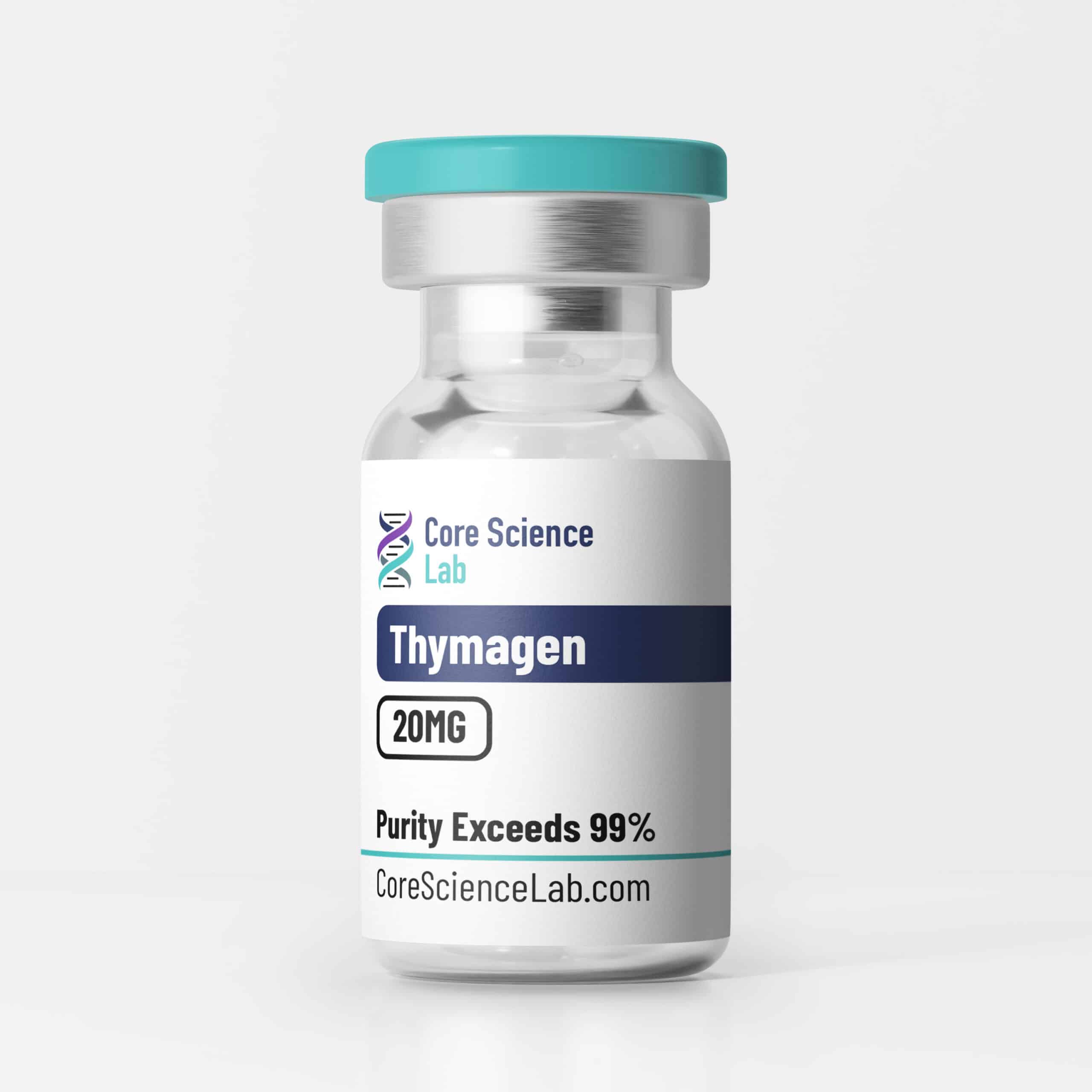
A high-purity, lyophilized synthetic dipeptide bioregulator (Glu-Trp) characterized for its potent immunomodulatory and antiangiogenic properties, commonly utilized in research investigating viral pathogenesis, oncological models, and immune correction.
Trust & Quality Verification
Purity Standard
Verified Analysis
Available
Shipping
Thymagen (also known chemically as the EW dipeptide, Thymogen, or IM862) is a synthetic short peptide research reagent corresponding to a naturally occurring bioregulator originally isolated from the thymus gland. It is chemically distinct due to its dipeptide structure, which allows it to act as an intracellular signaling molecule and a regulator of gene expression. Researchers employ this molecule to investigate the modulation of innate cell-mediated immunity, specifically exploring its influence on TLR/RLR signaling mechanisms during viral infections such as COVID-19, as well as its specific antiangiogenic properties in experimental models of metastatic carcinoma.
Biochemical Characteristics
Chemical Properties
| Property | Specification |
| Molecule Name | Thymagen |
| Synonyms | Thymogen; IM862; Oglufanide; EW Dipeptide; L-alpha-Glutamyl-L-tryptophan |
| PubChem CID | 100094 |
| Molecular Formula | C16H19N3O5 |
| Molecular Weight | 333.34 g/mol |
| Form | Lyophilized Powder |
| Purity | 99% (Verified via HPLC) |
| Solubility | Soluble in water and aqueous buffers (refer to SDS) |
| Documentation | COA and SDS available per lot |
Thymagen is strictly for laboratory research and is commonly employed in the following investigational areas:
Viral Pathogenesis and COVID-19 Models
Research models utilize Thymagen to evaluate its efficacy in modulating the immune response during severe viral infections. Investigations focus on the peptide’s effects on gene expression and protein synthesis involved in the pathogenesis of COVID-19, quantifying its ability to regulate immune status and mitigate severe disease progression in aged cohorts.
Oncology and Antiangiogenesis
Experimental protocols employ this dipeptide (often designated as IM862) to characterize its anti-tumor and antiangiogenic properties. Studies assess its mechanisms of action in limiting vascular network formation within tumor microenvironments, particularly in models of metastatic renal cell carcinoma.
Immunomodulation and TLR/RLR Signaling
In broader immunological research, Thymagen is used to study the molecular aspects of immunocorrection. Researchers evaluate how short peptides influence signaling through Toll-like and RIG-I-like receptors (TLR/RLR), maintaining tissue homeostasis and enhancing the organism’s innate cell-mediated immune defense.
Pathway / Mechanistic Context
The primary mechanism of action for Thymagen in research settings involves its function as a short dipeptide bioregulator capable of penetrating cells to modulate gene transcription and innate immune pathways.
Preclinical Research Summary
Published preclinical and translational literature documents investigations of Thymagen (and its related peptide complexes) across various experimental models focusing on virology and oncology.
Form & Analytical Testing
Referenced Citations
References are provided for informational purposes only and are not clinical claims.
RESEARCH USE ONLY
This product is intended strictly for laboratory research use only. It is not for human or veterinary use. It is not intended for diagnosis, treatment, cure, or prevention of any disease. All purchases are subject to our Terms of Service and Purity Guarantee.
No COAs available for this product.
RESEARCH USE ONLY
This product is intended strictly for laboratory research use only. It is not for human or veterinary use. It is not intended for diagnosis, treatment, cure, or prevention of any disease. All purchases are subject to our Terms of Service and Purity Guarantee.
Reviews
There are no reviews yet.