
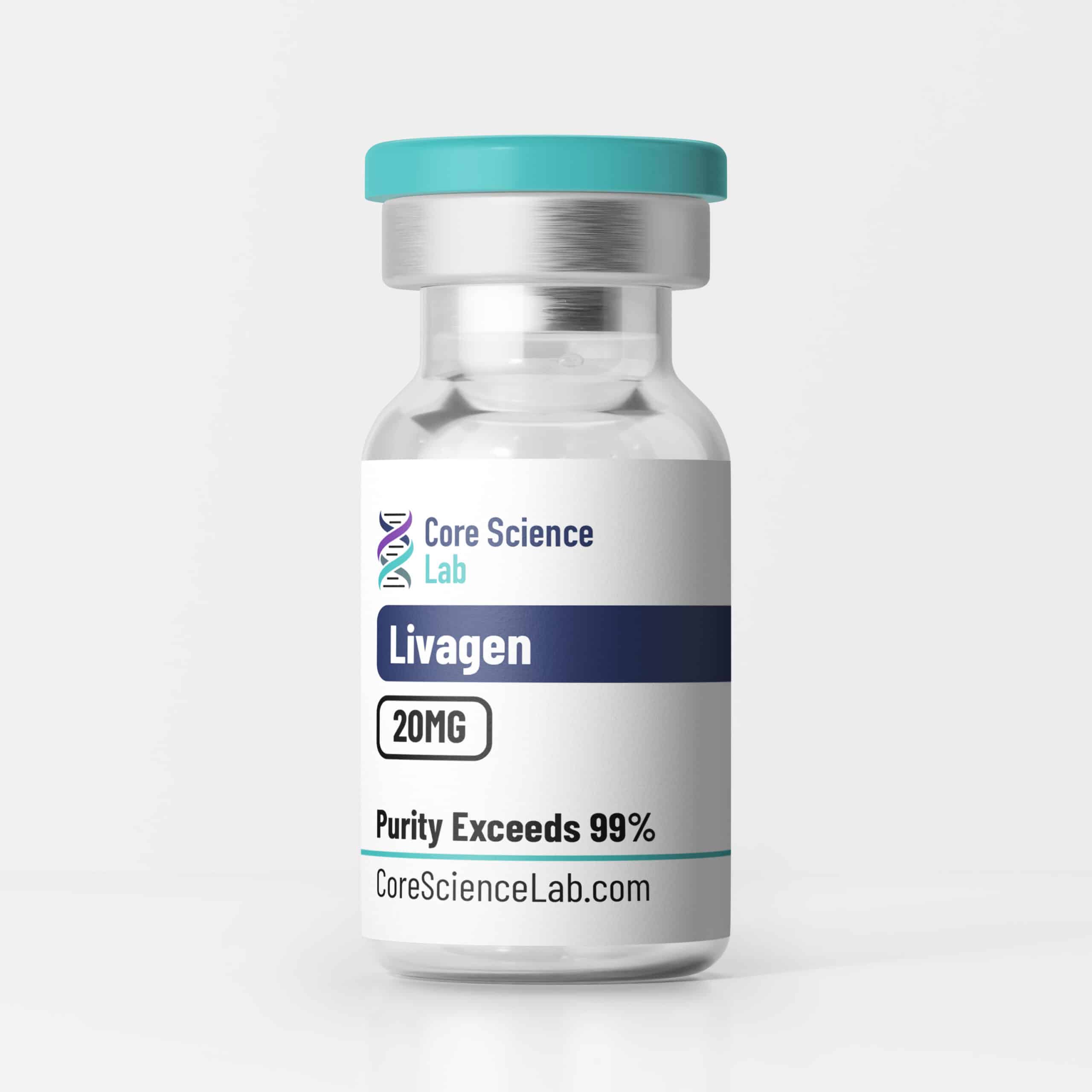
A synthetic tetrapeptide (Lys-Glu-Asp-Ala) designed to mimic the biological activity of the liver peptide complex, characterized for research applications involving chromatin decondensation, immune system modulation, and enzymatic regulation in aging models.
Trust & Quality Verification
Purity Standard
Verified Analysis
Available
Shipping
Livagen (Lys-Glu-Asp-Ala, or KEDA) is a short, synthetic bioregulatory peptide. It was developed to replicate the effects of specific liver extracts on organismal physiology. Research indicates that Livagen acts as an epigenetic modulator, capable of inducing the decondensation of chromatin in lymphocytes, particularly in aged subjects.
In laboratory settings, Livagen is utilized to study the restoration of gene expression profiles that are silenced during aging or pathological states. It is also investigated for its ability to modulate the activity of enkephalin-degrading enzymes in serum and influence the morphology of immune organs like the thymus in hypophysectomized models.
Biochemical Characteristics
Chemically, Livagen is a tetrapeptide with the sequence Lys-Glu-Asp-Ala. It is distinct for its direct influence on chromatin structure and enzymatic activity.
Chemical Properties
| Property | Specification |
| Molecule Name | Livagen |
| Synonyms | KEDA; Lys-Glu-Asp-Ala |
| Sequence | Lys-Glu-Asp-Ala |
| Molecular Formula | C₁₈H₃₀N₆O₉ |
| Molecular Weight | 474.47 g/mol |
| Form | Lyophilized Powder |
| Purity | ≥99% (Verified via HPLC) |
| Solubility | Soluble in water (refer to SDS) |
| Documentation | COA available per lot; SDS available |
Livagen is strictly for laboratory research and is commonly employed in the following investigational areas:
Chromatin Remodeling and Epigenetics
Livagen is a primary reagent for studying the “opening” of aged chromatin. Researchers use it to observe the decondensation of heterochromatin and the activation of Nucleolar Organizer Regions (NORs) in lymphocytes from elderly subjects, measuring the subsequent changes in transcriptional activity.
Enkephalinase Inhibition and Pain Signaling
Studies involving human serum investigate Livagen’s ability to inhibit enkephalin-degrading enzymes (such as aminopeptidase N). This application focuses on understanding how peptide bioregulators can influence the half-life of endogenous opioids and modulate pain-signaling pathways.
Digestive Enzyme Regulation
Livagen is used to investigate the regulation of digestive physiology. In rat models of different ages, it is administered to measure changes in the activity of key digestive enzymes (e.g., pepsin, trypsin, amylase) in the gastrointestinal tract and pancreas.
Immune System Morphology
In hypophysectomized avian models (birds with the pituitary gland removed), Livagen is utilized to study the structural recovery of the thymus. Researchers quantify changes in cortical and medullary thickness to assess the peptide’s restorative effects on immunosenescence.
Pathway / Mechanistic Context
The primary mechanism of action for Livagen in research settings involves chromatin modification and enzyme inhibition.
Preclinical Research Summary
Published preclinical literature documents investigations of Livagen across multiple experimental models:
Form & Analytical Testing
This material is produced via robust solid-phase peptide synthesis and supplied as a lyophilized (freeze-dried) powder.
Referenced Citations
References are provided for informational purposes only and are not clinical claims.
RESEARCH USE ONLY
This product is intended strictly for laboratory research use only. It is not for human or veterinary use. It is not intended for diagnosis, treatment, cure, or prevention of any disease. All purchases are subject to our Terms of Service and Purity Guarantee.
No COAs available for this product.
RESEARCH USE ONLY
This product is intended strictly for laboratory research use only. It is not for human or veterinary use. It is not intended for diagnosis, treatment, cure, or prevention of any disease. All purchases are subject to our Terms of Service and Purity Guarantee.

Reviews
There are no reviews yet.