
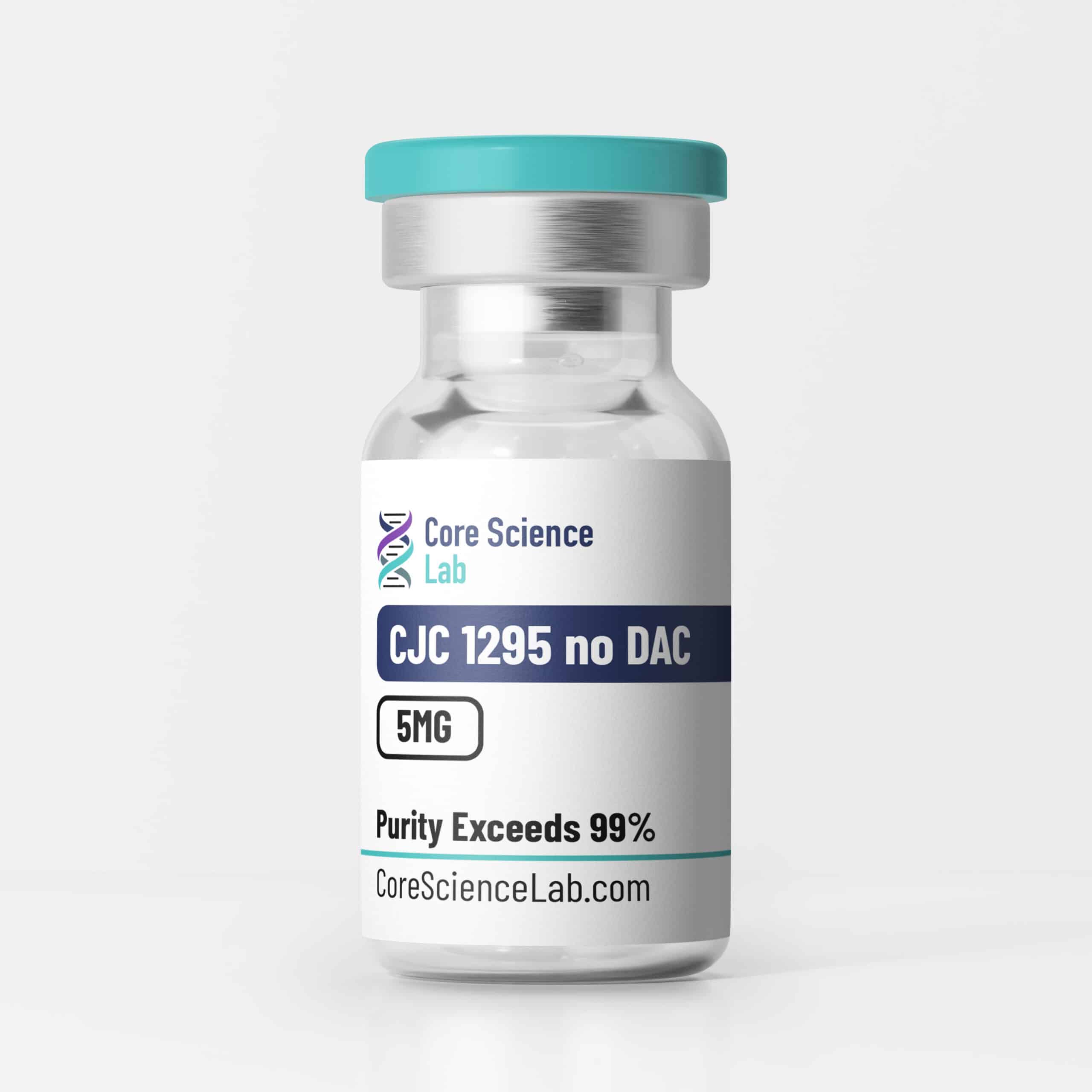
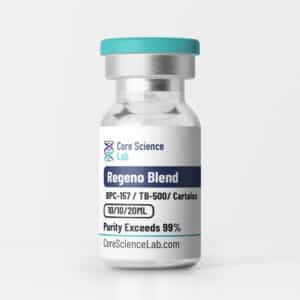
A combined lyophilized research reagent containing a tetrasubstituted Growth Hormone-Releasing Hormone (GHRH) analog and a selective Growth Hormone Secretagogue (GHS). This blend is designed for research applications aiming to investigate the synergistic stimulation of the somatotropic axis through simultaneous activation of GHRH and ghrelin receptors.
Trust & Quality Verification
$75.00
Out of stock
Purity Standard
Verified Analysis
Available
Shipping
The CJC 1295 (No DAC) & Ipamorelin Blend is a dual-action research tool utilized to study the coordinated regulation of growth hormone (GH) secretion.
In laboratory settings, this blend is employed to maximize intracellular signaling for GH synthesis and release. The combination allows researchers to observe the “multiplier effect” where the concurrent activation of the GHRH receptor (by CJC 1295) and the GHS receptor (by Ipamorelin) results in a GH secretory pulse that exceeds the sum of individual administrations.
Biochemical Characteristics
This product combines two distinct peptide classes to target separate receptors on the pituitary somatotroph.
Chemical Properties
| Property | Specification (CJC 1295 No DAC) | Specification (Ipamorelin) |
| Molecule Name | Mod GRF 1-29; Tetrasubstituted GRF 1-29 | Ipamorelin |
| Sequence | Tyr-D-Ala-Asp-Ala-Ile-Phe-Thr-Gln-Ser-Tyr-Arg-Lys-Val-Leu-Ala-Gln-Leu-Ser-Ala-Arg-Lys-Leu-Leu-Gln-Asp-Ile-Leu-Ser-Arg-NH2 | Aib-His-D-2-Nal-D-Phe-Lys-NH2 |
| CAS Number | 863288-34-0 | 170851-70-4 |
| Molecular Formula | C152H252N44O42 | C38H49N9O5 |
| Molecular Weight | 3367.9 g/mol | 711.85 g/mol |
| Purity | ≥99% (Verified via HPLC) | ≥99% (Verified via HPLC) |
| Form | Lyophilized Powder (Blend) | Lyophilized Powder (Blend) |
The CJC 1295 (No DAC) & Ipamorelin blend is strictly for laboratory research and is commonly employed in the following areas:
Pulsatile Secretion Analysis
Researchers use this blend to replicate physiological growth hormone spikes. The “No DAC” variant of CJC 1295 has a short half-life (approx. 30 minutes in some models), allowing for the study of acute, episodic secretion events rather than constitutive elevation.
Bone Growth and Density
Ipamorelin has been specifically investigated for its ability to induce longitudinal bone growth in rodent models. This blend is used to determine if synergistic stimulation can enhance osteoblast activity and mineralization rates beyond baseline metrics.
Metabolic Flux and Composition
Studies utilize this combination to examine the downstream effects of GH signaling on lipolysis and nitrogen retention. It serves as a tool to explore how the somatotropic axis influences body composition and energy substrate utilization without the confounding variables of elevated cortisol.
Pathway / Mechanistic Context
The mechanism of action involves a dual-receptor trigger on the pituitary somatotroph membrane:
Preclinical Research Summary
Published preclinical literature documents investigations of these peptides in various models:
Form & Analytical Testing
This material is produced via robust chemical synthesis and supplied as a lyophilized (freeze-dried) powder.
Storage & Handling
Stable at room temperature for up to 90 days. For long-term storage, keep at -20°C (-4°F) or colder. Once reconstituted with a solvent (e.g., bacteriostatic water), the solution must be stored at 4°C (39°F) and utilized within 30 days. Avoid repeated freeze-thaw cycles.
Referenced Citations
References are provided for informational purposes only and are not clinical claims.
RESEARCH USE ONLY
This product is intended strictly for laboratory research use only. It is not for human or veterinary use. It is not intended for diagnosis, treatment, cure, or prevention of any disease. All purchases are subject to our Terms of Service and Purity Guarantee.
No COAs available for this product.
RESEARCH USE ONLY
This product is intended strictly for laboratory research use only. It is not for human or veterinary use. It is not intended for diagnosis, treatment, cure, or prevention of any disease. All purchases are subject to our Terms of Service and Purity Guarantee.
Reviews
There are no reviews yet.