
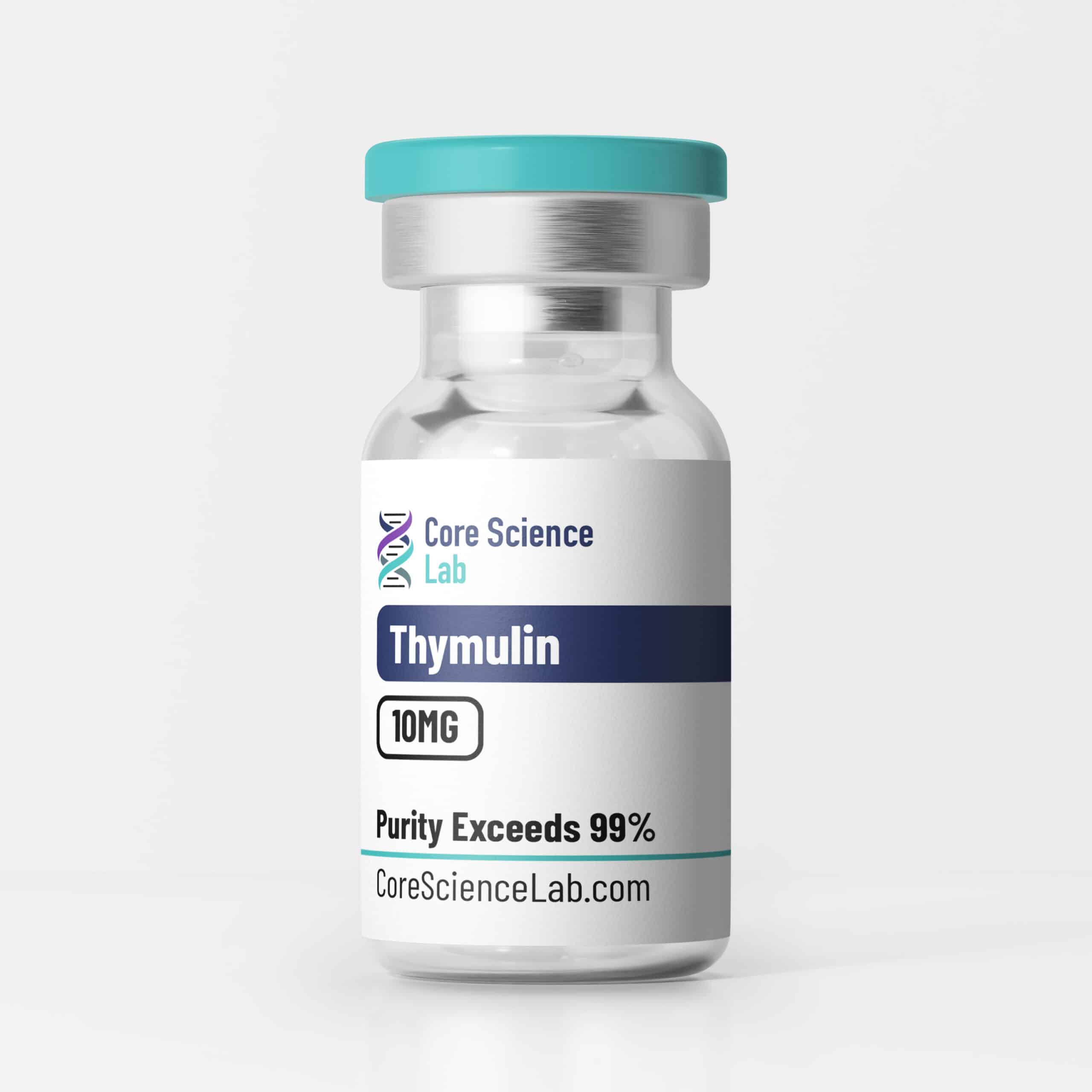
A thymic nonapeptide hormone that requires zinc for biological activity, characterized for research applications involving T-cell differentiation, neuroimmunomodulation, and the regulation of inflammatory pain and hyperalgesia.
Trust & Quality Verification
Purity Standard
Verified Analysis
Available
Shipping
Thymulin (also known as Serum Thymic Factor or FTS) is a nonapeptide hormone exclusively produced by thymic epithelial cells. It plays a critical role in T-cell differentiation and the modulation of the immune system. Uniquely, Thymulin exists in two forms: a biologically inactive peptide and a biologically active metallopeptide complexed with zinc in an equimolar ratio.
In research settings, Thymulin is extensively investigated for its neuroendocrine properties. It is used to study the “thymus-neuroendocrine axis,” specifically how pituitary hormones like growth hormone (GH) and prolactin regulate thymic function. Furthermore, Thymulin is a key reagent in pain research, where it is utilized to explore mechanisms of analgesia and the downregulation of pro-inflammatory cytokines in the central nervous system.
Biochemical Characteristics
Chemically, Thymulin is a nonapeptide that forms a specific tetrahedral conformation upon binding with zinc, which is essential for its biological activity.
Chemical Properties
| Property | Specification |
| Molecule Name | Thymulin |
| Synonyms | Serum Thymic Factor (FTS); Facteur Thymique Sérique; Zn-FTS |
| Sequence | <Glu-Ala-Lys-Ser-Gln-Gly-Gly-Ser-Asn (<Glu = pyroglutamic acid) |
| Molecular Formula | C₃₃H₅₄N₁₂O₁₅ (Peptide only) |
| Molecular Weight | 858.85 g/mol (Peptide); ~924 g/mol (Zn complex) |
| Form | Lyophilized Powder |
| Purity | ≥99% (Verified via HPLC) |
| Solubility | Soluble in water (refer to SDS) |
| Documentation | COA available per lot; SDS available |
Thymulin is strictly for laboratory research and is commonly employed in the following investigational areas:
Neuroinflammation and Analgesia
Thymulin is a potent tool for studying inflammatory hyperalgesia. In rat models, intracerebroventricular (i.c.v.) administration of Thymulin has been shown to reverse endotoxin-induced hyperalgesia. Researchers use it to investigate the downregulation of spinal pro-inflammatory cytokines (TNF-α, IL-6) and the inhibition of p38 MAPK phosphorylation in microglia.
T-Cell Differentiation and Immunity
As a classical thymic hormone, Thymulin is used to study T-cell maturation. It promotes the expression of T-cell markers and enhances T-cell functions, including suppressor activity and cytotoxicity. Research often focuses on its role in normalizing the T-helper/T-suppressor ratio in immunodeficient models.
Asthma and Airway Remodeling
In respiratory research, Thymulin gene therapy (using DNA nanoparticles) is investigated for its potential to prevent airway remodeling. Studies in ovalbumin-challenged mice demonstrate that Thymulin expression can reduce lung inflammation, collagen deposition, and smooth muscle hypertrophy, improving overall lung mechanics.
Neuroendocrine Regulation
Thymulin is used to map the feedback loops between the thymus and the pituitary gland. It serves as a probe to study how hormones like GH, prolactin, and thyroxine influence thymic endocrine function, and conversely, how Thymulin stimulates the release of pituitary hormones such as LH and ACTH.
Pathway / Mechanistic Context
The primary mechanisms of action for Thymulin in research settings involve zinc-dependent receptor modulation and cytokine regulation.
Preclinical Research Summary
Published preclinical literature documents investigations of Thymulin across multiple experimental models:
Form & Analytical Testing
This material is produced via robust solid-phase peptide synthesis and supplied as a lyophilized (freeze-dried) powder.
Referenced Citations
References are provided for informational purposes only and are not clinical claims.
RESEARCH USE ONLY
This product is intended strictly for laboratory research use only. It is not for human or veterinary use. It is not intended for diagnosis, treatment, cure, or prevention of any disease. All purchases are subject to our Terms of Service and Purity Guarantee.
No COAs available for this product.
RESEARCH USE ONLY
This product is intended strictly for laboratory research use only. It is not for human or veterinary use. It is not intended for diagnosis, treatment, cure, or prevention of any disease. All purchases are subject to our Terms of Service and Purity Guarantee.
Reviews
There are no reviews yet.