Description
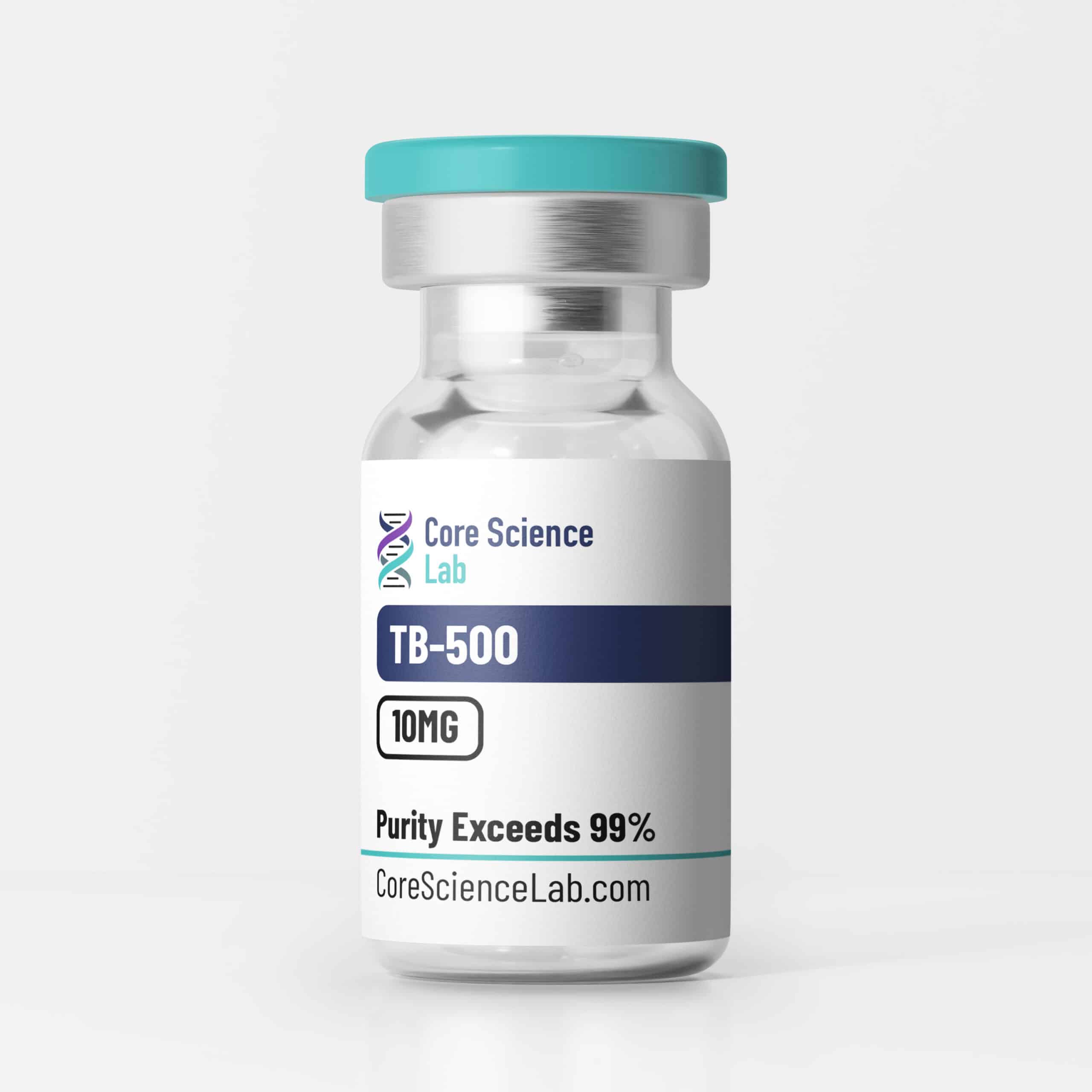
TB-500 (Thymosin Beta-4) is a synthetic 43-amino acid peptide. It is used in investigational workflows involving cytoskeletal plasticity, cellular migration assays, and the characterization of regenerative signaling pathways. Unlike naturally occurring Thymosin Beta-4, this synthetic reagent allows for controlled dosing in in vitro and in vivo models to quantify effects on G-actin binding and downstream angiogenic cascades.
Biochemical Characteristics
Chemically, TB-500 is characterized by a flexible, unfolded structure in solution that facilitates specific binding interactions with monomeric actin.
- Sequence/Structure: 43-amino acid peptide sequence homologous to the actin-sequestering domain of Thymosin Beta-4.
- Permeability: Investigated for its ability to interact with intracellular actin pools and surface receptors on endothelial cells.
Specificity: Designed to probe G-actin sequestration sites and modulate the ratio of filamentous (F) to monomeric (G) actin.
TB-500 is strictly for laboratory research and is commonly employed in the following investigational areas:
Cytoskeletal Organization and Motility
Research utilizes this peptide to study actin polymerization dynamics. Investigators measure the sequestration of G-actin monomers to determine how Thymosin Beta-4 upregulation influences cytoskeletal remodeling, a critical step in cellular migration and structural plasticity.
Angiogenesis and Endothelial Function
Studies focus on measuring the expression of angiogenic factors and tube formation capacity in endothelial cell cultures. TB-500 is used as a chemical probe to evaluate the upregulation of Vascular Endothelial Growth Factor (VEGF) and the migration potential of stem cells in ischemic models.
Inflammation and Oxidative Stress Models
Experimental workflows employ TB-500 to characterize its influence on inflammatory markers and oxidative stress pathways. Researchers quantify endpoints related to autophagy and ferroptosis to assess cellular survival mechanisms under stress conditions.
Pathway / Mechanistic Context
The primary mechanistic context for TB-500 in research settings is the modulation of actin dynamics and vascular signaling.
- Actin Sequestration: TB-500 acts by binding to monomeric G-actin, preventing its uncontrolled polymerization into F-actin filaments. This “buffering” mechanism maintains a pool of actin monomers available for rapid polymerization during cell migration.
- VEGF Axis Modulation: The peptide is investigated for its downstream effects on VEGF expression, serving as a signal to upregulate vascular repair cascades.
- Anti-Inflammatory Signaling: Research suggests interaction with pathways that limit inflammation, potentially involving autophagy regulation.
Preclinical Research Summary
Published preclinical literature documents investigations of TB-500 across experimental models for pathway characterization and endpoint measurement:
- Ischemic Tissue Models: In mouse ischemic hindlimb models, research indicates that Thymosin Beta-4 may enhance the therapeutic efficacy of adipose-derived stem cells, with endpoints measuring neovascularization and tissue perfusion (Kim et al., 2020).
- Cardiac Injury Models: Studies have evaluated the peptide as a multi-faceted repair molecule in heart injury models, characterizing its role in tissue remodeling and cell survival (Bjorklund et al., 2019).
- Metabolic and Liver Models: Research investigates the alleviation of non-alcoholic fatty liver conditions, specifically measuring the inhibition of ferroptosis via the up-regulation of GPX4 (Zhu et al., 2021).
- Ocular Surface Repair: In models of bacterial keratitis, Thymosin Beta-4 is studied as an adjunct agent, where investigators quantify corneal re-epithelialization rates and immune response modulation (Sosne & Berger, 2023).
Form & Analytical Testing
This material is produced via solid-phase peptide synthesis (SPPS) and supplied as a lyophilized (freeze-dried) powder.
- Lyophilization: Removes water content under vacuum to maintain compound integrity and extend shelf-life.
- Identity Verification: Each lot undergoes Mass Spectrometry (MS) to confirm the molecular weight and sequence identity.
- Purity Verification: High-Performance Liquid Chromatography (HPLC) is performed to ensure the product meets the ≥99% purity standard required for reproducible research data.
Referenced Citations
References are provided for informational purposes only and are not clinical claims.
- Bjorklund, G., Dadar, M., Aaseth, J., & Chirumbolo, S. (2019). Thymosin β4: a multi-faceted tissue repair stimulating protein in heart injury. Current Medicinal Chemistry.
- Bock-Marquette, I., Maar, K., Maar, S., Lippai, B., Faskerti, G., Gallyas, F., Olson, E., & Srivastava, D. (2023). Thymosin beta-4 denotes new directions towards developing prosperous anti-aging regenerative therapies. International Immunopharmacology, 116, 109741.
- Gao, J., Ying, Y., Lin, C., Tao, N., Hoffman, R., Shi, D., & Chen, Z. (2022). Thymosin β4 and actin: binding modes, biological functions and clinical applications. Current Protein & Peptide Science.
- Kim, J., Joo, H., & Hong, S. (2020). Abstract 469: Thymosin Beta4 Enhancing Therapeutic Efficacy of Human Adipose-derived Stem Cells in Mouse Ischemic Hindlimb Model. Circulation Research.
- Philp, D., & Kleinman, H. (2010). Animal studies with thymosin β4, a multifunctional tissue repair and regeneration peptide. Annals of the New York Academy of Sciences, 1194.
- Renga, G., Oikonomou, V., Stincardini, C., Pariano, M., Borghi, M., Costantini, C., Bartoli, A., Garaci, E., Goldstein, A., & Romani, L. (2018). Thymosin β4 limits inflammation through autophagy. Expert Opinion on Biological Therapy, 18, 171 – 175.
- Sosne, G., & Berger, E. (2023). Thymosin beta 4: A potential novel adjunct treatment for bacterial keratitis. International Immunopharmacology, 118, 109953.
- Zhang, G., Murthy, K., Pare, R., & Qian, Y. (2020). Protective effect of Tβ4 on central nervous system tissues and its developmental prospects. European Journal of Inflammation, 18.
- Zhu, Z., Zhang, Y., Huang, X., Can, L., Zhao, X., Wang, Y., Xue, J., Cheng, M., & Zhu, L. (2021). Thymosin beta 4 alleviates non-alcoholic fatty liver by inhibiting ferroptosis via up-regulation of GPX4. European Journal of Pharmacology, 174351.
RESEARCH USE ONLY
This product is intended strictly for laboratory research use only. It is not for human or veterinary use. It is not intended for diagnosis, treatment, cure, or prevention of any disease. All purchases are subject to our Terms of Service and Purity Guarantee.
No COAs available for this product.

Reviews
There are no reviews yet.