
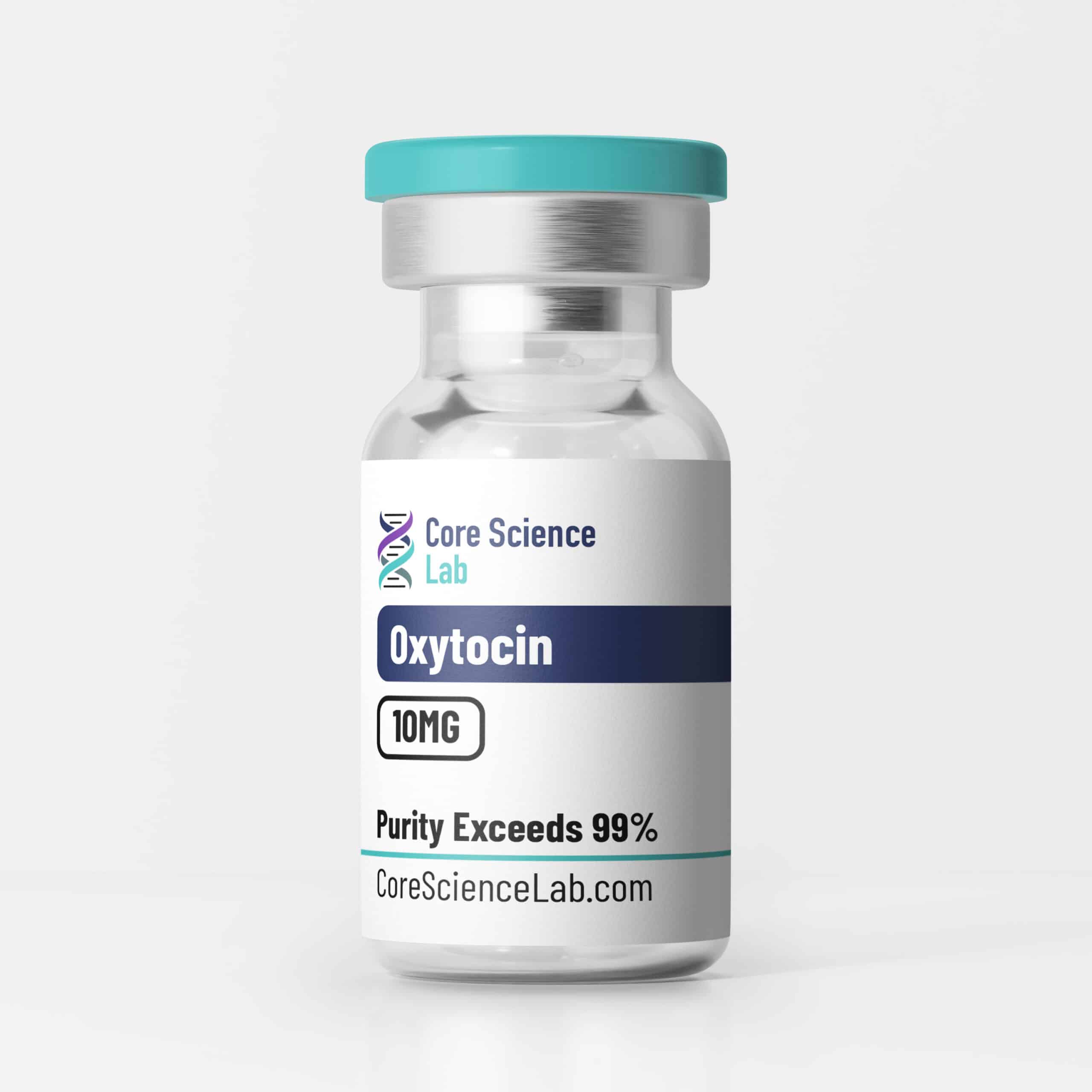
A high-purity, lyophilized synthetic nonapeptide biologically identical to the endogenous hypothalamic neuropeptide. It is extensively utilized in research to investigate its pleiotropic roles as a central neuroregulator of social and emotional behaviors, stress resilience, wound healing, and metabolic homeostasis.
Trust & Quality Verification
Purity Standard
Verified Analysis
Available
Shipping
Oxytocin is a synthetic cyclic nonapeptide research reagent corresponding to the naturally occurring mammalian neurohypophysial hormone. It is chemically distinct due to its nine-amino-acid structure containing a crucial disulfide bridge, which allows it to function as both a systemic hormone and a central neuromodulator. Researchers employ this molecule to investigate the oxytocinergic system and the hypothalamic-pituitary-adrenal (HPA) axis, specifically exploring how it modulates neurobiological pathways associated with social buffering, stress allostasis, and psychiatric disorders, as well as its systemic impact on pancreatic beta-cell responsivity, insulin secretion, and tissue regeneration.
Biochemical Characteristics
Chemical Properties
| Property | Specification |
| Molecule Name | Oxytocin |
| Synonyms | Pitocin; α-Hypophamine |
| PubChem CID | 439302 |
| Molecular Formula | C43H66N12O12S2 |
| Molecular Weight | 1007.2 g/mol |
| Form | Lyophilized Powder |
| Purity | $\ge99\%$ (Verified via HPLC) |
| Solubility | Soluble in water and aqueous buffers (refer to SDS) |
| Documentation | COA and SDS available per lot |
Oxytocin is strictly for laboratory research and is commonly employed in the following investigational areas:
Neurobiology of Stress and Social Behavior
Research models utilize Oxytocin to evaluate its anxiolytic and prosocial properties. Investigations focus on the peptide’s effects on the central nervous system, quantifying changes in emotional regulation, the social buffering of stress responses, and the modulation of allostasis and resilience in behavioral models.
Metabolic Homeostasis and Diabetes
Experimental protocols employ this neuropeptide to characterize its role in metabolic regulation. Studies assess its ability to modulate pancreatic islet function, measuring its impact on insulin and GLP-1 secretion, beta-cell responsivity, glucose tolerance, and the amelioration of gene expression patterns (e.g., PEPCK) in obesity-induced diabetes models.
Wound Healing and Tissue Regeneration
In immunological and physiological research, Oxytocin is used to study the acceleration of tissue repair. Researchers evaluate its anti-inflammatory effects and its interactions with microbial symbionts to facilitate oral ulcer recovery and systemic wound healing processes.
Psychopharmacology and Psychiatric Disorders
Studies utilize this hormone to explore its potential as a novel psychotropic agent. Investigations map the intracellular signaling of the oxytocin receptor to behavior, assessing its experimental application in the treatment paradigms of complex psychiatric and mood disorders.
Pathway / Mechanistic Context
The primary mechanism of action for Oxytocin in research settings involves its targeted binding to the specific G-protein-coupled oxytocin receptor (OXTR), triggering diverse intracellular signaling cascades across central and peripheral tissues.
Preclinical Research Summary
Published preclinical and translational literature documents the extensive investigation of Oxytocin across diverse behavioral, metabolic, and physiological experimental models.
Form & Analytical Testing
Referenced Citations
References are provided for informational purposes only and are not clinical claims.
RESEARCH USE ONLY
This product is intended strictly for laboratory research use only. It is not for human or veterinary use. It is not intended for diagnosis, treatment, cure, or prevention of any disease. All purchases are subject to our Terms of Service and Purity Guarantee.
No COAs available for this product.
RESEARCH USE ONLY
This product is intended strictly for laboratory research use only. It is not for human or veterinary use. It is not intended for diagnosis, treatment, cure, or prevention of any disease. All purchases are subject to our Terms of Service and Purity Guarantee.
Reviews
There are no reviews yet.