Description
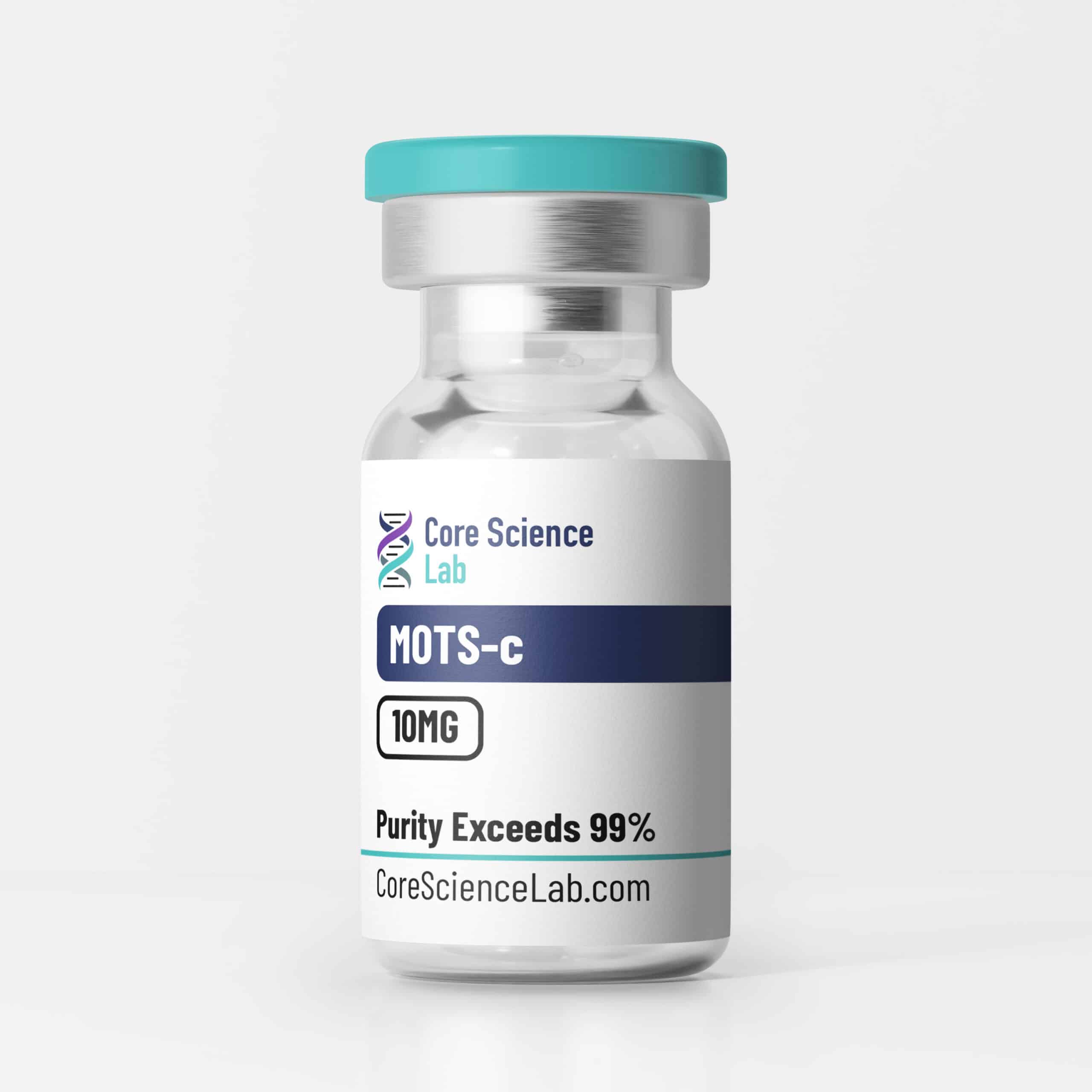
MOTS-c (Mitochondrial Open Reading Frame of the 12S rRNA-c) is a 16-amino acid peptide that represents a paradigm shift in cellular signaling, bridging the mitochondrial genome with nuclear regulation. Unlike most hormones which are nucleus-encoded, MOTS-c is encoded by the mitochondrial DNA. It is released into the cytosol and systemic circulation, where it acts as a bioactive hormone-like signal.
In research settings, MOTS-c is extensively investigated for its profound effects on metabolic homeostasis. It has been described as an “exercise mimetic” due to its ability to prevent diet-induced obesity and insulin resistance in murine models. Unique among mitochondrial peptides, MOTS-c translocates to the nucleus in response to metabolic stress, where it directly regulates gene expression to coordinate cellular resistance and adaptation.
Biochemical Characteristics
Biochemically, MOTS-c is defined by its origin in the mitochondrial 12S rRNA gene and its specific intracellular trafficking capabilities.
- Source: Encoded by a short open reading frame (sORF) within the mitochondrial 12S rRNA.
- Nuclear Translocation: Under stress conditions (e.g., glucose restriction), MOTS-c enters the nucleus to interact with chromatin and transcription factors (such as Nrf2), a mechanism essential for its cytoprotective effects.
- Targeting: It targets the folate cycle and the methionine-folate-AICAR-AMPK axis, influencing cellular metabolism at a fundamental level.
- Conservation: The biological activity of MOTS-c highlights a conserved mechanism of mitochondrial-nuclear communication (retrograde signaling).
Chemical Properties
| Property |
Specification |
| Molecule Name |
MOTS-c |
| Sequence Length |
16 Amino Acids |
| Source |
Mitochondrial Genome (12S rRNA region) |
| Molecular Weight |
~2174.6 Da |
| Form |
Lyophilized Powder |
| Purity |
≥99% (Verified via HPLC) |
| Solubility |
Soluble in water (refer to SDS) |
| Documentation |
COA available per lot; SDS available |
MOTS-c is strictly for laboratory research and is commonly employed in the following investigational areas:
Metabolic Homeostasis and Obesity
MOTS-c is a primary reagent in obesity and diabetes research. Studies utilize the peptide to investigate the regulation of insulin sensitivity and lipid metabolism. It is observed to suppress weight gain in high-fat diet models and regulate adipose homeostasis, specifically in preventing metabolic dysfunction associated with ovariectomy.
Muscle Physiology and Physical Performance
Researchers employ MOTS-c to study age-dependent physical decline. It is investigated for its ability to enhance physical performance and reduce muscle atrophy signaling (myostatin downregulation) in aged models, validating its classification as an exercise-induced mitochondrial regulator.
Neuroprotection and Cognitive Function
In neuroscience, MOTS-c is used to explore mechanisms of neuroprotection. Models of Traumatic Brain Injury (TBI) and neurodegeneration (Alzheimer’s-like pathology) utilize MOTS-c to assess its ability to inhibit neuroinflammation, reduce beta-amyloid toxicity, and improve memory via transcriptomic and metabolomic modulation.
Longevity and Aging
Given its mitochondrial origin and metabolic effects, MOTS-c is studied in the context of exceptional longevity. Research investigates the correlation between MOTS-c polymorphism/levels and healthy aging phenotypes.
Pathway / Mechanistic Context
The primary mechanisms of action for MOTS-c in research settings involve AMPK activation and nuclear gene regulation.
- Folate Cycle Inhibition: MOTS-c inhibits the folate cycle, leading to an accumulation of AICAR (5-aminoimidazole-4-carboxamide ribonucleotide).
- AMPK Activation: Increased AICAR levels trigger the activation of Adenosine Monophosphate-Activated Protein Kinase (AMPK), a master regulator of cellular energy homeostasis that promotes glucose uptake and fatty acid oxidation.
- Nuclear Regulation: In response to stress, MOTS-c translocates to the nucleus to bind to Adaptive Antioxidant Response Elements (ARE), regulating the expression of genes involved in stress resistance and metabolism.
Preclinical Research Summary
Published preclinical literature documents investigations of MOTS-c across multiple experimental models:
- Insulin Resistance: In mice fed a high-fat diet, MOTS-c administration was shown to prevent the development of insulin resistance and diet-induced obesity, mirroring the effects of exercise.
- Muscle Regeneration: Research in aged mice indicates that MOTS-c treatment significantly improves physical capacity and skeletal muscle health, potentially by suppressing myostatin expression.
- Cognitive Recovery: In models of TBI and LPS-induced inflammation, MOTS-c demonstrated neuroprotective properties, reducing neuronal apoptosis and improving cognitive outcomes through the suppression of pro-inflammatory cytokines.
- Post-Menopausal Metabolism: In ovariectomized mice, MOTS-c treatment prevented brown adipose tissue inflammation and visceral fat accumulation, suggesting a role in managing hormonal metabolic shifts.
Form & Analytical Testing
This material is produced via robust solid-phase peptide synthesis and supplied as a lyophilized (freeze-dried) powder.
- Lyophilization: Removes water content under vacuum to maintain peptide integrity and extend shelf-life.
- Identity Verification: Each lot undergoes Mass Spectrometry (MS) to confirm molecular weight and identity.
- Purity Verification: High-Performance Liquid Chromatography (HPLC) is performed to ensure the product meets the ≥99% purity standard required for reproducible research data.
Referenced Citations
References are provided for informational purposes only and are not clinical claims.
- Kim, K., Son, J., Benayoun, B., & Lee, C. (2018). The Mitochondrial-Encoded Peptide MOTS-c Translocates to the Nucleus to Regulate Nuclear Gene Expression in Response to Metabolic Stress. Cell metabolism, 28 3, 516-524.e7. https://doi.org/10.1016/j.cmet.2018.06.008.
- Lu, H., Wei, M., Zhai, Y., Li, Q., Ye, Z., Wang, L., Luo, W., Chen, J., & Lu, Z. (2019). MOTS-c peptide regulates adipose homeostasis to prevent ovariectomy-induced metabolic dysfunction. Journal of Molecular Medicine, 97, 473 – 485. https://doi.org/10.1007/s00109-018-01738-w.
- Lee, C., Zeng, J., Drew, B., Sallam, T., Martín-Montalvo, A., Wan, J., Kim, S., Mehta, H., Hevener, A., De Cabo, R., & Cohen, P. (2015). The mitochondrial-derived peptide MOTS-c promotes metabolic homeostasis and reduces obesity and insulin resistance. Cell metabolism, 21 3, 443-54. https://doi.org/10.1016/j.cmet.2015.02.009.
- Li, F., Jia, Y., Fang, J., Gong, L., Zhang, Y., Wei, S., Wu, L., & Jiang, P. (2024). Neuroprotective Mechanism of MOTS-c in TBI Mice: Insights from Integrated Transcriptomic and Metabolomic Analyses. Drug Design, Development and Therapy, 18, 2971 – 2987. https://doi.org/10.2147/DDDT.S460265.
- Jiang, J., Chang, X., Nie, Y., Shen, Y., Liang, X., Peng, Y., & Chang, M. (2021). Peripheral Administration of a Cell-Penetrating MOTS-c Analogue Enhances Memory and Attenuates Aβ1-42- or LPS-Induced Memory Impairment through Inhibiting Neuroinflammation. ACS chemical neuroscience. https://doi.org/10.1021/acschemneuro.0c00782.
- Reynolds, J., Lai, R., Woodhead, J., Joly, J., Mitchell, C., Cameron-Smith, D., Lu, R., Cohen, P., Graham, N., Benayoun, B., Merry, T., & Lee, C. (2021). MOTS-c is an exercise-induced mitochondrial-encoded regulator of age-dependent physical decline and muscle homeostasis. Nature Communications. https://doi.org/10.1038/s41467-020-20790-0.
- Kumagai, H., Coelho, A., Wan, J., Mehta, H., Yen, K., Huang, A., Zempo, H., Fuku, N., Maeda, S., Oliveira, P., Cohen, P., & Kim, S. (2021). MOTS-c reduces myostatin and muscle atrophy signaling. American journal of physiology. Endocrinology and metabolism. https://doi.org/10.1152/ajpendo.00275.2020.
- Mohtashami, Z., Singh, M., Salimiaghdam, N., Ozgul, M., & Kenney, M. (2022). MOTS-c, the Most Recent Mitochondrial Derived Peptide in Human Aging and Age-Related Diseases. International Journal of Molecular Sciences, 23. https://doi.org/10.3390/ijms231911991.
- Fuku, N., Pareja-Galeano, H., Zempo, H., Alis, R., Arai, Y., Lucia, A., & Hirose, N. (2015). The mitochondrial‐derived peptide MOTS‐c: a player in exceptional longevity?. Aging Cell, 14, 921 – 923. https://doi.org/10.1111/acel.12389.
RESEARCH USE ONLY
This product is intended strictly for laboratory research use only. It is not for human or veterinary use. It is not intended for diagnosis, treatment, cure, or prevention of any disease. All purchases are subject to our Terms of Service and Purity Guarantee.
No COAs available for this product.



Reviews
There are no reviews yet.