Description
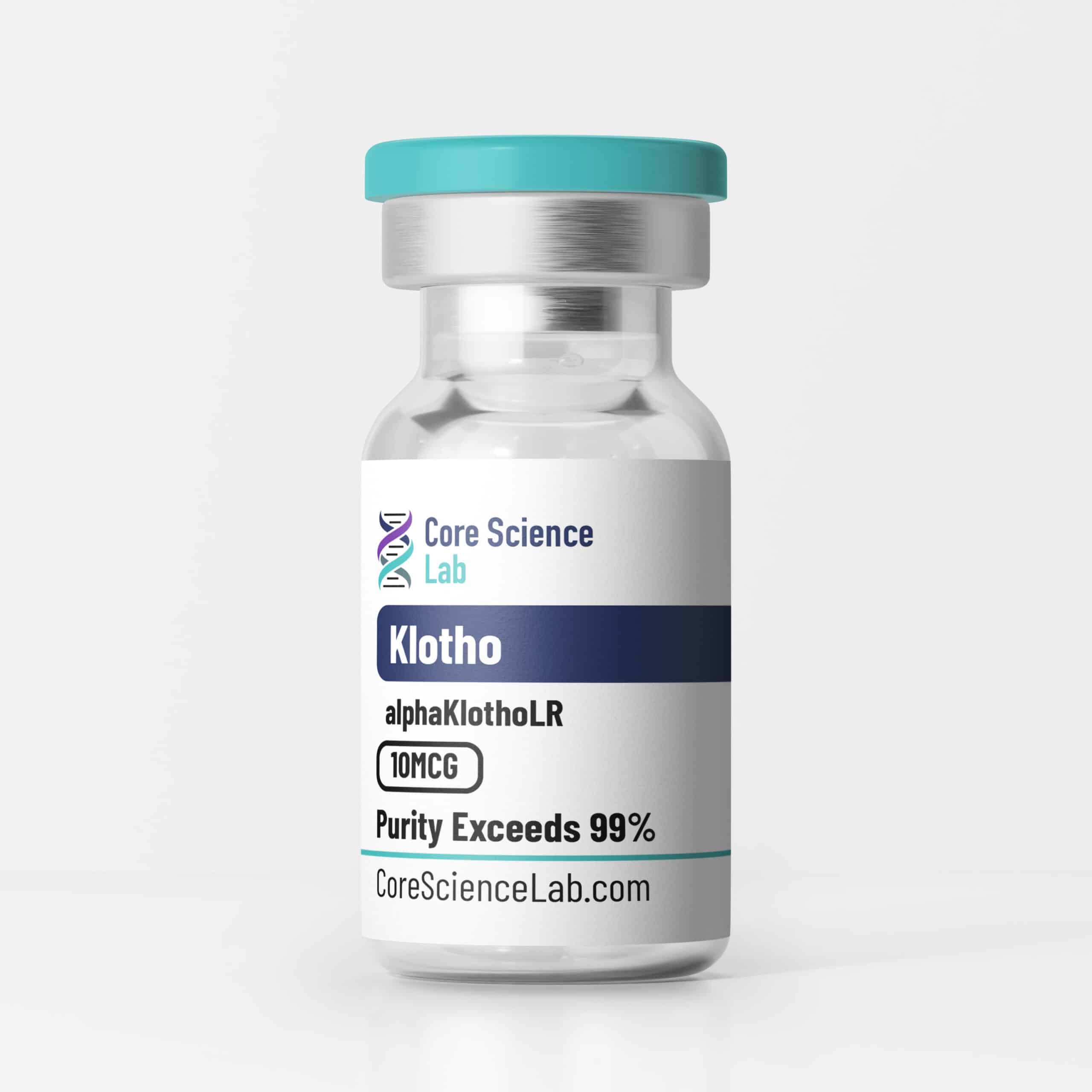
Klotho (specifically the alpha-Klotho isoform) is a transmembrane protein that can be cleaved to release a soluble circulating fragment, often referred to as an anti-aging hormone. In research settings, recombinant alpha-Klotho is utilized to investigate its role as an obligatory co-receptor for FGF23, a signaling interaction that is essential for maintaining phosphate homeostasis and vitamin D metabolism.
Beyond mineral metabolism, Klotho acts as a powerful autocrine enzyme and endocrine factor. It is extensively studied for its ability to suppress oxidative stress and inflammation through the activation of the Nrf2 pathway. Research indicates that circulating alpha-Klotho regulates metabolism via distinct central and peripheral mechanisms, influencing glucose handling and insulin sensitivity. It is a primary reagent in experimental models focusing on kidney disease, vascular calcification, and the physiological decline of muscle and neural tissues.
Biochemical Characteristics
Biochemically, Klotho is a member of the glycosidase family 1. While it shares homology with beta-glucuronidases, its primary described enzymatic function in physiology involves sialidase activity and protein-protein interaction.
- Enzymatic Activity: Functions as a sialidase (neuraminidase) that removes terminal sialic acids from cell surface ion channels, such as TRPV5, regulating their retention and activity.
- Receptor Cofactor: Forms a binary complex with fibroblast growth factor receptors (FGFRs), increasing their affinity for FGF23 and conferring tissue specificity to FGF23 signaling.
- Antioxidant Induction: Modulates intracellular signaling cascades, specifically the PI3K/Akt and Nrf2 pathways, to enhance endogenous antioxidant defenses.
- Structure: The soluble form (alphaKlothoLR) represents the extracellular domain shed from the membrane or generated via alternative splicing.
Chemical Properties
| Property |
Specification |
| Molecule Name |
Alpha-Klotho (Recombinant) |
| Synonyms |
α-Klotho; Soluble Klotho; KL |
| Source |
Recombinant (typically CHO or HEK293 expressed) |
| Molecular Weight |
~60-70 kDa (Soluble fragment) / ~130 kDa (Full extracellular) |
| Form |
Lyophilized Powder |
| Purity |
≥95-99% (Verified via SDS-PAGE/HPLC) |
| Solubility |
Soluble in water/PBS (refer to SDS) |
| Documentation |
COA available per lot; SDS available |
Klotho is strictly for laboratory research and is commonly employed in the following investigational areas:
Renal Pathophysiology and Mineral Metabolism
Klotho is a central figure in nephrology research. It is identified as a phosphaturic substance acting on the renal proximal tubule. Researchers use Klotho supplementation in models of Chronic Kidney Disease (CKD) and Acute Kidney Injury (AKI) to study its potential to ameliorate fibrosis, reduce endoplasmic reticulum stress, and prevent tissue calcification.
Aging and Muscle Regeneration
In aging research, Klotho levels are correlated with skeletal muscle function. Studies utilize Klotho to investigate the reversal of age-related declines in muscle progenitor cell mitochondrial function and regeneration capabilities. Low plasma Klotho has also been epidemiologically linked to poor grip strength in older populations, prompting mechanistic studies into its ergogenic potential.
Cardiovascular Health Klotho is used to study the regulation of cardiomyocytes and vascular smooth muscle cells. Research demonstrates its ability to modulate electrical activity and calcium homeostasis in pulmonary vein cardiomyocytes via PI3K/Akt signaling. Additionally, it acts as a protective factor against vascular calcification and oxidative stress in aortic smooth muscle cells.
Neuroprotection Investigations in neuroscience employ Klotho to study the crosstalk between autophagy, the endoplasmic reticulum, and inflammatory responses in neurons. It has been observed to increase antioxidant defenses in astrocytes and enhance ubiquitin-proteasome activity in neurons, suggesting a neuroprotective role against protein aggregation.
Pathway / Mechanistic Context
The primary mechanism of action for Klotho in research settings involves both receptor-dependent and enzymatic pathways.
- FGF23-Klotho Axis: Klotho binds to FGFR1c, 3c, and 4, enabling the high-affinity binding of FGF23. This complex suppresses renal phosphate reabsorption (via NPT2a/c downregulation) and 1,25(OH)2D3 synthesis.
- Ion Channel Regulation: Klotho hydrolyzes extracellular sugar residues (sialic acid) on the TRPV5 calcium channel. This modification exposes galectin-1 binding sites, trapping the channel in the plasma membrane and increasing calcium reabsorption.
- Insulin/IGF-1 Signaling: Klotho interacts with the insulin/IGF-1 signaling pathway, resulting in the activation of FOXO transcription factors, which upregulate antioxidant enzymes like SOD2 and catalase.
Preclinical Research Summary
Published preclinical literature documents investigations of Klotho across multiple experimental models:
- Sepsis and AKI: In models of sepsis-associated acute kidney injury, Klotho activation of the Nrf2 pathway was shown to inhibit ferroptosis, thereby attenuating organ damage.
- Pulmonary Protection: Research indicates that Klotho attenuates oxidant-induced mtDNA damage and apoptosis in alveolar epithelial cells, suggesting a protective role in lung injury models.
- Diabetes and Insulin: In pancreatic beta-cell lines (MIN6), anti-aging gene Klotho was found to enhance glucose-induced insulin secretion by up-regulating plasma membrane levels of TRPV2.
- Muscle Mitochondria: Age-related declines in alpha-Klotho were shown to drive progenitor cell mitochondrial dysfunction; supplementation restored bioenergetics and improved muscle regeneration in aged mice.
Form & Analytical Testing
This material is produced via recombinant protein expression and supplied as a lyophilized powder.
- Lyophilization: Removes water content to maintain protein structure and enzymatic activity during storage.
- Identity Verification: Verified via Western Blot or Mass Spectrometry to confirm isoform identity.
- Purity Verification: High-Performance Liquid Chromatography (HPLC) or SDS-PAGE is performed to ensure the product meets the purity standards required for reproducible cell culture and in vivo research.
Referenced Citations
References are provided for informational purposes only and are not clinical claims.
- [1] Razzaque, M. S. (2009). The FGF23–Klotho axis: endocrine regulation of phosphate homeostasis. Nature Reviews Endocrinology. https://doi.org/10.1038/nrendo.2009.196
- [2] Hu, M. C., et al. (2010). Klotho: a novel phosphaturic substance acting as an autocrine enzyme in the renal proximal tubule. FASEB Journal. https://doi.org/10.1096/fj.10-154765
- [3] Hu, M. C., et al. (2013). Fibroblast Growth Factor 23 and Klotho: Physiology and Pathophysiology of an Endocrine Network of Mineral Metabolism. Annual Review of Physiology. https://doi.org/10.1146/annurev-physiol-030212-183727
- [4] Zhao, X., et al. (2024). New insights into the role of Klotho in inflammation and fibrosis: molecular and cellular mechanisms. Frontiers in Immunology. https://doi.org/10.3389/fimmu.2024.1454142
- [5] Yamamoto, M., et al. (2005). Regulation of Oxidative Stress by the Anti-aging Hormone Klotho. Journal of Biological Chemistry. https://doi.org/10.1074/jbc.m509039200
- [6] Hung, Y., et al. (2020). Klotho modulates electrical activity and calcium homeostasis in pulmonary vein cardiomyocytes via PI3K/Akt signalling. Europace. https://doi.org/10.1093/europace/euaa100
- [7] Maltese, G., et al. (2016). The anti‐ageing hormone klotho induces Nrf2‐mediated antioxidant defences in human aortic smooth muscle cells. Journal of Cellular and Molecular Medicine. https://doi.org/10.1111/jcmm.12996
- [8] Leibrock, C. B., et al. (2015). NH4Cl Treatment Prevents Tissue Calcification in Klotho Deficiency. Journal of the American Society of Nephrology. https://doi.org/10.1681/asn.2014030230
- [9] Orellana, A. M., et al. (2023). Klotho increases antioxidant defenses in astrocytes and ubiquitin–proteasome activity in neurons. Scientific Reports. https://doi.org/10.1038/s41598-023-41166-6
- [10] Mytych, J. (2021). Klotho and neurons: mutual crosstalk between autophagy, endoplasmic reticulum, and inflammatory response. Neural Regeneration Research. https://doi.org/10.4103/1673-5374.303014
- [11] Al-Kadi, A., et al. (2025). Klotho: A multifaceted protector in sepsis-induced organ damage and a potential therapeutic target. World Journal of Critical Care Medicine. https://doi.org/10.5492/wjccm.v14.i3.103458
- [12] Landry, T., et al. (2021). Circulating α-klotho regulates metabolism via distinct central and peripheral mechanisms. Metabolism. https://doi.org/10.1016/j.metabol.2021.154819
- [14] Lin, Y., & Sun, Z. (2012). Antiaging Gene Klotho Enhances Glucose-Induced Insulin Secretion by Up-Regulating Plasma Membrane Levels of TRPV2 in MIN6 β-Cells. Endocrinology. https://doi.org/10.1210/en.2012-1091
- [15] Clemens, Z., et al. (2021). The biphasic and age-dependent impact of klotho on hallmarks of aging and skeletal muscle function. eLife. https://doi.org/10.7554/elife.61138
- [16] Arroyo, E., et al. (2022). Klotho: An Emerging Factor With Ergogenic Potential. Frontiers in Rehabilitation Sciences. https://doi.org/10.3389/fresc.2021.807123
- [17] Semba, R. D., et al. (2011). Relationship of low plasma klotho with poor grip strength in older community-dwelling adults: the InCHIANTI study. European Journal of Applied Physiology. https://doi.org/10.1007/s00421-011-2072-3
- [18] Kale, A., et al. (2021). Klotho in kidney diseases: a crosstalk between the renin–angiotensin system and endoplasmic reticulum stress. Nephrology Dialysis Transplantation. https://doi.org/10.1093/ndt/gfab340
- [20] Donate-Correa, J., et al. (2023). Klotho, Oxidative Stress, and Mitochondrial Damage in Kidney Disease. Antioxidants. https://doi.org/10.3390/antiox12020239
- [21] Sun, X., et al. (2017). DAF-16/FOXO Transcription Factor in Aging and Longevity. Frontiers in Pharmacology. https://doi.org/10.3389/fphar.2017.00548
- [22] Sahu, A., et al. (2018). Age-related declines in α-Klotho drive progenitor cell mitochondrial dysfunction and impaired muscle regeneration. Nature Communications. https://doi.org/10.1038/s41467-018-07253-3
- [23] Kim, S.-J., et al. (2017). Klotho, an antiaging molecule, attenuates oxidant-induced alveolar epithelial cell mtDNA damage and apoptosis. American Journal of Physiology-Lung Cellular and Molecular Physiology. https://doi.org/10.1152/ajplung.00063.2017
- [24] Cha, S.-K., et al. (2008). Removal of sialic acid involving Klotho causes cell-surface retention of TRPV5 channel via binding to galectin-1. Proceedings of the National Academy of Sciences. https://doi.org/10.1073/pnas.0803223105
- [25] Wolf, M. T. F., et al. (2014). Klotho Up-regulates Renal Calcium Channel Transient Receptor Potential Vanilloid 5 (TRPV5) by Intra- and Extracellular N-glycosylation-dependent Mechanisms. Journal of Biological Chemistry. https://doi.org/10.1074/jbc.m114.616649
- [27] Zhou, P., et al. (2023). Klotho activation of Nrf2 inhibits the ferroptosis signaling pathway to ameliorate sepsis-associated acute kidney injury. Translational Andrology and Urology. https://doi.org/10.21037/tau-23-573
- [29] Xu, Y., & Sun, Z. (2015). Molecular Basis of Klotho: From Gene to Function in Aging. Endocrine Reviews. https://doi.org/10.1210/er.2013-1079
- [30] Tohyama, O., et al. (2004). Klotho is a novel beta-glucuronidase capable of hydrolyzing steroid beta-glucuronides. Journal of Biological Chemistry.
- [31] Kuzina, E. S., et al. (2019). Structures of ligand-occupied β-Klotho complexes reveal a molecular mechanism underlying endocrine FGF specificity and activity. Proceedings of the National Academy of Sciences. https://doi.org/10.1073/pnas.1822055116
RESEARCH USE ONLY
This product is intended strictly for laboratory research use only. It is not for human or veterinary use. It is not intended for diagnosis, treatment, cure, or prevention of any disease. All purchases are subject to our Terms of Service and Purity Guarantee.
No COAs available for this product.

Reviews
There are no reviews yet.