Description
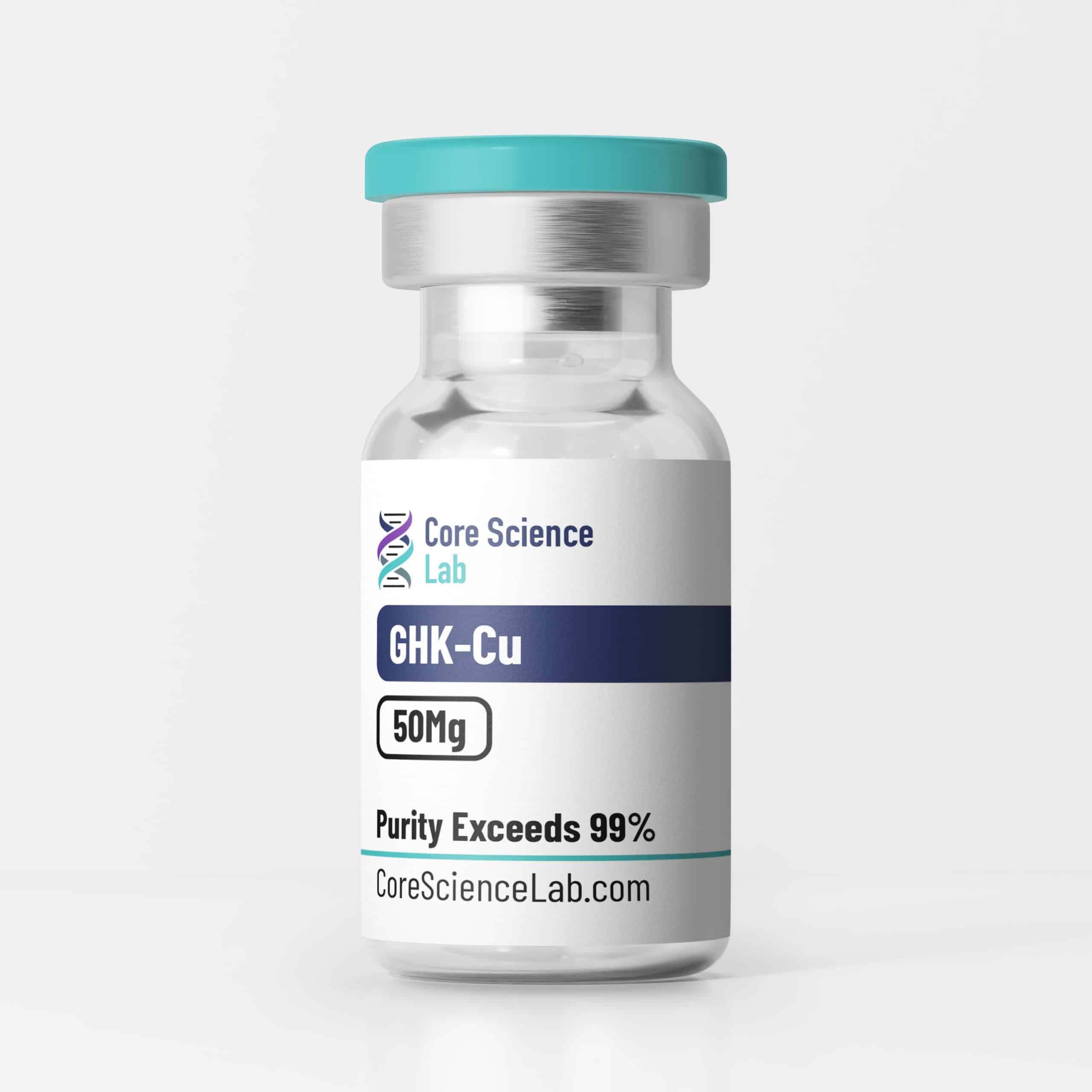
GHK-Cu (Glycyl-L-histidyl-L-lysine copper complex) is a synthetic form of a naturally occurring human tripeptide that possesses a high binding affinity for copper (II) ions. It is widely utilized in research to investigate tissue remodeling and skin regeneration through the modulation of multiple cellular pathways.
Distinct from simple copper salts, the GHK-Cu complex functions as a delivery system and a modulator of gene expression. Research indicates it influences genes relevant to nervous system function and cognitive decline. In laboratory settings, it is frequently employed to study the stimulation of connective tissue accumulation, angiogenesis, and the regulation of oxidative stress in various tissue models.
Biochemical Characteristics
Chemically, GHK-Cu is defined by its ability to facilitate the uptake of copper into cells, which is essential for the function of numerous enzymes involved in collagen synthesis and antioxidant defense.
- Sequence/Structure: Tripeptide (Gly-His-Lys) chelated with Copper (Cu2+).
- Permeability: Studies utilize various carrier systems, such as liposomes, to enhance the permeation and retention of GHK-Cu in target tissues for cosmetic and therapeutic modeling.
- Stability: The complex exhibits potent antioxidant properties and is capable of preventing metal-induced protein aggregation.
- Specificity: GHK-Cu modulates a broad spectrum of human genes, capable of resetting gene expression patterns in cancer cell lines such as MCF7 and PC3.
Chemical Properties
| Property |
Specification |
| Molecule Name |
GHK-Cu (Copper Peptide) |
| Synonyms |
Glycyl-L-histidyl-L-lysine-Cu2+; Copper Tripeptide-1 |
| Sequence |
Gly-His-Lys·Cu |
| Molecular Formula |
C₁₄H₂₂CuN₆O₄ (Complex) |
| Molecular Weight |
~401.91 g/mol (varies by salt/hydration) |
| Form |
Lyophilized Powder (Blue) |
| Purity |
≥99% (Verified via HPLC) |
| Solubility |
Soluble in water |
| Documentation |
COA available per lot; SDS available |
GHK-Cu is strictly for laboratory research and is commonly employed in the following investigational areas:
Wound Healing and Tissue Remodeling
GHK-Cu is a primary reagent in wound repair research. In vivo studies quantify its ability to stimulate connective tissue accumulation and accelerate wound closure. Experimental models demonstrate that GHK-Cu, particularly when encapsulated in liposomes, promotes cell proliferation and angiogenesis in scald wounds.
Pulmonary Inflammation and Fibrosis
In respiratory research, GHK-Cu is investigated for its anti-inflammatory and antioxidant effects. Studies utilizing bleomycin-induced pulmonary fibrosis models observe its potential to reduce inflammation. Additionally, it is used to assess the attenuation of cigarette smoke-induced emphysema and oxidative stress pathways.
Neuroprotection and Cognitive Function
Research into neurodegenerative diseases employs GHK-Cu to study its effects on central nervous system stability. It has been observed to prevent copper- and zinc-induced protein aggregation and cell death in vitro. Furthermore, in 5xFAD mouse models of Alzheimer’s disease, intranasal administration is studied for its ability to attenuate behavioral and neuropathological features.
Genomic Modulation in Oncology
GHK-Cu is utilized to study the modulation of gene expression in cancer research. Investigations involving human breast (MCF7) and prostate (PC3) cancer cells focus on the peptide’s ability to alter the expression of genes related to metastasis and cellular function.
Pathway / Mechanistic Context
The primary mechanisms of action for GHK-Cu in research settings involve copper transport, enzyme cofactor delivery, and transcriptional modulation.
- Gene Regulation: GHK-Cu affects the expression of numerous genes, resetting pathological gene patterns to a healthier state, including those involved in nerve function.
- Oxidative Stress Reduction: The complex functions as a potent antioxidant, neutralizing free radicals and reducing oxidative stress markers in models of lung injury and inflammation.
- Angiogenesis & ECM Synthesis: By delivering copper, a necessary cofactor for lysyl oxidase, GHK-Cu facilitates the cross-linking of collagen and elastin, thereby promoting angiogenesis and connective tissue density.
Preclinical Research Summary
Published preclinical literature documents investigations of GHK-Cu across multiple experimental models for pathway characterization and endpoint measurement:
- Acute Lung Injury: In LPS-induced acute lung injury mouse models, treatment with GHK-Cu was observed to ameliorate injury severity, establishing a link between the peptide and inflammatory suppression.
- Wound Repair: Research indicates that GHK-Cu-loaded nanoparticles or liposomes significantly accelerate wound healing rates and enhance antibacterial properties in experimental applications.
- Alzheimer’s Models: Preclinical data suggest that GHK peptide treatment can improve cognitive outcomes and reduce pathological markers in aggressive Alzheimer’s mouse models.
Form & Analytical Testing
This material is produced via robust chemical synthesis and supplied as a lyophilized (freeze-dried) powder.
- Lyophilization: Removes water content under vacuum to maintain compound integrity and extend shelf-life.
- Identity Verification: Each lot undergoes Mass Spectrometry (MS) to confirm molecular weight and identity.
- Purity Verification: High-Performance Liquid Chromatography (HPLC) is performed to ensure the product meets the ≥99% purity standard required for reproducible research data.
Referenced Citations
References are provided for informational purposes only and are not clinical claims.
- Pickart, L. (2008). The human tri-peptide GHK and tissue remodeling. Journal of Biomaterials Science, Polymer Edition, 19, 969 – 988. https://doi.org/10.1163/156856208784909435
- Pickart, L., Vasquez-Soltero, J., & Margolina, A. (2015). GHK Peptide as a Natural Modulator of Multiple Cellular Pathways in Skin Regeneration. BioMed Research International, 2015. https://doi.org/10.1155/2015/648108
- Dymek, M., Olechowska, K., Hąc-Wydro, K., & Sikora, E. (2023). Liposomes as Carriers of GHK-Cu Tripeptide for Cosmetic Application. Pharmaceutics, 15. https://doi.org/10.3390/pharmaceutics15102485
- Wang, X., Liu, B., Xu, Q., Sun, H., Shi, M., Wang, D., Guo, M., Yu, J., Zhao, C., & Feng, B. (2017). GHK‐Cu‐liposomes accelerate scald wound healing in mice by promoting cell proliferation and angiogenesis. Wound Repair and Regeneration, 25. https://doi.org/10.1111/wrr.12520
- Maquart, F., Bellon, G., Chaqour, B., Wegrowski, J., Patt, L., Trachy, R., Monboisse, J., Chastang, F., Birembaut, P., & Gillery, P. (1993). In vivo stimulation of connective tissue accumulation by the tripeptide-copper complex glycyl-L-histidyl-L-lysine-Cu2+ in rat experimental wounds. The Journal of clinical investigation, 92 5, 2368-76. https://doi.org/10.1172/JCI116842
- Hou, G., & Zhou, X. (2018). Antioxidant and anti-inflammation effect of GHK-Cu in bleomycin-induced pulmonary fibrosis. ILD/DPLD of known origin. https://doi.org/10.1183/13993003.CONGRESS-2018.PA2957
- Zhang, Q., Yan, L., Lu, J., & Zhou, X. (2022). Glycyl-L-histidyl-L-lysine-Cu2+ attenuates cigarette smoke-induced pulmonary emphysema and inflammation by reducing oxidative stress pathway. Frontiers in Molecular Biosciences, 9. https://doi.org/10.3389/fmolb.2022.925700
- Park, J., Lee, H., Kim, S., & Yang, S. (2016). The tri-peptide GHK-Cu complex ameliorates lipopolysaccharide-induced acute lung injury in mice. Oncotarget, 7, 58405 – 58417. https://doi.org/10.18632/oncotarget.11168
- Min, J., Sarlus, H., & Harris, R. (2024). Glycyl-l-histidyl-l-lysine prevents copper- and zinc-induced protein aggregation and central nervous system cell death in vitro. Metallomics: Integrated Biometal Science, 16. https://doi.org/10.1093/mtomcs/mfae019
- Tucker, M., Liao, G., Park, J., Rosenfeld, M., Wezeman, J., Mangalindan, R., Ratner, D., Darvas, M., & Ladiges, W. (2023). Behavioral and neuropathological features of Alzheimer’s disease are attenuated in 5xFAD mice treated with intranasal GHK peptide. bioRxiv. https://doi.org/10.1101/2023.11.20.567908
- Pickart, L., Vasquez-Soltero, J., & Margolina, A. (2017). The Effect of the Human Peptide GHK on Gene Expression Relevant to Nervous System Function and Cognitive Decline. Brain Sciences, 7. https://doi.org/10.3390/brainsci7020020
- Sun, L., Li, A., Hu, Y., Li, Y., Shang, L., & Zhang, L. (2019). Self‐Assembled Fluorescent and Antibacterial GHK‐Cu Nanoparticles for Wound Healing Applications. Particle & Particle Systems Characterization, 36. https://doi.org/10.1002/ppsc.201800420
- Pickart, L., Biology, F., & Margolina, A. (2021). Modulation of Gene Expression in Human Breast Cancer MCF7 and Prostate Cancer PC3 Cells by the Human Copper-Binding Peptide GHK-Cu. https://doi.org/10.21926/OBM.GENET.2102128
RESEARCH USE ONLY
This product is intended strictly for laboratory research use only. It is not for human or veterinary use. It is not intended for diagnosis, treatment, cure, or prevention of any disease. All purchases are subject to our Terms of Service and Purity Guarantee.
No COAs available for this product.

Reviews
There are no reviews yet.