
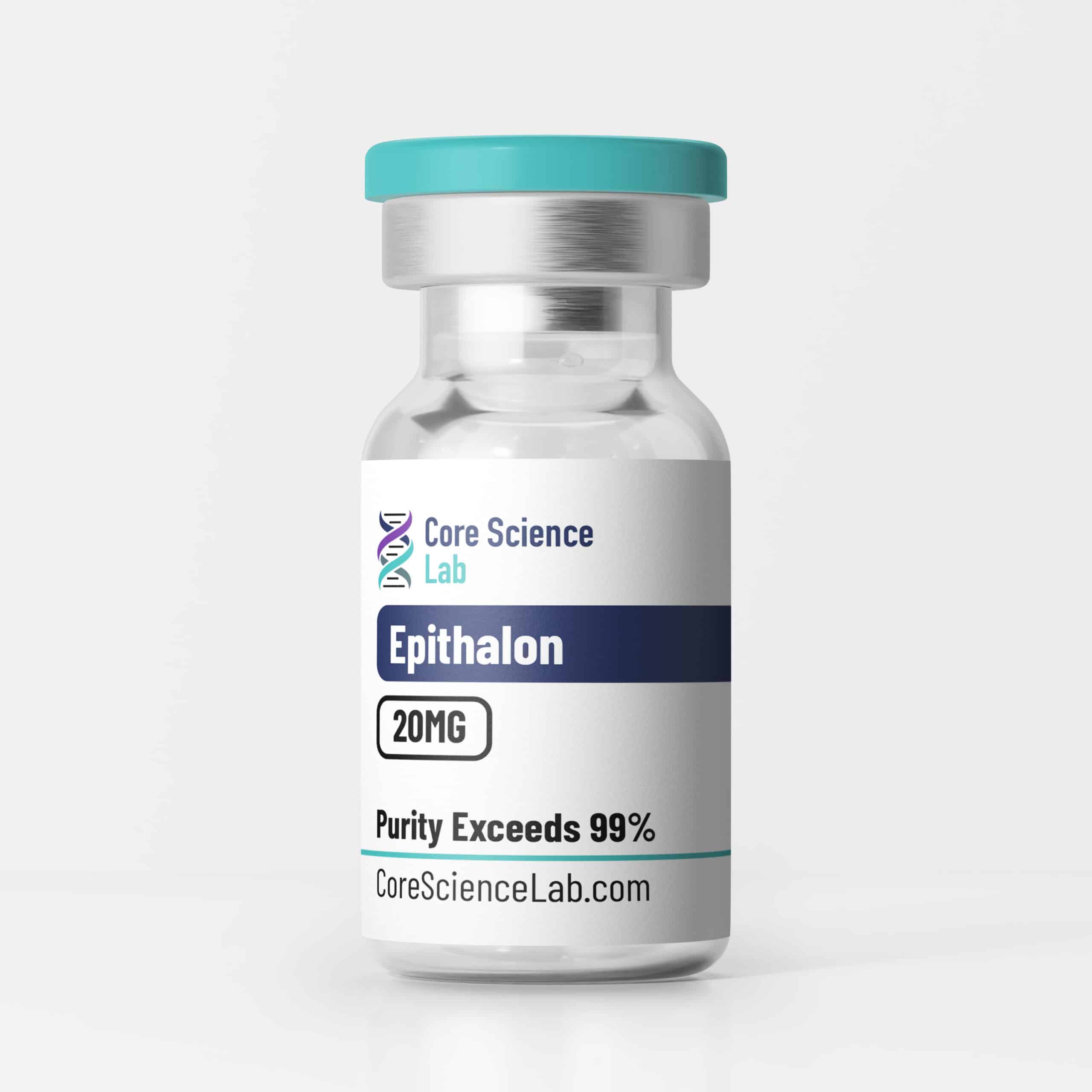
A high-purity, lyophilized synthetic tetrapeptide (Ala-Glu-Asp-Gly) designed to mimic the biological activity of the pineal gland extract epithalamin. Epithalon is extensively researched for its capacity to activate the enzyme telomerase, elongate telomeres in somatic cells, and modulate biomarkers of aging and oxidative stress.
Trust & Quality Verification
Purity Standard
Verified Analysis
Available
Shipping
Epithalon (also known as Epitalon) is a synthetic tetrapeptide research reagent (Ala-Glu-Asp-Gly) based on the analysis of amino acid sequences found in the pineal gland. It is primarily utilized in gerontological research as a potent “geroprotector” due to its ability to interact with the epigenome and induce telomerase activity.
In laboratory settings, Epithalon is a critical tool for studying the “Hayflick limit”—the number of times a normal human cell population will divide before cell division stops. Research indicates that Epithalon can overcome this division limit in human somatic cells by promoting the elongation of telomeres, the protective caps at the ends of chromosomes. Additionally, it is investigated for its role in regulating antioxidant defense systems and restoring hormonal sensitivity in aged models.
Biochemical Characteristics
Chemically, Epithalon is the tetrapeptide L-alanyl-L-glutamyl-L-aspartyl-glycine. It acts as a gene-switch modulator, initiating specific protein synthesis pathways.
Chemical Properties
| Property | Specification |
| Molecule Name | Epithalon |
| Synonyms | Epitalon; AGAG; Ala-Glu-Asp-Gly |
| Sequence | Ala-Glu-Asp-Gly |
| CAS Number | 307297-39-8 |
| Molecular Formula | C14H22N4O9 |
| Molecular Weight | 390.35 g/mol |
| Form | Lyophilized Powder |
| Purity | ≥99% (Verified via HPLC) |
| Solubility | Soluble in water and organic solvents (refer to SDS) |
| Documentation | COA available per lot; SDS available |
Epithalon is strictly for laboratory research and is commonly employed in the following investigational areas:
Telomere Biology and Cellular Senescence
Epithalon is the gold-standard peptide for inducing telomerase activity in culture. Researchers use it to study the mechanisms of telomere elongation and the retardation of cellular senescence in human somatic cells. It is utilized to investigate the potential for extending the proliferative lifespan of cells beyond their natural division limits.
Oncology and Tumor Suppression
The peptide is used in oncology research to study its inhibitory effects on spontaneous tumor incidence and specific carcinogenesis models. Studies involve measuring the expression of oncogenes (such as HER-2/neu) and observing tumor progression in colon and breast cancer models.
Lifespan and Aging Models
Epithalon is frequently employed in longevity studies using Drosophila melanogaster and rodent models. Researchers quantify changes in biomarkers of aging, mean lifespan, and the incidence of age-related pathologies to evaluate the peptide’s geroprotective potential.
Reproductive Aging
Recent investigations utilize Epithalon to study post-ovulatory aging. In mouse oocyte models, the peptide is applied to observe its protective effects against oxidative damage and chromosomal abnormalities, providing data on the preservation of gamete quality.
Pathway / Mechanistic Context
The primary mechanism of action for Epithalon involves epigenetic regulation and enzymatic activation.
Preclinical Research Summary
Published preclinical literature documents investigations of Epithalon across multiple experimental models:
Form & Analytical Testing
This material is produced via robust chemical synthesis and supplied as a lyophilized (freeze-dried) powder.
Referenced Citations
References are provided for informational purposes only and are not clinical claims.
RESEARCH USE ONLY
This product is intended strictly for laboratory research use only. It is not for human or veterinary use. It is not intended for diagnosis, treatment, cure, or prevention of any disease. All purchases are subject to our Terms of Service and Purity Guarantee.
No COAs available for this product.
RESEARCH USE ONLY
This product is intended strictly for laboratory research use only. It is not for human or veterinary use. It is not intended for diagnosis, treatment, cure, or prevention of any disease. All purchases are subject to our Terms of Service and Purity Guarantee.
Reviews
There are no reviews yet.