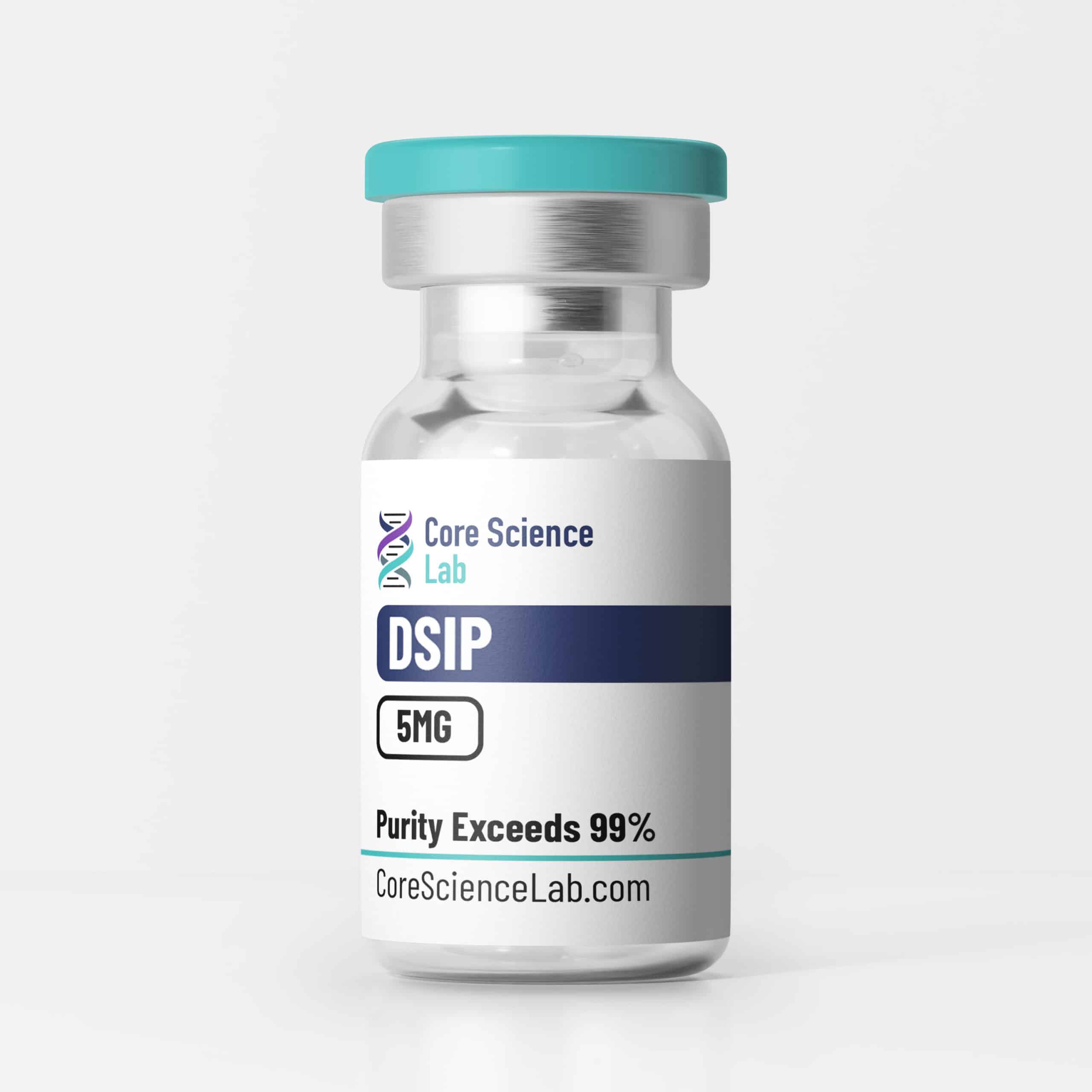
DSIP (Delta Sleep-Inducing Peptide) (5mg)

A high-purity, lyophilized synthetic nonapeptide structurally identical to endogenous Delta Sleep-Inducing Peptide (DSIP). It is widely investigated in research models for its ability to modulate sleep architecture, regulate neuroendocrine function, and exhibit potent stress-protective and antioxidant properties during states of physiological overload.

Trust & Quality Verification

  • Research Use Only. Not for human or veterinary use
  • Verifiable purity via HPLC & Mass Spectrometry
  • Supplied as lyophilized powder for stability during transport and storage
  • Certificate of Analysis (COA) available per lot
  • Safety Data Sheet (SDS) available

SKU: V-DSIP-5MG Category:

99%+

Purity Standard

HPLC

Verified Analysis

COA

Available

Free

Shipping

Description

Delta Sleep-Inducing Peptide (DSIP) is an amphiphilic, 9-amino-acid regulatory neuropeptide first isolated in 1977 from the cerebral venous blood of rabbits following induced slow-wave sleep. While its initial characterization focused heavily on its ability to induce delta rhythm electroencephalogram (EEG) activity and promote sleep, subsequent research has revealed that DSIP functions as a highly pleiotropic neuromodulator.

Researchers utilize this molecule to investigate its broad systemic effects, which include the modulation of the hypothalamic-pituitary-adrenal (HPA) axis, the stimulation of specific gonadotropins, and the attenuation of stress-induced metabolic disturbances. Due to its ability to readily cross the blood-brain barrier, DSIP is heavily employed in neurobiological assays examining oxidative phosphorylation, hypoxia-induced neurotoxicity, and the buffering of central nervous system stress responses.

Biochemical Characteristics

  • Sequence/Structure: Nonapeptide (9 amino acids); Trp-Ala-Gly-Gly-Asp-Ala-Ser-Gly-Glu (WAGGDASGE).
  • Permeability: Exhibits amphiphilic properties that allow it to successfully cross the blood-brain barrier (BBB) without requiring a carrier molecule, facilitating direct central nervous system interaction.
  • Stability: Supplied as a lyophilized salt to ensure long-term stability. In physiological models, endogenous DSIP possesses a relatively short half-life and often complexes with carrier proteins; synthetic administration allows for rapid, acute receptor engagement.
  • Specificity: Acts as a broad neuromodulator, specifically altering the release of corticotropin, luteinizing hormone, and somatoliberin, while directly influencing mitochondrial bioenergetics.

Chemical Properties

Property Specification
Molecule Name DSIP (Delta Sleep-Inducing Peptide)
Synonyms Emideltide
Molecular Formula C35H48N10O15
Molecular Weight 848.81 g/mol
Form Lyophilized Powder
Purity ≥99% (Verified via HPLC)
Solubility Soluble in water and aqueous buffers (refer to SDS)
Documentation COA and SDS available per lot

DSIP is strictly for laboratory research and is commonly employed in the following investigational areas:

Sleep Architecture and EEG Dynamics

Research models utilize DSIP to evaluate its impact on sleep-wake cycles and cerebral electrical activity. Investigations focus on quantifying increases in delta wave electrical output during polysomnography and assessing the peptide’s ability to facilitate natural slow-wave sleep induction without the suppressive neurological effects of traditional hypnotic sedatives.

Stress Allostasis and Neuroprotection

Experimental protocols employ the molecule to characterize its effects on cellular stress. Studies assess its capacity to normalize mitochondrial respiration and maintain ATP production under states of acute experimental hypoxia, mapping its potent antioxidant and neuroprotective capabilities.

Neuroendocrine Regulation

In physiological research, DSIP is used as a chemical probe to study the complex regulatory loops of the hypothalamus and pituitary gland. Researchers evaluate its ability to decrease basal corticotropin (ACTH) levels, effectively blunting the hormonal stress response, while simultaneously stimulating the release of luteinizing hormone (LH) and modulating the somatotropic axis.

Blood-Brain Barrier Transport Models

Because of its unique sequence, DSIP is widely investigated in pharmacokinetic models studying transmembrane diffusion. Assays focus on how the peptide achieves rapid bidirectional flux across brain microvessel endothelial cells without relying on saturable transport proteins.

Pathway / Mechanistic Context

The primary mechanism of action for DSIP in research settings involves its pleiotropic regulatory influence on endocrine axes, mitochondrial bioenergetics, and cerebral electrical rhythms.

  • Mitochondrial Bioenergetics: DSIP significantly increases the efficiency of oxidative phosphorylation in brain mitochondria. Under hypoxic stress, it preserves the rate of ADP phosphorylation and oxygen consumption, preventing the metabolic collapse of the cell.
  • HPA Axis Modulation: Functions as an antagonist to excessive stress signaling by suppressing the release of corticotropin, thereby lowering downstream glucocorticoid (cortisol/corticosterone) spikes during induced emotional or physical stress.
  • Limbic System Inhibition: Alters the expression of immediate-early genes (such as c-Fos) in the paraventricular nucleus and lateral septum during acute stress, indicating a direct buffering effect on neuronal excitability in the limbic system.

Preclinical Research Summary

Published preclinical literature documents the extensive investigation of DSIP across diverse experimental models focusing on neurology, endocrinology, and metabolic stress.

  • In polysomnographic animal models, peripheral administration of DSIP successfully crossed the blood-brain barrier and significantly increased EEG output in the delta wave range, confirming its primary sleep-modulating properties.
  • Pharmacokinetic studies using primary cultures of brain microvessel endothelial cell monolayers confirmed that intact DSIP penetrates the blood-brain barrier rapidly via simple transmembrane diffusion.
  • Investigations into endocrine output demonstrated that DSIP microinjections directly into the hypothalamus significantly elevated luteinizing hormone (LH) levels while simultaneously inhibiting the secretion of somatostatin.
  • In models of experimental hypoxia, pretreatment with DSIP completely inhibited hypoxia-induced reductions in mitochondrial respiratory activity, demonstrating profound stress-protective and antioxidant actions.
  • Behavioral and molecular models showed that DSIP administration dramatically reduced the induction of Fos-immunoreactive cells in the limbic structures of rats subjected to acute emotional stress.

Form & Analytical Testing

  • Synthesis: Solid-Phase Peptide Synthesis (SPPS).
  • Lyophilization: Removes water content under vacuum to maintain compound integrity and extend shelf-life.
  • Identity Verification: Mass Spectrometry (MS) to confirm molecular weight and identity.
  • Purity Verification: High-Performance Liquid Chromatography (HPLC) is performed to ensure the product meets the purity standard.

Storage & Handling

Stable at room temperature for up to 90 days. For long-term storage, keep at -20C (-4F) or colder.

Once mixed with a solvent (e.g., bacteriostatic water), the solution must be stored at 4C (39F) and utilized within 30 days. Avoid repeated freeze-thaw cycles, as this degrades the peptide structure.

Referenced Citations

References are provided for informational purposes only and are not clinical claims.

  • Graf, M. V., & Kastin, A. J. (1986). Delta-sleep-inducing peptide (DSIP): an update. Peptides, 7(6), 1165-1187. https://doi.org/10.1016/0196-9781(86)90148-8
  • Khvatova, E. M., Samartsev, V. N., Zagoskin, P. P., et al. (2003). Delta sleep inducing peptide (DSIP): effect on respiration activity in rat brain mitochondria and stress protective potency under experimental hypoxia. Peptides, 24(2), 307-311. https://doi.org/10.1016/s0196-9781(03)00040-8
  • Zlokovic, B. V., Segal, M. B., Davson, H., & Jankov, R. M. (1988). Passage of delta sleep-inducing peptide (DSIP) across the blood-cerebrospinal fluid barrier. Peptides, 9(3), 533-538. https://doi.org/10.1016/0196-9781(88)90160-X
  • Raeissi, K. L., & Audus, K. L. (1989). In-vitro Characterization of Blood-brain Barrier Permeability to Delta Sleep-inducing Peptide. Journal of Pharmacy and Pharmacology, 41(12), 848-852. https://doi.org/10.1111/j.2042-7158.1989.tb06385.x
  • Kafi, S., Monnier, M., & Gaillard, J. M. (1979). The delta-sleep inducing peptide (DSIP) increases duration of sleep in rats. Neuroscience Letters, 13(2), 169-172. https://doi.org/10.1016/0304-3940(79)90036-3
  • Sudakov, K. V., Umriukhin, P. E., Koplik, E. V., & Anokhin, K. V. (2001). Delta-Sleep Inducing Peptide (DSIP) and ACTH (4-10) Analogue Influence Fos-Induction in the Limbic Structures of the Rat Brain Under Emotional Stress. Stress, 4(2), 137-145. https://doi.org/10.3109/10253890109115728
  • Iyer, K. S., & McCann, S. M. (1987). Delta sleep inducing peptide (DSIP) stimulates the release of LH but not FSH via a hypothalamic site of action in the rat. Brain Research Bulletin, 19(5), 535-538. https://doi.org/10.1016/0361-9230(87)90069-4
  • Gray, R. A., Vander Velde, D. G., Burke, C. J., Manning, M. C., Middaugh, C. R., & Borchardt, R. T. (1994). Delta-Sleep-Inducing Peptide: Solution Conformational Studies of a Membrane-Permeable Peptide. Biochemistry, 33(13), 3778-3783. https://doi.org/10.1021/bi00172a006
  • Mikhaleva, I. I., et al. (2021). DSIP-Like KND Peptide Reduces Brain Infarction in C57Bl/6 and Reduces Myocardial Infarction in SD Rats When Administered during Reperfusion. Biomedicines, 9(4), 407. https://doi.org/10.3390/biomedicines9040407
  • Hui, M. P., Lajtha, A., & Hui, K. S. (1993). Characterization of the release and metabolism of delta sleep-inducing peptide (DSIP) in the rat brain. Neuropeptides, 24(3), 131-138. https://doi.org/10.1016/0143-4179(93)90076-M
  • Stable at room temperature for up to 90 days. For long-term storage, keep at -20°C (-4°F) or colder.
  • Once mixed with a solvent (e.g., bacteriostatic water), the solution must be stored at 4 °C (39°F) and utilized within 30 days. Avoid repeated freeze-thaw cycles, as this degrades the peptide structure.

RESEARCH USE ONLY

This product is intended strictly for laboratory research use only. It is not for human or veterinary use. It is not intended for diagnosis, treatment, cure, or prevention of any disease. All purchases are subject to our Terms of Service and Purity Guarantee.
No COAs available for this product.

Reviews

There are no reviews yet.

Be the first to review “DSIP (Delta Sleep-Inducing Peptide) (5mg)”

Your email address will not be published. Required fields are marked *

RESEARCH USE ONLY

This product is intended strictly for laboratory research use only. It is not for human or veterinary use. It is not intended for diagnosis, treatment, cure, or prevention of any disease. All purchases are subject to our Terms of Service and Purity Guarantee.
0