
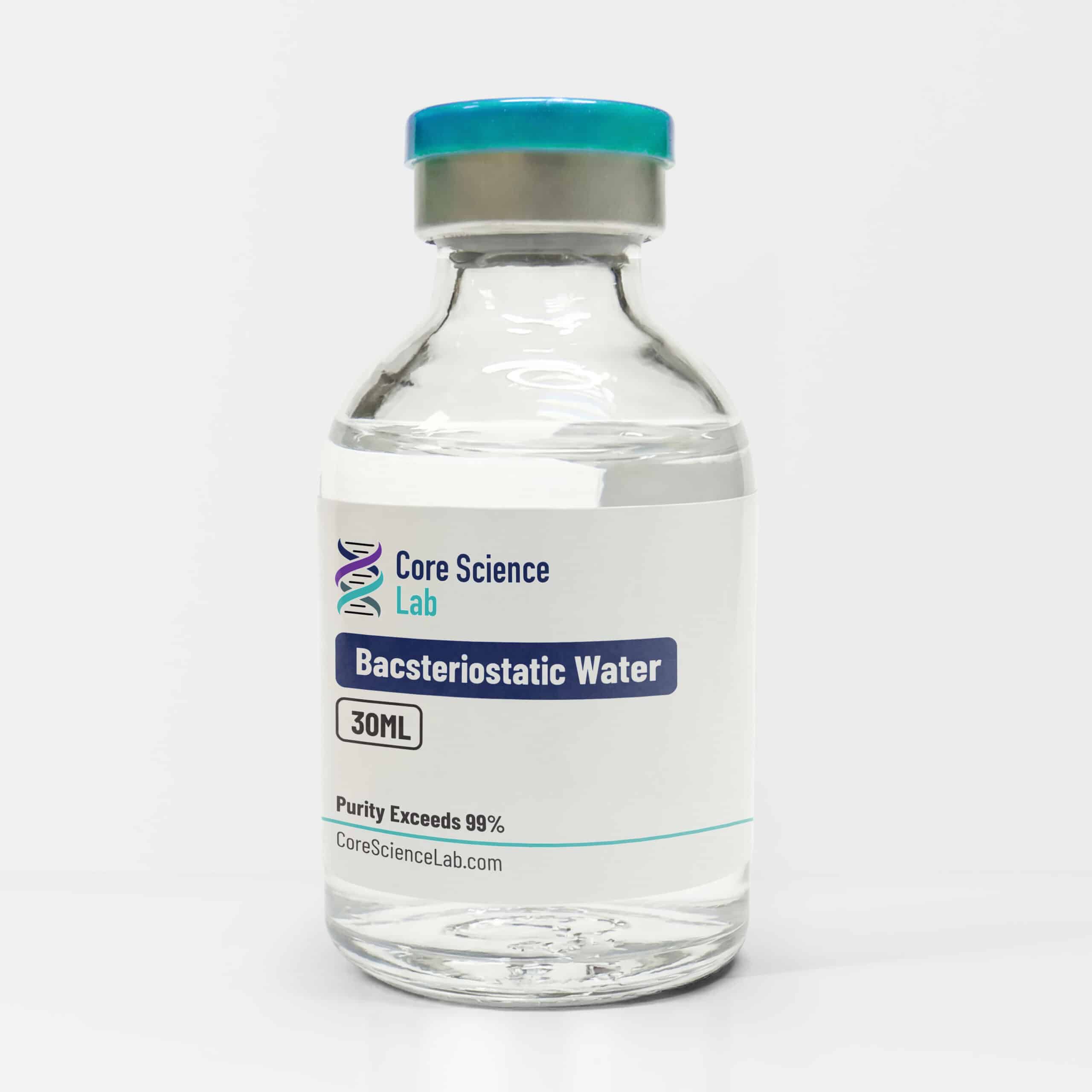
High-purity, sterile filtered water formulated with 1% benzyl alcohol, utilized as a stable reconstitution solvent for lyophilized research reagents and peptide solubilization.
Trust & Quality Verification
Purity Standard
Verified Analysis
Available
Shipping
Bacteriostatic Water (0.9% – 1% Benzyl Alcohol) is a sterile preparation of highly purified water containing benzyl alcohol added as a bacteriostatic preservative. It is supplied strictly for laboratory research use as a diluent or solvent.
Researchers utilize this solution primarily for the reconstitution of lyophilized (freeze-dried) peptides, proteins, and small molecules. Unlike standard sterile water, the inclusion of benzyl alcohol allows for the inhibition of bacterial proliferation, thereby preserving the integrity of dissolved research materials over extended experimental timelines in multi-use settings.
Chemically, this product is a mixture comprising Oxidane (Water) and Phenylmethanol (Benzyl Alcohol). The benzyl alcohol component functions as a bacteriostat, preventing the replication of bacteria by disrupting cell membrane integrity and inhibiting protein function in potential contaminants.
| Property | Specification |
| Molecule Name | Bacteriostatic Water |
| Active Agent | Benzyl Alcohol (Preservative) |
| CAS Number | 7732-18-5 (Water); 100-51-6 (Benzyl Alcohol) |
| Molecular Formula | H2O (Solvent); C7H8O (Preservative) |
| Form | Liquid Solution |
| Volume | 30 mL |
| Purity | Ultra-pure, Sterile Filtered |
| Solubility | Miscible with water-soluble compounds |
| Documentation | COA and SDS available per lot |
Bacteriostatic Water is strictly for laboratory research and is commonly employed in the following investigational areas:
Peptide Reconstitution
The primary application of this solvent is the solubilization of lyophilized peptides. The presence of benzyl alcohol prevents bacterial contamination upon the introduction of the solvent to the peptide vial, allowing researchers to maintain the solution for longer durations compared to reconstitution with non-bacteriostatic sterile water.
Dilution and Assay Preparation
In cellular assays and biochemical workflows, this solution is used to dilute concentrated stock solutions to working concentrations. It serves as a stable vehicle for delivering research compounds to in vitro test systems where maintenance of sterility is critical.
Shelf-Life Extension of Reagents
Research indicates that aqueous solutions of peptides are susceptible to hydrolysis and microbial degradation. The bacteriostatic properties of this water help mitigate microbial risks, thereby extending the usable window of reconstituted research materials stored at 4C (39F).
The primary mechanistic function of Bacteriostatic Water in research settings is preservation via bacterial inhibition.
As a fundamental laboratory reagent, Bacteriostatic Water is ubiquitous in preclinical research:
This material is produced via robust filtration and sterilization processes.
Identity Verification: The presence of benzyl alcohol is verified to ensure it meets the specified concentration (approx. 1%) required for bacteriostatic efficacy.
Stable at room temperature 20C to 25C (68F to 77F).
Once opened or used to reconstitute a peptide, the resulting solution is typically stored at 2 °C to 8 °C (36°F to 46°F) to preserve the stability of the dissolved peptide. Refer to the specific peptide’s storage guidelines for the reconstituted product.
RESEARCH USE ONLY
This product is intended strictly for laboratory research use only. It is not for human or veterinary use. It is not intended for diagnosis, treatment, cure, or prevention of any disease. All purchases are subject to our Terms of Service and Purity Guarantee.
No COAs available for this product.
RESEARCH USE ONLY
This product is intended strictly for laboratory research use only. It is not for human or veterinary use. It is not intended for diagnosis, treatment, cure, or prevention of any disease. All purchases are subject to our Terms of Service and Purity Guarantee.
Reviews
There are no reviews yet.