
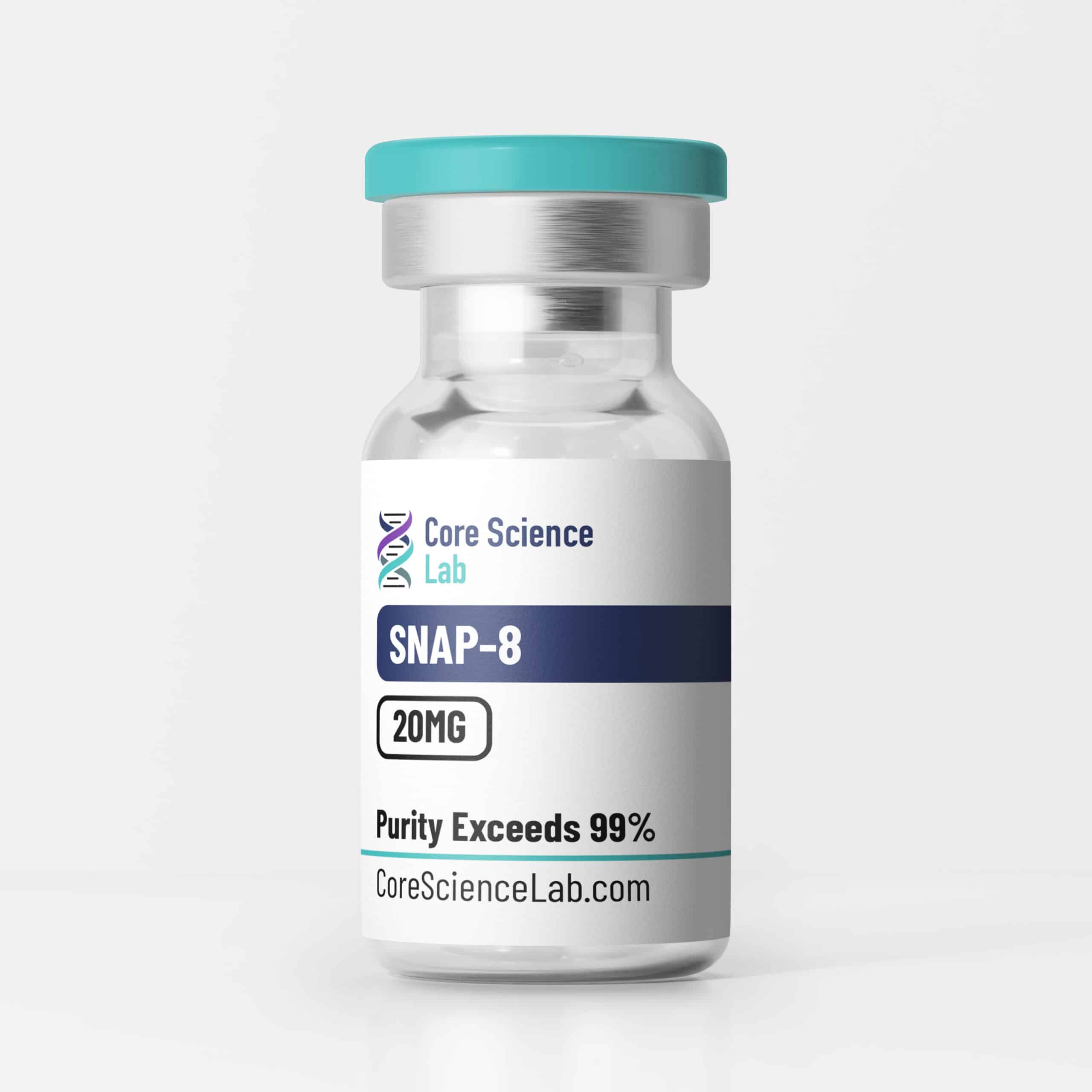
A high-purity, lyophilized synthetic octapeptide analogue mimicking the N-terminal end of SNAP-25. Characterized for research applications involving SNARE complex destabilization, neurotransmitter release modulation, and neuromuscular junction dynamics.
Trust & Quality Verification
Purity Standard
Verified Analysis
Available
Shipping
SNAP-8 (Acetyl Octapeptide-3) is a synthetic, elongated analogue of the well-characterized hexapeptide Argireline (Acetyl Hexapeptide-8). It is chemically designed to mimic the N-terminal sequence of SNAP-25 (Synaptosomal-Associated Protein, 25kDa), a critical membrane-bound protein required for the exocytosis of neurotransmitters.
In experimental models, SNAP-8 is utilized to investigate the structural dynamics of the SNARE (Soluble N-ethylmaleimide-sensitive factor Attachment protein REceptor) complex. By acting as a competitive inhibitor against endogenous SNAP-25, SNAP-8 allows researchers to study the dose-dependent attenuation of acetylcholine release and the subsequent downstream effects on muscle contraction signaling in isolated tissue and cellular assays.
Biochemical Characteristics
Chemically, SNAP-8 is characterized by an eight-amino-acid sequence that facilitates its targeted interaction with the SNARE complex formation process.
Chemical Properties
| Property | Specification |
| Molecule Name | SNAP-8 |
| Synonyms | Acetyl Octapeptide-3 |
| Molecular Formula | C41H70N16O16S |
| Molecular Weight | 1075.16 g/mol |
| Form | Lyophilized Powder |
| Purity | ≥99% (Verified via HPLC) |
| Solubility | Soluble in water and organic solvents (refer to SDS) |
| Documentation | COA available per lot; SDS available |
SNAP-8 is strictly for laboratory research and is commonly employed in the following investigational areas:
SNARE Complex Modulation
SNAP-8 is utilized as a chemical probe to study the biophysics of SNARE complex assembly. Researchers use this peptide to map the binding kinetics of synaptobrevin, syntaxin, and SNAP-25, and to quantify how structural analogues can destabilize this fusion machinery in isolated synaptic models.
Neurotransmitter Release Dynamics
In vitro neurobiological studies employ SNAP-8 to observe its inhibitory impact on vesicular exocytosis. Investigations focus on quantifying the reduction of acetylcholine and other catecholamines released into the synaptic cleft upon action potential stimulation.
Dermatological and Tissue Research
SNAP-8 is heavily researched in dermatological models investigating topical anti-aging mechanisms. Experimental models assess the compound’s ability to reduce biomechanical stress on tissue fibroblasts and epidermal constructs by mimicking botulinum toxin-like mechanisms without the associated macromolecular toxicity.
Pathway / Mechanistic Context
The primary mechanism of action for SNAP-8 in research settings revolves around the competitive inhibition of synaptic vesicle fusion.
Preclinical Research Summary
Published preclinical literature documents investigations of SNAP-8 and related SNARE-targeting peptides across multiple experimental models:
Form & Analytical Testing
This material is produced via robust chemical synthesis and supplied as a lyophilized (freeze-dried) powder.
Referenced Citations
References are provided for informational purposes only and are not clinical claims.
RESEARCH USE ONLY
This product is intended strictly for laboratory research use only. It is not for human or veterinary use. It is not intended for diagnosis, treatment, cure, or prevention of any disease. All purchases are subject to our Terms of Service and Purity Guarantee.
No COAs available for this product.
RESEARCH USE ONLY
This product is intended strictly for laboratory research use only. It is not for human or veterinary use. It is not intended for diagnosis, treatment, cure, or prevention of any disease. All purchases are subject to our Terms of Service and Purity Guarantee.
Reviews
There are no reviews yet.