
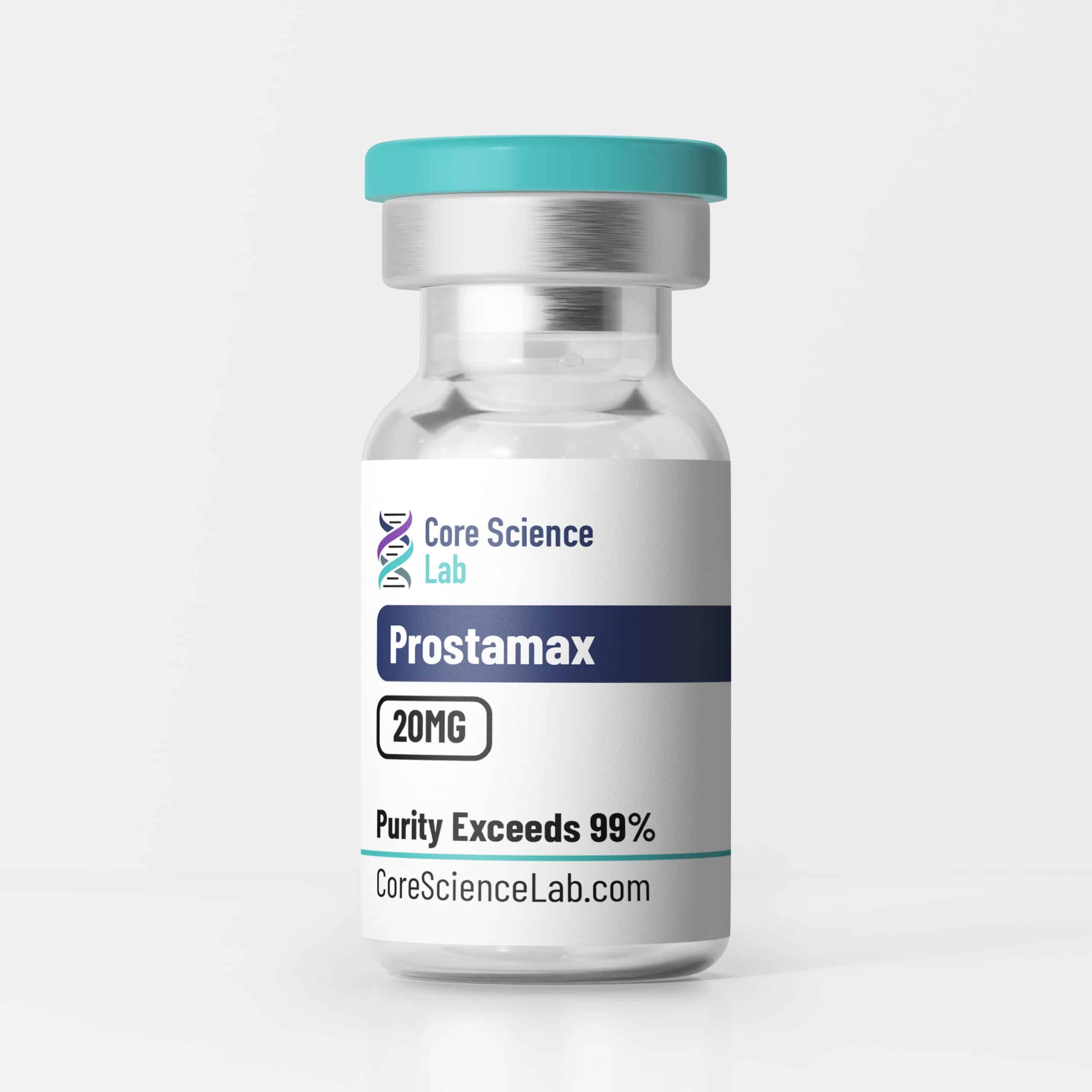
A high-purity, lyophilized synthetic tetrapeptide bioregulator (Lys-Glu-Asp-Pro) characterized for its profound epigenetic effects on chromatin condensation, cellular longevity, and targeted research applications in prostate health and immune modulation.
Trust & Quality Verification
Purity Standard
Verified Analysis
Available
Shipping
Prostamax is a synthetic ultrashort tetrapeptide research reagent (also known as a Khavinson peptide). It is chemically distinct for its ability to penetrate the cell nucleus and act directly on DNA chromatin, functioning as an epigenetic switch. Researchers employ this molecule to investigate the molecular mechanisms of tissue-specific bioregulation, specifically exploring its anti-aging and anti-inflammatory effects on the prostate gland, as well as its capacity to optimize the function and reactivate the chromatin of human lymphocytes in gerontological models.
Biochemical Characteristics
Chemical Properties
| Property | Specification |
| Molecule Name | Prostamax |
| Synonyms | KEDP Peptide; H-Lys-Glu-Asp-Pro-OH |
| PubChem CID | 9848296 |
| Molecular Formula | C20H33N5O9 |
| Molecular Weight | 487.51 g/mol |
| Form | Lyophilized Powder |
| Purity | $\ge99\%$ (Verified via HPLC) |
| Solubility | Soluble in water and aqueous buffers (refer to SDS) |
| Documentation | COA and SDS available per lot |
Prostamax is strictly for laboratory research and is commonly employed in the following investigational areas:
Prostate Health and Chronic Prostatitis
Research models utilize Prostamax to evaluate its efficacy in the management of prostate dysfunction. Investigations focus on the peptide’s anti-inflammatory properties, quantifying changes in tissue morphology and cellular recovery in experimental models of chronic aseptic prostatitis and its associated complications.
Epigenetics and Chromatin Reactivation
Experimental protocols employ this tetrapeptide to characterize its direct interactions with human DNA. Studies assess its influence on lymphocyte heterochromatin in situ, specifically measuring its ability to induce the decondensation (unrolling) of chromatin and reactivate ribosomal genes in senile subjects or aging cellular models.
Immune Modulation and Secretory Function
In immunological and gerontological research, Prostamax is used to study the broader peptide bioregulation of the immune system. Researchers evaluate how it affects the state of secretory immunity (e.g., in the saliva of elderly patients) and alters epigenetic controls to optimize lymphocyte function.
Pathway / Mechanistic Context
The primary mechanism of action for Prostamax in research settings involves its function as an epigenetic regulator and intracellular signaling molecule.
Preclinical Research Summary
Published preclinical literature documents investigations of Prostamax across diverse experimental models focusing on epigenetics, prostate health, and aging.
Form & Analytical Testing
Referenced Citations
References are provided for informational purposes only and are not clinical claims.
RESEARCH USE ONLY
This product is intended strictly for laboratory research use only. It is not for human or veterinary use. It is not intended for diagnosis, treatment, cure, or prevention of any disease. All purchases are subject to our Terms of Service and Purity Guarantee.
No COAs available for this product.
RESEARCH USE ONLY
This product is intended strictly for laboratory research use only. It is not for human or veterinary use. It is not intended for diagnosis, treatment, cure, or prevention of any disease. All purchases are subject to our Terms of Service and Purity Guarantee.
Reviews
There are no reviews yet.