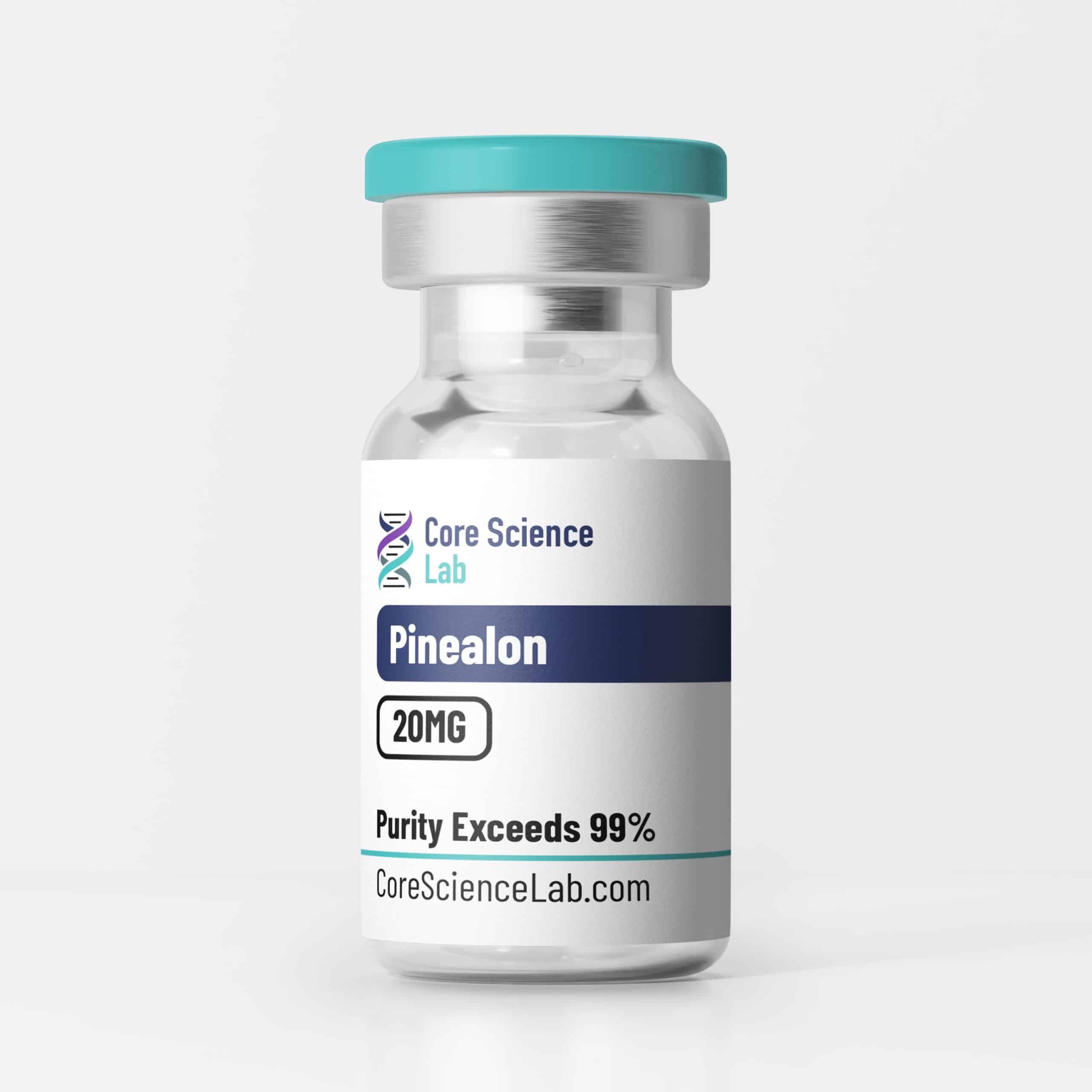
Pinealon (20mg)

A high-purity, lyophilized synthetic tripeptide bioregulator (Glu-Asp-Arg) characterized for its potent neuroprotective and geroprotective properties. It is extensively utilized in research to investigate its role in counteracting hypoxia, suppressing oxidative stress, and maintaining cellular homeostasis within the central nervous system.

Trust & Quality Verification

  • Research Use Only. Not for human or veterinary use
  • Verifiable purity via HPLC & Mass Spectrometry
  • Supplied as lyophilized powder for stability during transport and storage
  • Certificate of Analysis (COA) available per lot
  • Safety Data Sheet (SDS) available

Email when stock available

SKU: V-PINEA-20MG Category:

99%+

Purity Standard

HPLC

Verified Analysis

COA

Available

Free

Shipping

Description

Pinealon is a synthetic short tripeptide (Glu-Asp-Arg) research reagent. It is chemically distinct for its low molecular weight and specific ability to penetrate cellular and nuclear membranes to interact directly with DNA. Researchers employ this molecule to investigate the targeted epigenetic regulation of the central nervous system, specifically exploring its neuroprotective impact during oxidative stress, hypoxic injury, and experimental models of diabetes and hyperhomocysteinemia.

Biochemical Characteristics

  • Sequence/Structure: Peptide (3 amino acids); Glu-Asp-Arg (EDR).
  • Permeability: Demonstrates high cellular and nuclear membrane permeability, allowing for the penetration of the peptide directly into the nucleus (as observed in HeLa cells) to interact with deoxyribooligonucleotides.
  • Stability: Supplied as a lyophilized salt to ensure long-term stability and prevent hydrolytic degradation during storage.
  • Specificity: Functions as an intracellular signaling molecule that selectively regulates gene expression, mitigates reactive oxygen species (ROS) accumulation, and suppresses caspase-3 activation in neuronal tissues.

Chemical Properties

Property Specification
Molecule Name Pinealon
Synonyms EDR Peptide; L-Glutamyl-L-aspartyl-L-arginine
PubChem CID 10273502
Molecular Formula C15H26N6O8
Molecular Weight 418.41 g/mol
Form Lyophilized Powder
Purity 99% (Verified via HPLC)
Solubility Soluble in water and aqueous buffers (refer to SDS)
Documentation COA and SDS available per lot

Pinealon is strictly for laboratory research and is commonly employed in the following investigational areas:

Neuroprotection and Hypoxic Stress

Research models utilize Pinealon to evaluate its antihypoxic properties. Investigations focus on quantifying the regulation of cytokine content and the reduction of caspase-3 apoptotic activity in the brain during models of sharp hypoxic hypoxia, assessing overall neuronal viability and protection.

Epigenetics and Gene Expression

Experimental protocols employ this tripeptide to characterize its direct interaction with genetic material. Studies assess the penetration of fluorescence-labeled Pinealon into the nucleus and its specific in vitro interactions with DNA, mapping its role in the expression of NMDA receptor subunit genes (e.g., in the hippocampus of rats with experimental diabetes).

Metabolic and Circadian Regulation

In systemic research, Pinealon is used to study neurochemical disturbances caused by metabolic stress. Researchers evaluate its capacity to protect subjects from prenatal hyperhomocysteinemia and correct disturbances in the diurnal dynamics of hypothalamic norepinephrine content.

Pathway / Mechanistic Context

The primary mechanism of action for Pinealon in research settings involves its direct epigenetic modulation of neuronal cells and its potent antioxidant pathways.

  • Nuclear Penetration and DNA Interaction: Readily crosses the cell membrane and nuclear envelope to interact specifically with deoxyribooligonucleotides, directly regulating the transcription of key receptors (like NMDA subunits).
  • Oxidative Stress Suppression: Increases cell viability by inhibiting the accumulation of free radicals (ROS) and preventing the activation of stress-related signaling pathways.
  • Anti-Apoptotic and Neurochemical Modulation: Downregulates caspase-3 activity in response to hypoxia and stabilizes the diurnal rhythm of key neurotransmitters, such as hypothalamic norepinephrine.

Preclinical Research Summary

Published preclinical literature documents investigations of Pinealon (EDR) across diverse experimental models focusing on neurobiology, hypoxia, and metabolic stress.

  • In experimental diabetes models, Pinealon administration modulated learning behaviors and the expression of NMDA receptor subunit genes in the hippocampus.
  • In vitro studies with HeLa cells demonstrated that short, labeled peptides like Pinealon successfully penetrate the nucleus and specifically interact with DNA.
  • Research on cellular viability indicates that Pinealon protects against oxidative stress by suppressing free radical levels and activating proliferative processes.
  • In vivo studies demonstrated that the peptide regulates blood serum cytokines, reduces brain caspase-3 activity during sharp hypoxic hypoxia, and corrects circadian norepinephrine disturbances induced by hyperhomocysteinemia.

Form & Analytical Testing

  • Solid-Phase Peptide Synthesis
  • Lyophilization
  • Identity Verification: Mass Spectrometry (MS) to confirm molecular weight and identity.
  • Purity Verification: High-Performance Liquid Chromatography (HPLC) is performed to ensure the product meets the purity standard.

Referenced Citations

References are provided for informational purposes only and are not clinical claims.

  • Karantysh, G., Fomenko, M., Menzheritskii, A., Prokof’ev, V., Ryzhak, G., & Butenko, E. (2020). Effect of Pinealon on Learning and Expression of NMDA Receptor Subunit Genes in the Hippocampus of Rats with Experimental Diabetes. Neurochemical Journal, 14, 314-320. https://doi.org/10.1134/S181971242003006X.
  • Fedoreyeva, L., Kireev, I., Khavinson, V., & Vanyushin, B. (2011). Penetration of short fluorescence-labeled peptides into the nucleus in HeLa cells and in vitro specific interaction of the peptides with deoxyribooligonucleotides and DNA. Biochemistry (Moscow), 76, 1210-1219. https://doi.org/10.1134/S0006297911110022.
  • Khavinson, V., Ribakova, Y., Kulebiakin, K., Vladychenskaya, E., Kozina, L., Arutjunyan, A., & Boldyrev, A. (2011). Pinealon increases cell viability by suppression of free radical levels and activating proliferative processes.. Rejuvenation research, 14 5, 535-41 . https://doi.org/10.1089/rej.2011.1172.
  • Arutjunyan, A., Kozina, L., Stvolinskiy, S., Bulygina, Y., Mashkina, A., & Khavinson, V. (2012). Pinealon protects the rat offspring from prenatal hyperhomocysteinemia.. International journal of clinical and experimental medicine, 5 2, 179-85. https://pubmed.ncbi.nlm.nih.gov/22567179/.
  • Kozina, L. (2008). [Investigation of antihypoxic properties of short peptides].. Advances in gerontology = Uspekhi gerontologii, 21 1, 61-7. https://pubmed.ncbi.nlm.nih.gov/18546825/.
  • Mendzheritskii, A., Karantysh, G., Ryzhak, G., & Dem’ianenko, S. (2014). [Regulation of content of cytokines in blood serum and of caspase-3 activity in brains of old rats in model of sharp hypoxic hypoxia with Cortexin and Pinealon].. Advances in gerontology = Uspekhi gerontologii, 27 1, 94-7. https://pubmed.ncbi.nlm.nih.gov/25051764/.
  • Korenevskii, A., Arutyunyan, A., Milyutina, Y., Zaloznyaya, I., & Kozina, L. (2014). Pinealon corrects hyperhomocysteinemia-induced disturbances of the diurnal dynamics of hypothalamic norepinephrine content in female rats. Neurochemical Journal, 8, 205 – 207. https://doi.org/10.1134/S1819712414030088.
  • Stable at room temperature for up to 90 days. For long-term storage, keep at -20°C (-4°F) or colder.
  • Once mixed with a solvent (e.g., bacteriostatic water), the solution must be stored at 4 °C (39°F) and utilized within 30 days. Avoid repeated freeze-thaw cycles, as this degrades the peptide structure.

RESEARCH USE ONLY

This product is intended strictly for laboratory research use only. It is not for human or veterinary use. It is not intended for diagnosis, treatment, cure, or prevention of any disease. All purchases are subject to our Terms of Service and Purity Guarantee.
No COAs available for this product.

Reviews

There are no reviews yet.

Be the first to review “Pinealon (20mg)”

Your email address will not be published. Required fields are marked *

RESEARCH USE ONLY

This product is intended strictly for laboratory research use only. It is not for human or veterinary use. It is not intended for diagnosis, treatment, cure, or prevention of any disease. All purchases are subject to our Terms of Service and Purity Guarantee.
0