
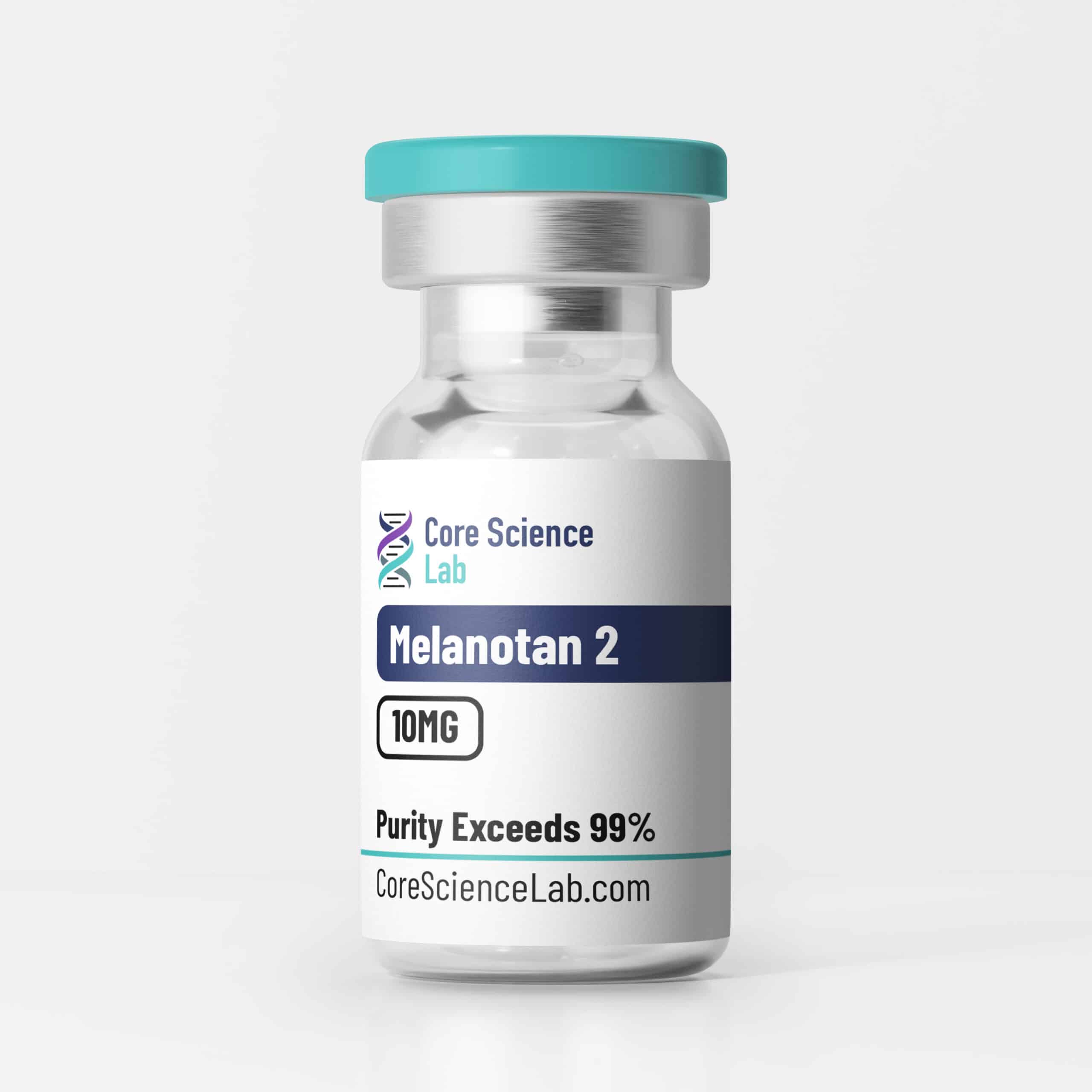
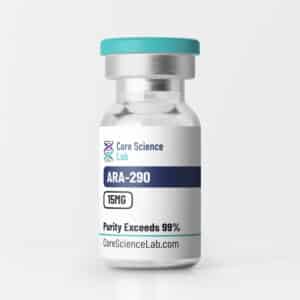
A high-purity, lyophilized synthetic cyclic heptapeptide analogue of alpha-melanocyte-stimulating hormone (α-MSH). Characterized for research applications involving non-selective melanocortin receptor (MCR) agonism, melanogenesis, and the neuroendocrine modulation of energy homeostasis.
Trust & Quality Verification
$50.00
Out of stock
Purity Standard
Verified Analysis
Available
Shipping
Melanotan 2 (MT-II) is a synthetic, cyclic lactam analogue of the endogenous peptide hormone α-MSH. In experimental models, it functions as a highly potent, non-selective agonist across multiple melanocortin receptor subtypes, specifically MC1R, MC3R, MC4R, and MC5R. Unlike linear α-MSH analogues (such as Melanotan 1), Melanotan 2 readily crosses the blood-brain barrier, making it a critical research reagent for investigating both central and peripheral melanocortin signaling pathways.
It is widely utilized in laboratory settings to study the downstream effects of peripheral MC1R activation, which regulates melanocyte activity and melanogenesis. Furthermore, central nervous system penetration allows researchers to map the complex physiological responses dictated by MC3R and MC4R activation, including profound alterations in lipid metabolism, thermogenesis, feeding behavior, and neurogenic sexual arousal pathways.
Biochemical Characteristics
Chemically, Melanotan 2 is truncated and cyclized to enhance resistance against enzymatic degradation, thereby possessing a significantly longer half-life than endogenous α-MSH.
Chemical Properties
| Property | Specification |
| Molecule Name | Melanotan 2 |
| Synonyms | MT-II; MT-2; Melanotan II |
| Molecular Formula | C50H69N15O9 |
| Molecular Weight | 1024.2 g/mol |
| Form | Lyophilized Powder |
| Purity | ≥99% (Verified via HPLC) |
| Solubility | Soluble in water and organic solvents (refer to SDS) |
| Documentation | COA available per lot; SDS available |
Melanotan 2 is strictly for laboratory research and is commonly employed in the following investigational areas:
Metabolic Homeostasis & Thermogenesis
Central administration of MT-2 is utilized as a chemical probe to study the suppression of caloric intake and the stimulation of energy expenditure. Researchers employ this peptide to quantify the activation of MC3R and MC4R in the hypothalamus, assessing its ability to increase uncoupling protein 1 (UCP1) levels in brown adipose tissue and modulate lipid mobilization.
Melanogenesis & Dermatological Assays
In in vitro skin models and melanocyte cultures, MT-2 is used to observe the direct stimulation of MC1R. Assays focus on quantifying eumelanin production, evaluating cellular photoprotection against UV-induced oxidative stress, and tracking the upregulation of PTEN pathways.
Neuromodulation and Addiction Pathways
Because MT-2 activates central MC4Rs, it is heavily utilized in neurobiological models of reward and addiction. Researchers investigate how melanocortin receptor agonism alters dopamine signaling in the nucleus accumbens, frequently studying its efficacy in blunting binge-like ethanol intake and altering reward-seeking behaviors.
Peripheral Nerve Regeneration
Experimental models evaluate MT-2 for its neuroprotective properties. Studies involve measuring the recovery of sciatic nerve function and the preservation of sensory nerve conduction velocity following mechanical injury or neurotoxic chemical exposure (e.g., cisplatin models).
Pathway / Mechanistic Context
The primary mechanism of action for Melanotan 2 in research settings involves the activation of G protein-coupled melanocortin receptors.
Preclinical Research Summary
Published preclinical literature documents investigations of Melanotan 2 across multiple experimental models for pathway characterization:
Form & Analytical Testing
This material is produced via robust chemical synthesis and supplied as a lyophilized (freeze-dried) powder.
Referenced Citations
References are provided for informational purposes only and are not clinical claims.
RESEARCH USE ONLY
This product is intended strictly for laboratory research use only. It is not for human or veterinary use. It is not intended for diagnosis, treatment, cure, or prevention of any disease. All purchases are subject to our Terms of Service and Purity Guarantee.
No COAs available for this product.
RESEARCH USE ONLY
This product is intended strictly for laboratory research use only. It is not for human or veterinary use. It is not intended for diagnosis, treatment, cure, or prevention of any disease. All purchases are subject to our Terms of Service and Purity Guarantee.
Reviews
There are no reviews yet.