
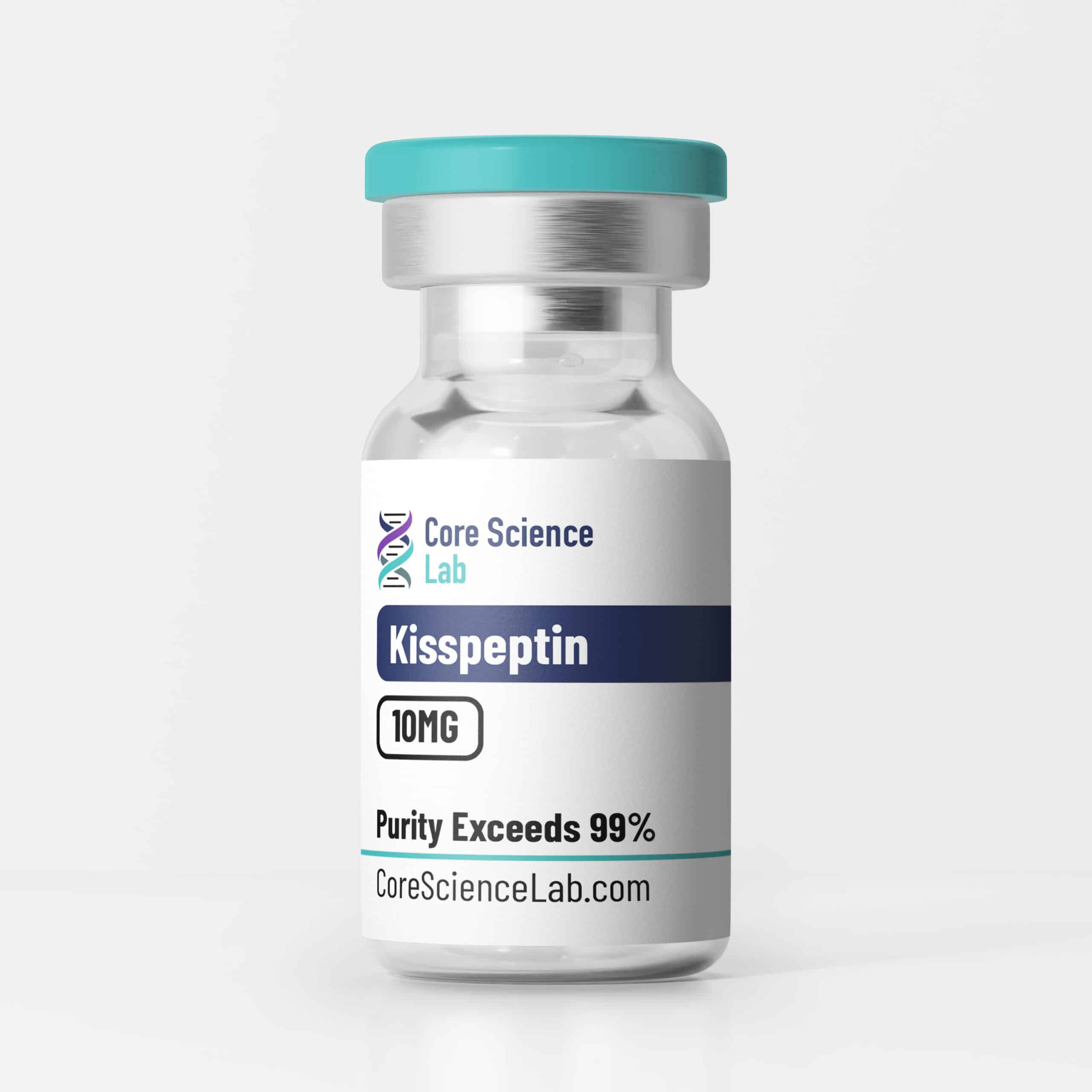
A potent, synthetic decapeptide agonist of the G-protein coupled receptor GPR54 (KISS1R), characterized for research applications involving the hypothalamic-pituitary-gonadal (HPG) axis, tumor metastasis inhibition, and neuroendocrine regulation.
Trust & Quality Verification
$45.00
Out of stock
Purity Standard
Verified Analysis
Available
Shipping
Kisspeptin (specifically the Kisspeptin-10 fragment) is an endogenous peptide derived from the KISS1 gene. It functions as the primary ligand for the G-protein coupled receptor GPR54 (also known as Kiss1R). Originally identified as “metastin” due to its ability to suppress metastasis in melanoma cell lines, Kisspeptin is now established as a master regulator of the reproductive axis, governing the secretion of Gonadotropin-Releasing Hormone (GnRH).
Beyond its classical endocrine roles, Kisspeptin is a subject of intense investigation in oncology and neurology. It is utilized in research to study the inhibition of cell migration and invasion in various cancer models. Emerging data also positions Kisspeptin as a probe for investigating neuroprotection against protein aggregation and the regulation of cardiovascular tissue remodeling.
Biochemical Characteristics
Chemically, Kisspeptin-10 represents the C-terminal decapeptide of the full-length Kisspeptin protein. This fragment retains full receptor binding affinity and biological potency.
Chemical Properties
| Property | Specification |
| Molecule Name | Kisspeptin-10 |
| Synonyms | Metastin (45-54); Kp-10 |
| Sequence | YNWNSFGLRF-NH2 |
| Molecular Formula | C₆₃H₇₈N₁₈O₁₄ |
| Molecular Weight | 1302.44 g/mol |
| Form | Lyophilized Powder |
| Purity | ≥99% (Verified via HPLC) |
| Solubility | Soluble in water and organic solvents (refer to SDS) |
| Documentation | COA available per lot; SDS available |
Kisspeptin is strictly for laboratory research and is commonly employed in the following investigational areas:
Hypothalamic-Pituitary-Gonadal (HPG) Axis Regulation
Kisspeptin is the standard control reagent for stimulating the release of GnRH in neuroendocrine models. Researchers utilize it to map the neural circuitry controlling puberty onset and reproductive feedback loops, specifically examining its stimulation of the HPG axis upon central or peripheral administration.
Oncology and Metastasis Inhibition
Referred to as “metastin,” Kisspeptin is heavily researched for its anti-metastatic properties. It is used to study the inhibition of cell migration and invasion in trophoblasts and cancer cell lines. Recent applications include its development as a radiopharmaceutical conjugate (DOTA-kisspeptin-10) for pan-tumor imaging and therapy.
Neuroprotection and Toxicology
In neurodegenerative research, Kisspeptin-10 is applied to cell models to assess its protective effects. Studies utilizing differentiated SH-SY5Y cells investigate the peptide’s ability to rescue cholinergic neurons from alpha-synuclein-induced toxicity, a key marker in Parkinson’s disease pathology.
Cardiovascular Remodeling and Hemodynamics
Kisspeptin is used to investigate tissue structure and vascular health. Research models involving cerebral aneurysms use the peptide to study the downregulation of Egr-1 expression as a preventative mechanism. Additionally, it is employed to measure collagen content increases in the myocardium mediated by focal adhesion kinase (FAK) activity.
Pathway / Mechanistic Context
The primary mechanism of action for Kisspeptin in research settings is the activation of the GPR54 receptor.
Preclinical Research Summary
Published preclinical literature documents investigations of Kisspeptin across multiple experimental models for pathway characterization and endpoint measurement:
Form & Analytical Testing
This material is produced via robust solid-phase peptide synthesis and supplied as a lyophilized (freeze-dried) powder.
Referenced Citations
References are provided for informational purposes only and are not clinical claims.
RESEARCH USE ONLY
This product is intended strictly for laboratory research use only. It is not for human or veterinary use. It is not intended for diagnosis, treatment, cure, or prevention of any disease. All purchases are subject to our Terms of Service and Purity Guarantee.
No COAs available for this product.
RESEARCH USE ONLY
This product is intended strictly for laboratory research use only. It is not for human or veterinary use. It is not intended for diagnosis, treatment, cure, or prevention of any disease. All purchases are subject to our Terms of Service and Purity Guarantee.
Reviews
There are no reviews yet.