
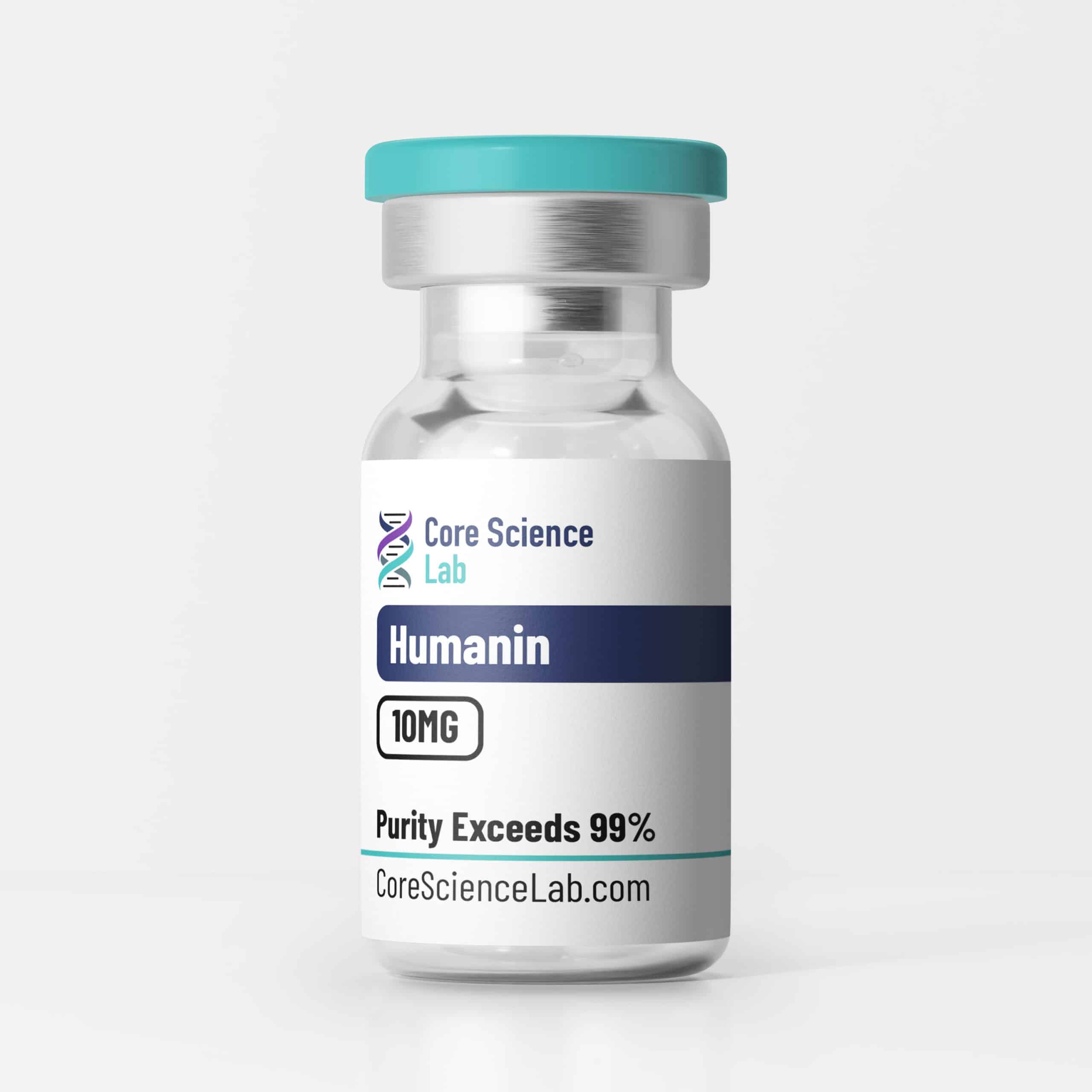
A high-purity, lyophilized synthetic 24-amino-acid mitochondrial-derived peptide (MDP). It is widely characterized for research applications involving profound cytoprotection, neuroprotection against oxidative stress, BAX-mediated apoptosis inhibition, and the regulation of systemic metabolic homeostasis.
Trust & Quality Verification
$99.00
1 in stock
Purity Standard
Verified Analysis
Available
Shipping
Humanin is a naturally occurring micropeptide transcribed directly from the 16S ribosomal RNA region of the mitochondrial genome (mtDNA). Originally identified during genomic screens for factors that rescue neurons from familial Alzheimer’s disease mutants, Humanin has since been recognized in experimental pharmacology as a highly pleiotropic, broad-spectrum survival factor.
In laboratory settings, synthetic Humanin is utilized as a chemical probe to study cellular resilience, mitochondrial stress responses, and targeted apoptosis evasion. Because it is capable of operating through both intracellular protein-protein interactions and extracellular receptor binding, researchers employ this peptide across diverse mammalian models to investigate the buffering of amyloid-beta (Aβ) toxicity, the suppression of reactive oxygen species (ROS), and the modulation of the IGF-1 metabolic axis.
Biochemical Characteristics
Chemically, Humanin is an amphipathic polypeptide engineered to maintain robust stability while interacting with cytosolic apoptotic mediators and complex membrane receptors.
Chemical Properties
| Property | Specification |
| Molecule Name | Humanin |
| Synonyms | HN; Mitochondrial-derived peptide HN; MTRNR2-encoded peptide |
| Molecular Formula | C119H204N34O32S2 |
| Molecular Weight | 2687.2 g/mol |
| Form | Lyophilized Powder |
| Purity | ≥99% (Verified via HPLC) |
| Solubility | Soluble in water and aqueous buffers (refer to SDS) |
| Documentation | COA available per lot; SDS available |
Humanin is strictly for laboratory research and is commonly employed in the following investigational areas:
Neurodegeneration and Amyloid-Beta Toxicity
Humanin is a foundational reagent in neurobiological models of Alzheimer’s disease. Researchers apply the peptide to cultured neurons to quantify its ability to suppress neurotoxicity induced by various amyloid-beta fragments, preserving synaptic plasticity and completely preventing early-stage caspase activation.
Mitochondrial Bioenergetics and Apoptosis
In experimental models of hypoxia, ischemia, and starvation, Humanin is used to map intrinsic apoptotic pathways. Assays focus on how the peptide’s direct physical interaction with BAX prevents mitochondrial membrane permeabilization, thereby preserving ATP production and oxidative phosphorylation efficiency under extreme distress.
Metabolic Homeostasis and Glucoregulation
Physiological studies employ Humanin to observe its regulatory effects on metabolism and the endocrine system. Researchers evaluate its capacity to interact with the IGF-1/IGFBP-3 axis to improve hypothalamic insulin sensitivity, regulate hepatic glucose output, and normalize systemic energy expenditure.
Cardiovascular Ischemia and Endothelial Function
Due to its profound cytoprotective traits, Humanin is widely investigated in cardiovascular models. Experimental protocols assess its utility in reducing myocardial infarct size, mitigating oxidative damage in cardiomyocytes, and preventing oxidized LDL-induced apoptosis in human endothelial cells.
Pathway / Mechanistic Context
The primary mechanism of action for Humanin in research settings is dual-modal, orchestrating survival through both direct intracellular binding and extracellular signal transduction.
Preclinical Research Summary
Published preclinical literature documents investigations of Humanin across multiple distinct experimental models:
Form & Analytical Testing
This material is produced via robust solid-phase chemical synthesis and supplied as a lyophilized (freeze-dried) powder.
Storage & Handling
Stable at room temperature for up to 90 days. For long-term storage, keep at -20C (-4F) or colder. Once mixed with a solvent (e.g., bacteriostatic water), the solution must be stored at 4C (39F) and utilized within 30 days. Avoid repeated freeze-thaw cycles, as this degrades the delicate peptide structure.
Referenced Citations
References are provided for informational purposes only and are not clinical claims.
RESEARCH USE ONLY
This product is intended strictly for laboratory research use only. It is not for human or veterinary use. It is not intended for diagnosis, treatment, cure, or prevention of any disease. All purchases are subject to our Terms of Service and Purity Guarantee.
No COAs available for this product.
RESEARCH USE ONLY
This product is intended strictly for laboratory research use only. It is not for human or veterinary use. It is not intended for diagnosis, treatment, cure, or prevention of any disease. All purchases are subject to our Terms of Service and Purity Guarantee.
Reviews
There are no reviews yet.