Description
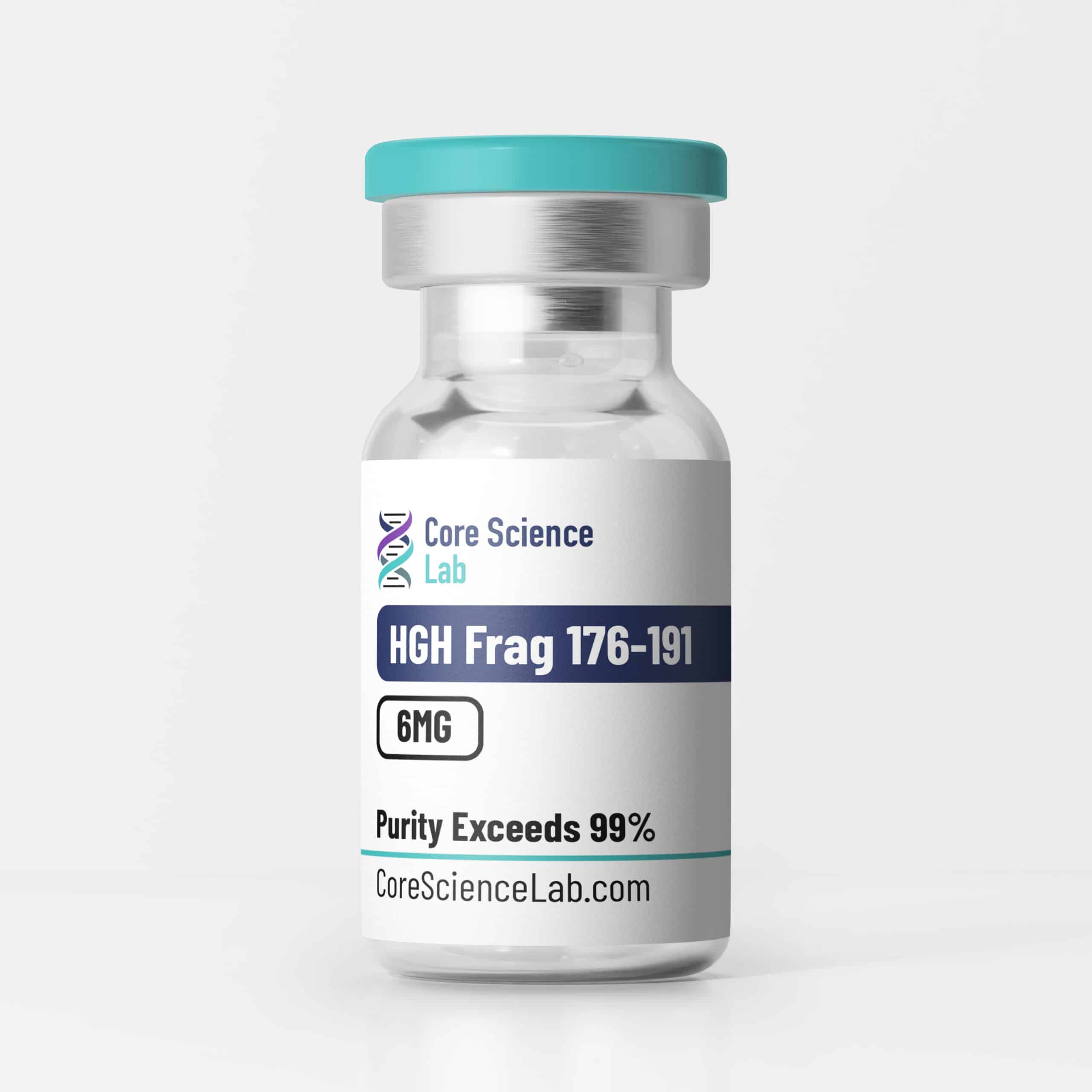
HGH Fragment 176-191 is a synthetic, truncated polypeptide derived from the discrete lipolytic domain of human growth hormone. While full-length hGH binds to the classical growth hormone receptor to stimulate systemic growth, cellular proliferation, and insulin-like growth factor-1 (IGF-1) production, the 176-191 fragment specifically isolates the hormone’s lipid-mobilizing properties.
In experimental pharmacology, researchers utilize this molecule to investigate targeted fat oxidation and lipolysis in adipocytes. Because it lacks the N-terminal sequences of the intact hormone, HGH Fragment 176-191 provides a precise chemical probe to study metabolic energy expenditure and adipose tissue reduction without inducing the diabetogenic (insulin resistance) or hyperplastic side effects typically associated with intact hGH administration.
Biochemical Characteristics
Chemically, HGH Fragment 176-191 is engineered to mimic the structural conformation of the intact hormone’s C-terminus, relying on a stabilized sequence to interact with peripheral metabolic pathways.
- Sequence/Structure: 16-amino acid polypeptide; Tyr-Leu-Arg-Ile-Val-Gln-Cys-Arg-Ser-Val-Glu-Gly-Ser-Cys-Gly-Phe.
- Receptor Affinity: Demonstrates targeted activity within adipose tissue, modulating beta-3-adrenergic receptor (β3-AR) RNA expression, though its lipolytic actions are complex and not exclusively mediated by direct receptor agonism. It does not bind to the classical hGH receptor.
- Stability: Supplied as a lyophilized salt. The structure includes an internal disulfide bond between cysteine residues for molecular stability and resistance to rapid proteolytic degradation.
- Specificity: Highly specific for lipolytic and antilipogenic pathways; completely lacks the IGF-1-mediated growth-promoting and insulin-antagonistic properties of the full 191-amino acid parent hormone.
Chemical Properties
| Property |
Specification |
| Molecule Name |
HGH Fragment 176-191 |
| Synonyms |
Somatotropin (176-191); GH Lipolytic Fragment; AOD9604 analogue |
| PubChem CID |
71300630 |
| Molecular Formula |
C78H123N23O23S2 |
| Molecular Weight |
1815.10 g/mol |
| Form |
Lyophilized Powder |
| Purity |
≥99% (Verified via HPLC) |
| Solubility |
Soluble in water and aqueous buffers (refer to SDS) |
| Documentation |
COA available per lot; SDS available |
HGH Fragment 176-191 is strictly for laboratory research and is commonly employed in the following investigational areas:
Lipid Metabolism and Adipocyte Bioenergetics
HGH Fragment 176-191 is heavily utilized as a chemical probe in metabolic models. Researchers employ this peptide in isolated adipocyte cultures to quantify its dose-dependent ability to stimulate lipolysis and inhibit lipogenesis, mapping the specific reduction of intracellular triglyceride accumulation.
Adrenergic Receptor Modulation
Experimental models utilize this compound to study the physiological signaling of fat oxidation. Assays focus on how chronic exposure to the peptide upregulates the mRNA expression of beta-3 adrenergic receptors (β3-AR), a primary driver of lipid mobilization in mammalian models.
Energy Expenditure and Glucose Flux
Because it does not induce the hyperglycemia associated with native hGH, the fragment is used to investigate isolated energy expenditure pathways. Researchers measure alterations in fat oxidation rates and resting metabolic rates, observing shifts in substrate utilization from carbohydrates to lipids.
Targeted Carrier and Oncology Models
Recent advances in in vitro models have investigated the peptide sequence for its unique binding properties in targeted drug delivery. Experimental protocols assess the utility of the 176-191 fragment as a targeting ligand when conjugated to nanoparticle carriers (e.g., chitosan) to enhance the localized delivery of chemotherapeutics to specific cell lines.
Pathway / Mechanistic Context
The primary mechanism of action for HGH Fragment 176-191 in research settings revolves around targeted lipid mobilization and metabolic allostasis.
- Receptor Interaction: Unlike native hGH, the fragment does not bind to the systemic hGH receptor and does not trigger the downstream transcription of IGF-1.
- Signal Transduction: It acts locally on adipose tissue to upregulate the expression of the beta-3 adrenergic receptor (β3-AR). However, research in knockout models indicates that its lipolytic effects are also driven by parallel, non-β3-AR pathways that inhibit acetyl-CoA carboxylase activity.
- Resulting Flux: The combination of enhanced β3-AR density and the inhibition of lipogenic enzymes results in a profound increase in lipolysis (fat breakdown) and a halt in lipogenesis (fat accumulation), driving a net catabolic shift in adipose tissue volume and increasing systemic fat oxidation.
Preclinical Research Summary
Published preclinical literature documents investigations of HGH Fragment 176-191 and its stabilized analogues across multiple experimental models for pathway characterization:
- Lipid Reduction: In vivo models of genetically obese rodents demonstrate that chronic administration of the lipolytic fragment significantly reduces body weight gain, decreases adipose tissue mass, and increases plasma glycerol levels (a primary marker of lipolysis).
- Insulin Sensitivity: Unlike full-length human growth hormone, prolonged exposure to the 176-191 fragment in experimental models did not induce hyperglycemia, impair glucose tolerance, or reduce insulin sensitivity, confirming its targeted action.
- Receptor Autonomy: In vitro binding assays confirm that the peptide fragment induces weight loss and fat oxidation without interacting with the classical hGH receptor, preventing any unwanted cellular proliferation or hyperplastic tissue growth.
- Nanomedicine Integration: In silico and in vitro analyses suggest that conjugating the fragment sequence to doxorubicin-loaded nanoparticles enhances the binding and cytotoxic efficacy against specific human breast cancer cell lines (MCF-7).
Form & Analytical Testing
This material is produced via robust chemical synthesis and supplied as a lyophilized (freeze-dried) powder.
- Lyophilization: Removes water content under vacuum to maintain compound integrity and extend shelf-life.
- Identity Verification: Each lot undergoes Mass Spectrometry (MS) to confirm molecular weight and identity.
- Purity Verification: High-Performance Liquid Chromatography (HPLC) is performed to ensure the product meets the ≥99% purity standard required for reproducible research data.
Referenced Citations
References are provided for informational purposes only and are not clinical claims.
- Heffernan, M., et al. (2001). The effects of human GH and its lipolytic fragment (AOD9604) on lipid metabolism following chronic treatment in obese mice and beta(3)-AR knock-out mice. Endocrinology. https://doi.org/10.1210/endo.142.12.8522
- Ng, F. M., et al. (2000). Metabolic studies of a synthetic lipolytic domain (AOD9604) of human growth hormone. Hormone Research in Paediatrics. https://doi.org/10.1159/000053183
- Heffernan, M., et al. (2001). Increase of fat oxidation and weight loss in obese mice caused by chronic treatment with human growth hormone or a modified C-terminal fragment. International Journal of Obesity. https://doi.org/10.1038/sj.ijo.0801740
- Heffernan, M., et al. (2000). Effects of oral administration of a synthetic fragment of human growth hormone on lipid metabolism. American Journal of Physiology-Endocrinology and Metabolism. https://doi.org/10.1152/ajpendo.2000.279.3.E501
- Heffernan, M., et al. (2000). HGH fragment 177–191 stimulates lipolysis in adipose tissue of obese rodents. American Journal of Physiology-Endocrinology and Metabolism. https://doi.org/10.1152/ajpendo.2000.279.5.E1205
- Stier, H., et al. (2013). Safety and Tolerability of the Hexadecapeptide AOD9604 in Humans. Journal of Endocrinology and Metabolism. https://doi.org/10.4021/jem157w
- Habibullah, M. M., et al. (2022). Human Growth Hormone Fragment 176–191 Peptide Enhances the Toxicity of Doxorubicin-Loaded Chitosan Nanoparticles Against MCF-7 Breast Cancer Cells. Drug Design, Development and Therapy. https://doi.org/10.2147/DDDT.S367586
- Wade, J. D., et al. (1982). Effect of C-terminal chain shortening on the insulin-antagonistic activity of human growth hormone 177–191. Acta Endocrinologica. https://doi.org/10.1530/acta.0.1010010
- Aylward, J. H., et al. (1983). Regulation of glycogen synthase activity in muscle by a C-terminal part sequence of human growth hormone. Archives of Biochemistry and Biophysics.https://pubmed.ncbi.nlm.nih.gov/6307153/
- Ng, F. M., et al. (2000). Metabolic effects of a synthetic fragment of human growth hormone. Metabolism: Clinical and Experimental. https://doi.org/10.1053/meta.2000.17730
- Valentino, M. A., et al. (2010). Central and peripheral molecular targets for antiobesity pharmacotherapy. Clinical Pharmacology & Therapeutics. https://doi.org/10.1038/clpt.2010.57
- Batterham, R. L., et al. (2003). Inhibition of food intake in obese subjects by peptide YY3-36. The New England Journal of Medicine. https://doi.org/10.1056/NEJMoa030204
RESEARCH USE ONLY
This product is intended strictly for laboratory research use only. It is not for human or veterinary use. It is not intended for diagnosis, treatment, cure, or prevention of any disease. All purchases are subject to our Terms of Service and Purity Guarantee.
No COAs available for this product.

Reviews
There are no reviews yet.