Description
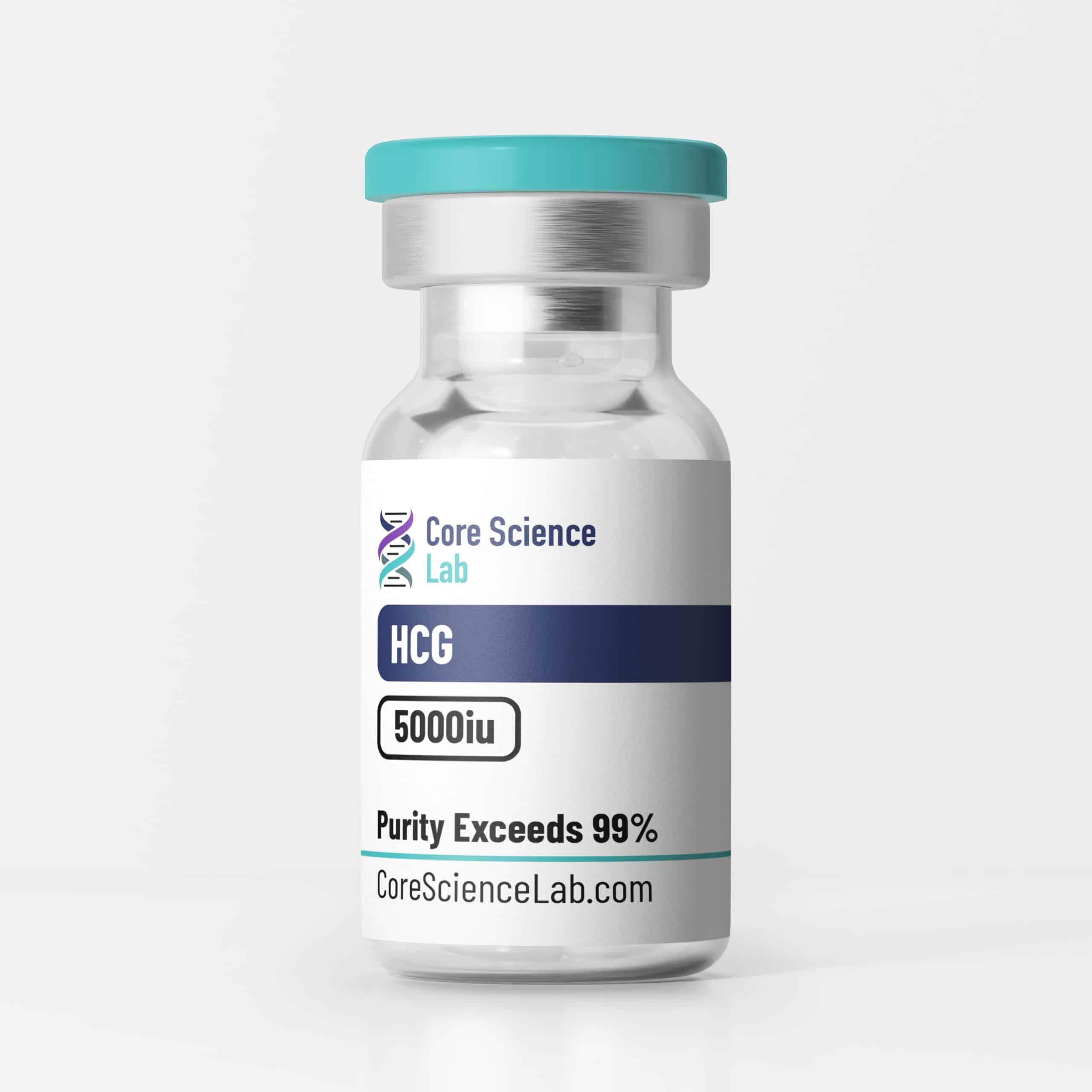
Human Chorionic Gonadotropin (HCG) is a complex heterodimeric glycoprotein normally secreted by syncytiotrophoblast cells. In experimental settings, this highly purified protein is utilized as an analog for Luteinizing Hormone (LH) due to its extended half-life and homologous binding affinity to the LH/CG receptor (LHCGR).
Researchers utilize this molecule to investigate its broad systemic and reproductive effects. Because HCG promotes the production of progesterone, estradiol, and specific angiogenic factors in vitro, it is heavily employed in assays examining corpus luteum function, reproductive endocrinology, and the cellular mechanisms underlying immune tolerance and endometrial receptivity.
Biochemical Characteristics
Chemically, HCG is composed of two non-covalently linked subunits: a common alpha subunit and a unique beta subunit that dictates receptor specificity.
- Sequence/Structure: Heterodimeric glycoprotein (92-amino-acid alpha subunit and 145-amino-acid beta subunit).
- Receptor Affinity: Exhibits potent binding affinity for the transmembrane LH/CG receptor, triggering cyclic AMP (cAMP) and intracellular signaling cascades.
- Stability: Supplied as a lyophilized salt to ensure long-term stability.
- Specificity: Acts as a targeted analog to endogenous luteinizing hormone, specifically altering the release of gonadal steroids and modulating the expression of angiogenic growth factors in cellular assays.
Chemical Properties
| Property |
Specification |
| Molecule Name |
Human Chorionic Gonadotropin (HCG) |
| Synonyms |
Choriogonadotropin, hCG |
| Molecular Formula |
C1049H1656N302O331S28 (Protein Core) |
| Molecular Weight |
~36700 g/mol |
| Form |
Lyophilized Powder |
| Purity |
≥99% (Verified via HPLC) |
| Solubility |
Soluble in water and aqueous buffers (refer to SDS) |
| Documentation |
COA and SDS available per lot |
HCG is strictly for laboratory research and is commonly employed in the following investigational areas:
Luteal Function and Steroidogenesis
Research models utilize HCG to evaluate its impact on corpus luteum maintenance and steroid hormone production. Investigations focus on quantifying increases in progesterone and estradiol synthesis in isolated luteal cell cultures, mapping the downstream enzymatic pathways activated by LHCGR binding.
Endometrial Receptivity and Angiogenesis
Experimental protocols employ the molecule to characterize its effects on the uterine microenvironment. Studies assess its capacity to upregulate vascular endothelial growth factor (VEGF) and matrix metalloproteinases in stromal cells, providing data on tissue remodeling and vascular network formation.
Immunomodulation and Tolerance
In physiological research, HCG is used as a chemical probe to study immune tolerance mechanisms at the maternal-fetal interface. Researchers evaluate its ability to influence T-regulatory (Treg) cell proliferation and alter the cytokine secretion profiles of peripheral blood mononuclear cells (PBMCs) toward a tolerogenic state.
Pathway / Mechanistic Context
The primary mechanism of action for HCG in research settings involves its robust interaction with the LHCGR, a G-protein-coupled receptor.
- Receptor Activation: HCG binds to the extracellular domain of the LH/CG receptor on target cells.
- Signal Transduction: Binding activates adenylate cyclase, leading to a rapid accumulation of intracellular cAMP and subsequent activation of protein kinase A (PKA).
- Gene Expression: The PKA pathway phosphorylates downstream transcription factors that upregulate the expression of steroidogenic enzymes (e.g., StAR, CYP11A1), thereby driving the synthesis of progesterone and other vital hormones in vitro.
Preclinical Research Summary
Published preclinical literature documents the extensive investigation of HCG across diverse experimental models focusing on reproductive biology and cellular immunology:
- In vitro Luteinization: Cell culture studies demonstrate that continuous HCG exposure prevents the apoptosis of granulosa-lutein cells and sustains progesterone output well beyond the typical lifespan of the unfertilized corpus luteum.
- Angiogenic Upregulation: Research indicates that HCG administration to endothelial cell lines significantly increases the expression of angiogenic factors, promoting cellular migration and the formation of capillary-like structures.
- Immune Cell Modulation: Data from immunological assays suggest that treatment with HCG can reduce the secretion of pro-inflammatory cytokines while promoting the expansion of immunosuppressive Treg cell populations.
Form & Analytical Testing
- Lyophilization: Removes water content under vacuum to maintain compound integrity and extend shelf-life.
- Identity Verification: Mass Spectrometry (MS) to confirm molecular weight and identity.
- Purity Verification: High-Performance Liquid Chromatography (HPLC) is performed to ensure the product meets the purity standard.
Storage & Handling
Stable at room temperature for up to 90 days. For long-term storage, keep at -20C (-4F) or colder. Once mixed with a solvent (e.g., bacteriostatic water), the solution must be stored at 4C (39F) and utilized within 30 days. Avoid repeated freeze-thaw cycles, as this degrades the peptide structure.
Referenced Citations
References are provided for informational purposes only and are not clinical claims.
- Cole, L. A. (2010). Biological functions of hCG and hCG-related molecules. Reproductive Biology and Endocrinology. https://doi.org/10.1186/1477-7827-8-102
- Berndt, S., et al. (2006). Angiogenic activity of human chorionic gonadotropin through LH receptor activation on endothelial and epithelial cells of the endometrium. The FASEB Journal. https://doi.org/10.1096/fj.06-5884com
- Schumacher, A., et al. (2013). Human chorionic gonadotropin attracts regulatory T cells into the fetal-maternal interface during early human pregnancy. The Journal of Immunology. https://doi.org/10.4049/jimmunol.1202414
- Licht, P., et al. (2001). Is human chorionic gonadotropin directly involved in the regulation of human implantation? Molecular and Cellular Endocrinology. https://doi.org/10.1016/s0303-7207(01)00424-6
- Choi, J., et al. (2022). Human Chorionic Gonadotropin and Early Embryogenesis: Review. International Journal of Molecular Sciences. https://doi.org/10.3390/ijms23031380
- Ziecik, A. J., et al. (2007). Luteinizing hormone and human chorionic gonadotropin: physiological and clinical implications. Reproductive Biology. https://doi.org/10.1016/j.repbio.2007.03.001
- Fares, F. (2006). The role of O-linked and N-linked oligosaccharides on the structure-function of glycoprotein hormones: development of agonists and antagonists. Biochimica et Biophysica Acta. https://doi.org/10.1016/j.bbagen.2006.07.006
- Mistry, A. M., et al. (2012). Luteinising hormone and human chorionic gonadotropin when used in assisted reproductive technology. Reproductive Biology and Endocrinology. https://doi.org/10.1186/1477-7827-12-95
- Nwabuobi, C., et al. (2017). hCG: Biological Functions and Clinical Applications. International Journal of Molecular Sciences. https://doi.org/10.3390/ijms18102037
- Filicori, M., et al. (2005). Role of luteinizing hormone and human chorionic gonadotropin in clinical practice. Fertility and Sterility. https://doi.org/10.1016/j.fertnstert.2005.01.082
- Puett, D., et al. (2007). Human chorionic gonadotropin receptor: structure and function. Reviews in Endocrine and Metabolic Disorders. https://doi.org/10.1007/s11154-007-9037-5
- Lei, Z. M., et al. (2001). Signaling and functional properties of human chorionic gonadotropin receptors. Molecular and Cellular Endocrinology. https://doi.org/10.1016/s0303-7207(01)00414-3
- Ascoli, M., et al. (2002). Biology of the luteinizing hormone/chorionic gonadotropin receptor. Endocrine Reviews. https://doi.org/10.1210/edrv.23.2.0466
RESEARCH USE ONLY
This product is intended strictly for laboratory research use only. It is not for human or veterinary use. It is not intended for diagnosis, treatment, cure, or prevention of any disease. All purchases are subject to our Terms of Service and Purity Guarantee.
No COAs available for this product.


Reviews
There are no reviews yet.