
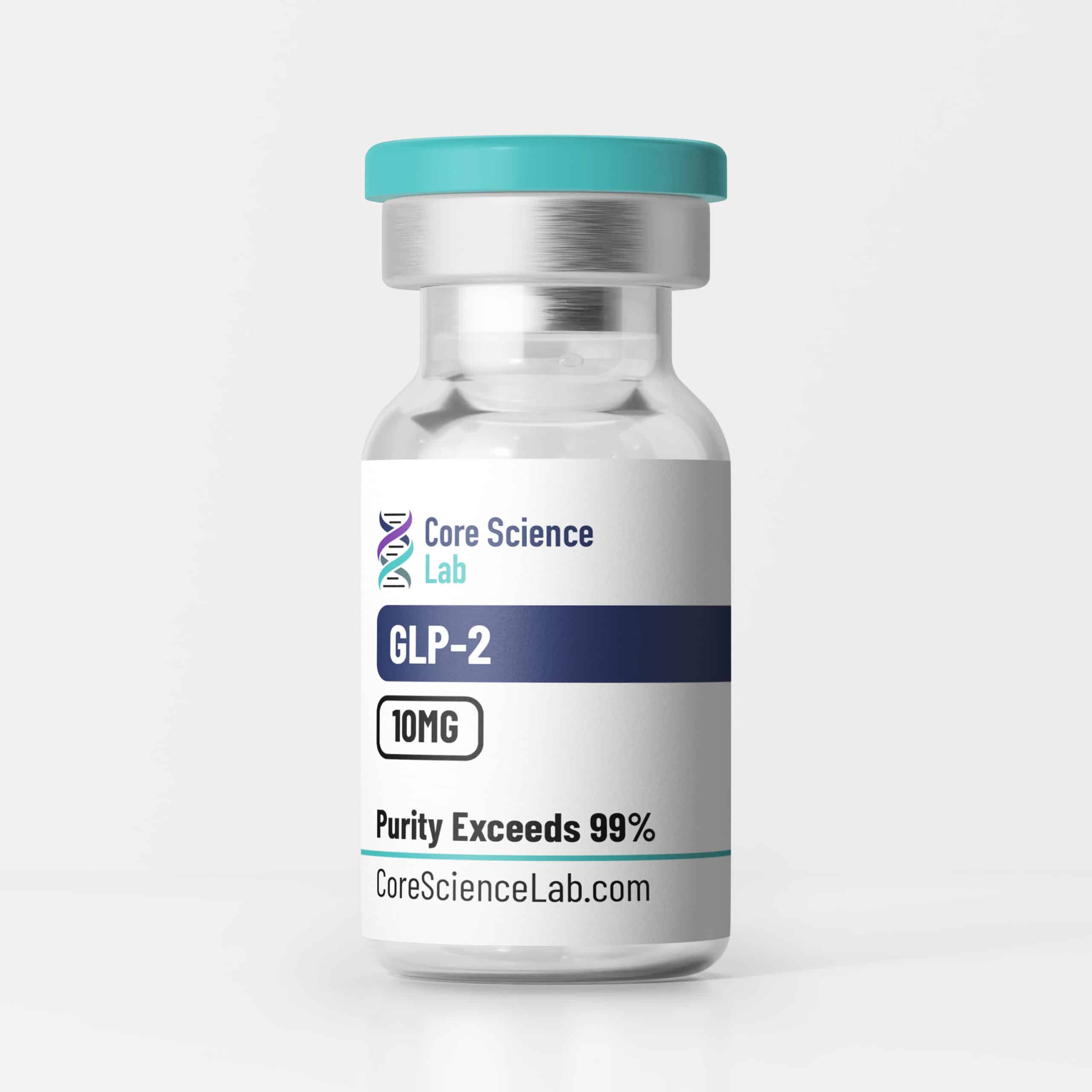
A high-purity, lyophilized synthetic peptide analogue of glucagon-like peptide-2 (GLP-2). Characterized strictly for research applications involving intestinal adaptation, mucosal epithelial cell survival, and gastrointestinal nutrient absorption pathways.
Trust & Quality Verification
Purity Standard
Verified Analysis
Available
Shipping
GLP-2 is a 33-amino acid peptide hormone belonging to the proglucagon-derived peptide family, endogenously secreted by enteroendocrine L cells of the distal small intestine and colon. In experimental models, synthetic GLP-2 analogues are utilized to investigate the structural and functional dynamics of the GLP-2 receptor (GLP-2R), a G protein-coupled receptor expressed predominantly within the gastrointestinal tract.
Unlike general metabolic incretins such as GLP-1, GLP-2 is specifically recognized for its potent intestinotrophic actions. It is widely utilized in laboratory settings to map the downstream effects of GLP-2R activation, particularly regarding the stimulation of crypt cell proliferation, the reduction of enterocyte apoptosis, and the enhancement of intestinal barrier function and nutrient absorptive capacity.
Biochemical Characteristics
Chemically, GLP-2 functions as a synthetic polypeptide characterized by an amino acid sequence designed to interface with cell-surface receptors relevant to gut mucosal adaptation.
Chemical Properties
| Property | Specification |
| Molecule Name | GLP-2 |
| Synonyms | Glucagon-Like Peptide 2 Analogue |
| Form | Lyophilized Powder |
| Purity | ≥99% (Verified via HPLC) |
| Solubility | Soluble in water and organic solvents (refer to SDS) |
| Documentation | COA available per lot; SDS available |
(Note: Exact Molecular Weights and Formulas should be verified per lot COA/SDS).
GLP-2 is strictly for laboratory research and is commonly employed in the following investigational areas:
Intestinal Adaptation & Tissue Engineering Models
GLP-2 is extensively utilized as a chemical probe to study intestinal adaptive growth following structural resection or chemical injury. Researchers employ this peptide to quantify mucosal hyperplasia, increased crypt-villus height, and restored absorptive capacity in isolated gastrointestinal models.
Cellular Survival and Apoptosis Assays
In vitro studies employ GLP-2 to observe its cytoprotective impact on intestinal epithelial cells. Investigations focus on how GLP-2 receptor activation rapidly suppresses caspase-3 activation and upregulates Bcl-2, effectively reducing cellular apoptosis and increasing cell survival rates.
Gastrointestinal Barrier Function and Bioenergetics
Experimental models utilize this compound to study its role in reducing epithelial permeability and increasing mesenteric blood flow. Researchers investigate how GLP-2 modulates nitric oxide production and coordinates the transport of intracellular lipids and dietary nutrients across the apical membrane of enterocytes.
Pathway / Mechanistic Context
The primary mechanism of action for GLP-2 in research settings involves the targeted activation of the GLP-2 receptor (GLP-2R).
Preclinical Research Summary
Published preclinical literature documents investigations of GLP-2 across multiple experimental models for pathway characterization:
Form & Analytical Testing
This material is produced via robust chemical synthesis and supplied as a lyophilized (freeze-dried) powder.
Referenced Citations
References are provided for informational purposes only and are not clinical claims.
RESEARCH USE ONLY
This product is intended strictly for laboratory research use only. It is not for human or veterinary use. It is not intended for diagnosis, treatment, cure, or prevention of any disease. All purchases are subject to our Terms of Service and Purity Guarantee.
No COAs available for this product.
RESEARCH USE ONLY
This product is intended strictly for laboratory research use only. It is not for human or veterinary use. It is not intended for diagnosis, treatment, cure, or prevention of any disease. All purchases are subject to our Terms of Service and Purity Guarantee.




Reviews
There are no reviews yet.