
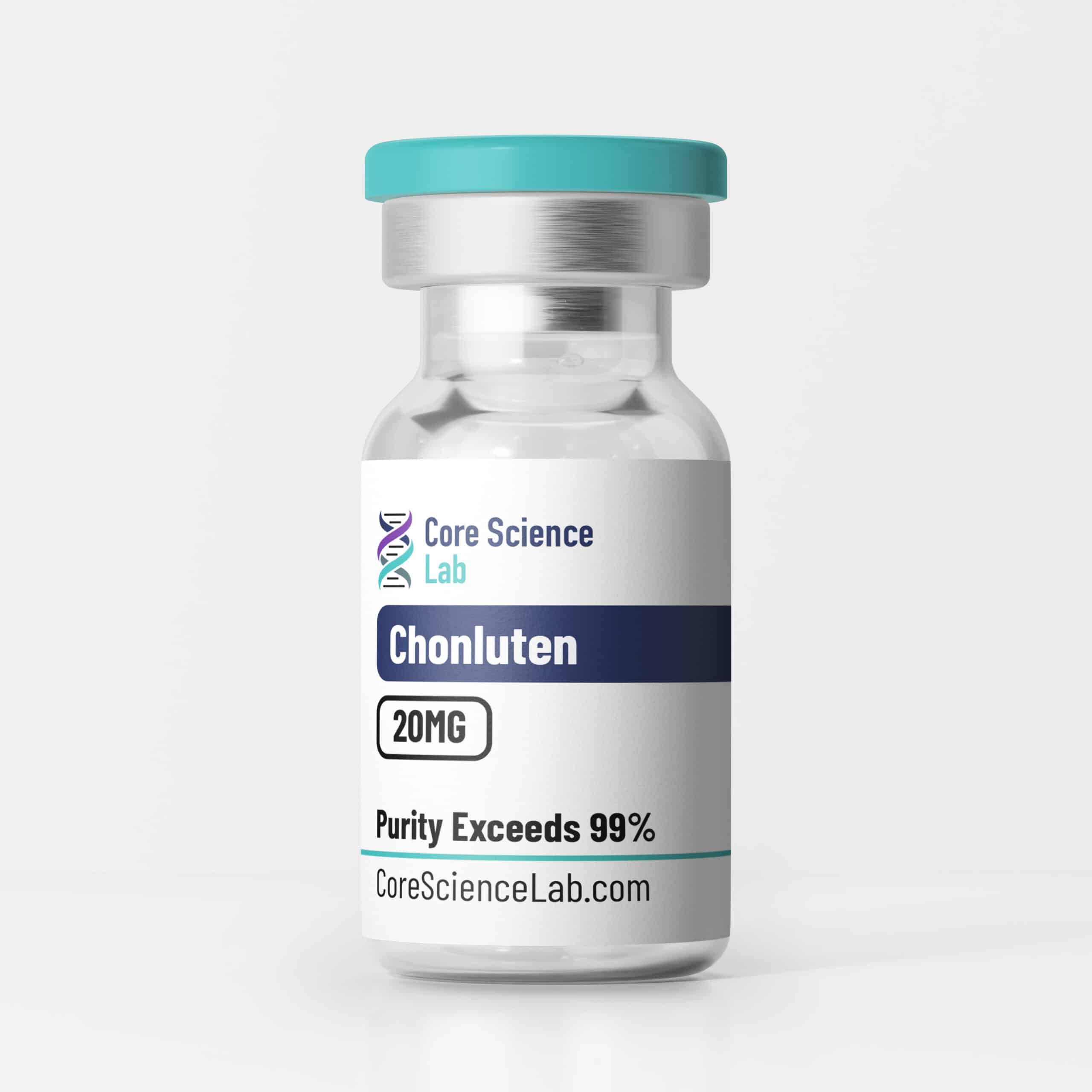
A high-purity, lyophilized tripeptide bioregulator composed of glutamic acid, aspartic acid, and glycine (Glu-Asp-Gly). Chonluten is characterized for its specific affinity for bronchial and gastric mucosal tissues, where it is investigated for its role in modulating gene expression related to inflammation and antioxidant defense.
Trust & Quality Verification
Purity Standard
Verified Analysis
Available
Shipping
Chonluten (also known as peptide T-34) is a synthetic tripeptide research reagent originally identified for its biological activity within the respiratory system. It belongs to a class of short-chain peptides known as “bioregulators” which are studied for their ability to interact directly with DNA and modulate epigenetic control mechanisms.
In laboratory settings, Chonluten is utilized to investigate the normalization of metabolic processes in bronchial epithelial cells and alveolar macrophages. Unlike large protein factors, its small molecular size (approx. 319 Da) allows for high membrane permeability, facilitating its use in intracellular signaling assays involving oxidative stress and cytokine regulation.
Biochemical Characteristics
Chemically, Chonluten is the tripeptide Glu-Asp-Gly. It is designed to mimic the active site of endogenous peptides found in bronchial tissue.
Chemical Properties
| Property | Specification |
| Molecule Name | Chonluten |
| Synonyms | T-34; Glu-Asp-Gly; Glutamyl-aspartyl-glycine |
| CAS Number | 75007-24-8 |
| Molecular Formula | C11H17N3O8 |
| Molecular Weight | 319.27 g/mol |
| Form | Lyophilized Powder |
| Purity | ≥99% (Verified via HPLC) |
| Solubility | Soluble in water and organic solvents (refer to SDS) |
| Documentation | COA available per lot; SDS available |
Chonluten is strictly for laboratory research and is commonly employed in the following investigational areas:
Respiratory System Physiology
Chonluten is the primary peptide reagent for studying bronchial mucosa integrity. Researchers utilize it in models of chronic respiratory dysfunction to observe its effects on bronchial epithelial cell regeneration and the maintenance of lung tissue homeostasis under toxic or infectious stress.
Inflammation and Cytokine Modulation
In vitro studies utilizing human monocytic cell lines (e.g., THP-1) employ Chonluten to investigate its anti-inflammatory properties. Data indicates that the peptide may inhibit the production of tumor necrosis factor-alpha (TNF-alpha) and other pro-inflammatory cytokines when cells are exposed to bacterial lipopolysaccharides (LPS).
Antioxidant Defense and Gene Expression
Chonluten is used as a chemical probe to study the peptidergic regulation of antioxidant enzymes. Research demonstrates its ability to normalize the expression of genes encoding superoxide dismutase (SOD) and heat shock proteins (HSP70), thereby enhancing cellular resistance to oxidative damage.
Gastroprotective Research
Beyond the lungs, Chonluten is investigated for its protective effects on the gastric mucosa. Experimental models of gastric ulcers utilize the peptide to study its ability to accelerate healing processes and reduce inflammation through the modulation of gene expression in stomach epithelial cells.
Pathway / Mechanistic Context
The primary mechanism of action for Chonluten in research settings involves epigenetic regulation via DNA binding.
Preclinical Research Summary
Published preclinical literature documents investigations of Chonluten across multiple experimental models:
Form & Analytical Testing
This material is produced via robust chemical synthesis and supplied as a lyophilized (freeze-dried) powder.
Referenced Citations
References are provided for informational purposes only and are not clinical claims.
RESEARCH USE ONLY
This product is intended strictly for laboratory research use only. It is not for human or veterinary use. It is not intended for diagnosis, treatment, cure, or prevention of any disease. All purchases are subject to our Terms of Service and Purity Guarantee.
No COAs available for this product.
RESEARCH USE ONLY
This product is intended strictly for laboratory research use only. It is not for human or veterinary use. It is not intended for diagnosis, treatment, cure, or prevention of any disease. All purchases are subject to our Terms of Service and Purity Guarantee.
Reviews
There are no reviews yet.