Description
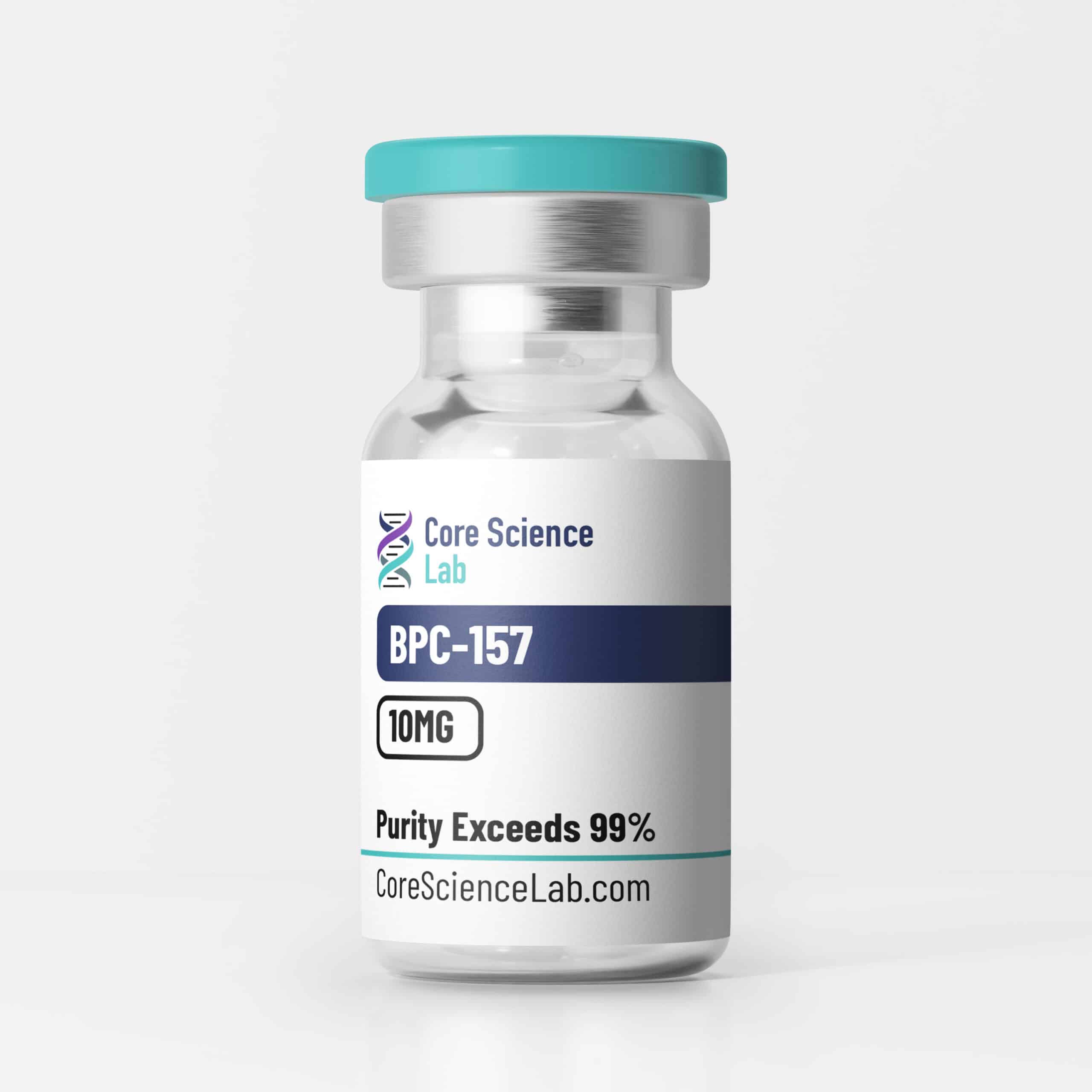
BPC-157 (Body Protection Compound-157) is a stable, synthetic pentadecapeptide research reagent. It is chemically derived from a protective protein found in gastric juice and is utilized in laboratory settings to investigate tissue repair mechanisms.
Researchers employ this molecule to study the acceleration of healing processes in various tissues, including tendons, bone, and the gastrointestinal tract. Key areas of investigation include the peptide’s influence on angiogenesis (blood vessel formation), cell migration, and the upregulation of growth factor receptors in fibroblast models.
Biochemical Characteristics
Chemically, BPC-157 is a 15-amino acid peptide that exhibits stability in gastric juice, distinguishing it from many other peptide factors. Research indicates it interacts with multiple signaling pathways to promote cytoprotection and tissue organization.
- Sequence/Structure: Pentadecapeptide (15 amino acids); Gly-EPP-Pro-Gly-Lys-Pro-Ala-Asp-Asp-Ala-Gly-Leu-Val.
- Permeability: Investigated for systemic and local effects in in vivo models, including gastrointestinal and trans-tissue transport.
- Stability: Characterized as a stable gastric pentadecapeptide, resistant to hydrolytic degradation in gastric juice conditions.
- Specificity: Modulates the Src-Caveolin-1-endothelial nitric oxide synthase (eNOS) pathway and activates vascular endothelial growth factor receptor 2 (VEGFR2).
Chemical Properties
| Property |
Specification |
| Molecule Name |
BPC-157 |
| Synonyms |
Pentadecapeptide BPC 157; Bepecin; PL 14736 |
| PubChem CID |
108101 |
| Molecular Formula |
C62H98N16O22 |
| Molecular Weight |
1419.54 g/mol |
| Form |
Lyophilized Powder |
| Purity |
≥99% (Verified via HPLC) |
| Solubility |
Soluble in water and aqueous buffers (refer to SDS) |
| Documentation |
COA and SDS available per lot |
BPC-157 is strictly for laboratory research and is commonly employed in the following investigational areas:
Tendon and Musculoskeletal Repair
Research models utilize BPC-157 to evaluate tendon healing and limb function. Studies focus on the peptide’s ability to promote tendon outgrowth, enhance cell survival and migration under stress, and upregulate Growth Hormone Receptor (GHR) expression in tendon fibroblasts. Further investigations assess the healing of myotendinous junctions and segmental bone defects in animal models.
Angiogenesis and Vascular Dynamics
BPC-157 is employed to characterize angiogenic signaling pathways. Researchers quantify the activation of VEGFR2 and the upregulation of the Src-Caveolin-1-eNOS pathway to understand how the peptide modulates vasomotor tone and promotes vessel formation in wound healing and ischemic tissues.
Gastrointestinal Cytoprotection
In GI research, BPC-157 is used to study the protection of intestinal integrity against various insults. Experimental protocols measure the peptide’s efficacy in mitigating lesions induced by stress, ethanol, and NSAIDs, as well as its role in stabilizing intestinal permeability and promoting fistula healing.
Ocular Neuroprotection and Repair
Recent investigations utilize BPC-157 to explore therapeutic potential in ocular conditions. Models involving corneal injury, retinal ischemia, and glaucoma assess the peptide’s impact on maintaining optic disc circulation and protecting against chemically induced damage.
Pathway / Mechanistic Context
The primary mechanistic context for BPC-157 in research settings is the modulation of growth factor signaling and nitric oxide pathways.
- VEGFR2 Activation: Research indicates BPC-157 promotes angiogenesis via the activation and upregulation of the VEGFR2 receptor.
- NO Signaling: The molecule is observed to modulate vasomotor tone through the Src-Caveolin-1-endothelial nitric oxide synthase (eNOS) pathway.
- Receptor Upregulation: In tendon fibroblasts, BPC-157 administration is linked to the enhanced expression of Growth Hormone Receptors, potentially facilitating tissue repair signaling.
Preclinical Research Summary
Published preclinical literature documents investigations of BPC-157 across multiple experimental models:
- Alkali-Burn Wound Model: Studies report that BPC-157 treatment enhances wound healing in vivo and promotes proliferation, migration, and angiogenesis in vitro.
- Bone Defect Models: In rabbit segmental bone defect models, BPC-157 was observed to exhibit an osteogenic effect comparable to bone marrow and autologous cortical bone implantation.
- Toxicology/NSAID Models: Research demonstrates that BPC-157 can rescue NSAID-induced cytotoxicity by stabilizing intestinal permeability.
- High-Fructose Diet Models: Investigations in rats subjected to high-fructose diets indicate the peptide may counteract hypertension and compromised optic disc head circulation.
Form & Analytical Testing
This material is produced via solid-phase peptide synthesis and supplied as a lyophilized (freeze-dried) powder.
- Lyophilization: Removes water content under vacuum to maintain compound integrity and extend shelf-life.
- Identity Verification: Each lot undergoes Mass Spectrometry (MS) to confirm molecular weight and identity.
- Purity Verification: High-Performance Liquid Chromatography (HPLC) is performed to ensure the product meets the $\ge99\%$ purity standard required for reproducible research data.
Referenced Citations
References are provided for informational purposes only and are not clinical claims.
- Seiwerth, S., et al. (1997). BPC 157’s effect on healing. Journal of Physiology-Paris, 91, 173-178. https://doi.org/10.1016/S0928-4257(97)89480-6
- Huang, T., et al. (2015). Body protective compound-157 enhances alkali-burn wound healing in vivo and promotes proliferation, migration, and angiogenesis in vitro. Drug Design, Development and Therapy, 9, 2485 – 2499. https://doi.org/10.2147/DDDT.S82030
- Šola, M., et al. (2022). Do We Have a New Psoriasis Drug?. The FASEB Journal, 36. https://doi.org/10.1096/fasebj.2022.36.s1.r5345
- Seiwerth, S., et al. (2021). Stable Gastric Pentadecapeptide BPC 157 and Wound Healing. Frontiers in Pharmacology, 12. https://doi.org/10.3389/fphar.2021.627533
- Chang, C., et al. (2011). The promoting effect of pentadecapeptide BPC 157 on tendon healing involves tendon outgrowth, cell survival, and cell migration. Journal of applied physiology, 110(3), 774-80. https://doi.org/10.1152/japplphysiol.00945.2010
- Chang, C., et al. (2014). Pentadecapeptide BPC 157 Enhances the Growth Hormone Receptor Expression in Tendon Fibroblasts. Molecules, 19, 19066 – 19077. https://doi.org/10.3390/molecules191119066
- Japjec, M., et al. (2021). Stable Gastric Pentadecapeptide BPC 157 as a Therapy for the Disable Myotendinous Junctions in Rats. Biomedicines, 9. https://doi.org/10.3390/biomedicines9111547
- Šebečić, B., et al. (1999). Osteogenic effect of a gastric pentadecapeptide, BPC-157, on the healing of segmental bone defect in rabbits: a comparison with bone marrow and autologous cortical bone implantation. Bone, 24(3), 195-202. https://doi.org/10.1016/S8756-3282(98)00180-X
- Hsieh, M., et al. (2017). Therapeutic potential of pro-angiogenic BPC157 is associated with VEGFR2 activation and up-regulation. Journal of Molecular Medicine, 95, 323-333. https://doi.org/10.1007/s00109-016-1488-y
- Hsieh, M., et al. (2020). Modulatory effects of BPC 157 on vasomotor tone and the activation of Src-Caveolin-1-endothelial nitric oxide synthase pathway. Scientific Reports, 10. https://doi.org/10.1038/s41598-020-74022-y
- Brčić, L., et al. (2009). Modulatory effect of gastric pentadecapeptide BPC 157 on angiogenesis in muscle and tendon healing. Journal of physiology and pharmacology, 60 Suppl 7, 191-6. https://doi.org/10.1135/CSS200911118
- Sikiric, P., et al. (1994). The beneficial effect of BPC 157, a 15 amino acid peptide BPC fragment, on gastric and duodenal lesions induced by restraint stress, cysteamine and 96% ethanol in rats. Life sciences, 54(5), PL63-8. https://doi.org/10.1016/0024-3205(94)00796-9
- Park, J., et al. (2020). BPC157 rescued NSAID-cytotoxicity via stabilizing intestinal permeability and enhancing cytoprotection. Current pharmaceutical design. https://doi.org/10.2174/1381612826666200523180301
- Sikiric, P., et al. (2020). Fistulas healing. Stable gastric pentadecapeptide BPC 157 therapy. Current pharmaceutical design. https://doi.org/10.2174/1381612826666200424180139
- Sikiric, P., et al. (2012). Focus on ulcerative colitis: stable gastric pentadecapeptide BPC 157. Current medicinal chemistry, 19(1), 126-32. https://doi.org/10.2174/092986712803414015
- Sikiric, P., et al. (2023). Stable Gastric Pentadecapeptide BPC 157—Possible Novel Therapy of Glaucoma and Other Ocular Conditions. Pharmaceuticals, 16. https://doi.org/10.3390/ph16071052
- Zlatar, M., et al. (2021). BPC 157 as a Therapy for Retinal Ischemia Induced by Retrobulbar Application of L-NAME in Rats. Frontiers in Pharmacology, 12. https://doi.org/10.3389/fphar.2021.632295
- Masnec, S., et al. (2015). Perforating Corneal Injury in Rat and Pentadecapeptide BPC 157. The FASEB Journal, 29. https://doi.org/10.1016/j.exer.2015.04.016
- Radevski, F., et al. (2019). Stable Gastric Pentadecapeptide BPC 157 in Rats Subjected to High Fructose (80%) Diet for One Month Counteracts Hypertension and Compromised
- Optic Disc Head Circulation and Following Atrophy. The FASEB Journal, 33. https://doi.org/10.1096/fasebj.2019.33.1_supplement.822.9
RESEARCH USE ONLY
This product is intended strictly for laboratory research use only. It is not for human or veterinary use. It is not intended for diagnosis, treatment, cure, or prevention of any disease. All purchases are subject to our Terms of Service and Purity Guarantee.
No COAs available for this product.

Reviews
There are no reviews yet.