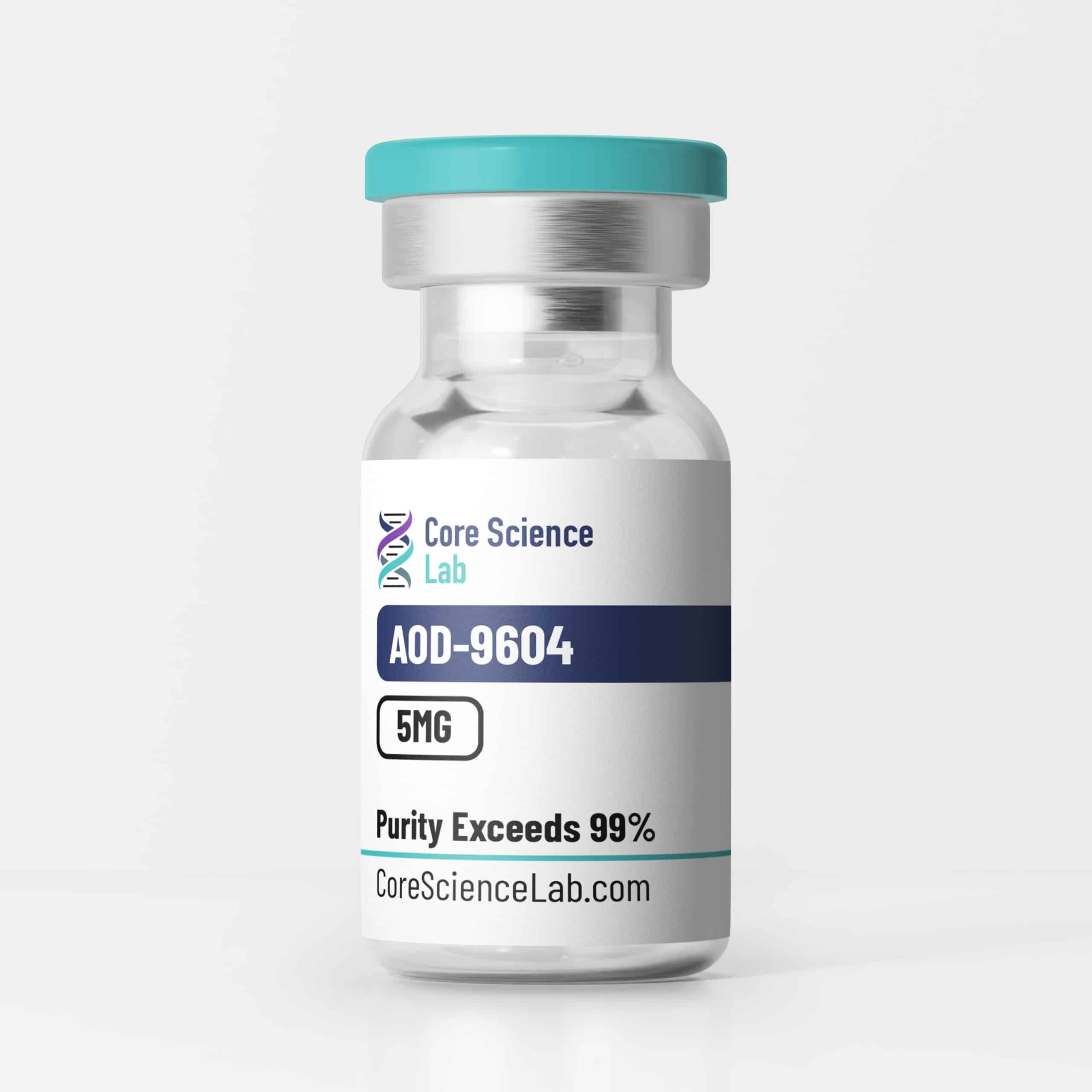
AOD-9604 (5mg)

High-purity, synthetic peptide fragment of human growth hormone (hGH C-terminus) characterized for research applications involving lipolytic regulation, metabolic signaling, and cartilage tissue engineering.

Trust & Quality Verification

  • Research Use Only. Not for human or veterinary use.
  • Verifiable purity via HPLC & Mass Spectrometry
  • Supplied as lyophilized powder for stability during transport and storage
  • Certificate of Analysis (COA) available per lot
  • Safety Data Sheet (SDS) available

Email when stock available

SKU: V-AOD-5MG Category:

99%+

Purity Standard

HPLC

Verified Analysis

COA

Available

Free

Shipping

Description

AOD-9604 (Tyr-hGH 177-191) is a synthetic peptide research reagent. It is chemically modified from the C-terminal region of the human growth hormone molecule by the addition of a tyrosine residue at the N-terminus.

Researchers utilize this molecule to investigate metabolic pathways, specifically differentiating the lipolytic (fat-reducing) properties of hGH from its growth-promoting (anabolic) effects. Unlike the full-length hormone, AOD-9604 is utilized in assays to evaluate lipid metabolism and cellular repair mechanisms without stimulating the production of Insulin-like Growth Factor 1 (IGF-1).

Biochemical Characteristics

Chemically, AOD-9604 is defined by a stabilized cyclic structure formed by a disulfide bridge between cysteine residues. This configuration preserves the functional lipolytic domain of the hGH molecule, facilitating interaction with metabolic receptors while minimizing affinity for the primary growth hormone receptor (GHR).

  • Sequence/Structure: Peptide (16 amino acids); Tyr-Leu-Arg-Ile-Val-Gln-Cys-Arg-Ser-Val-Glu-Gly-Ser-Cys-Gly-Phe (Disulfide bridge: Cys182–Cys189).
  • Permeability: Investigated for cellular uptake in adipocytes and chondrocytes.
  • Stability: Supplied as a lyophilized salt to ensure long-term stability and prevent hydrolytic degradation during storage.
  • Specificity: Mimics the lipolytic domain of hGH; characterized by a lack of IGF-1 stimulation in in vivo models.

Chemical Properties

Property Specification
Molecule Name AOD-9604
Synonyms Tyr-hGH (177-191); Lipotropin fragment; AOD9604
PubChem CID 16131448
Molecular Formula C78H123N23O23S2
Molecular Weight 1815.08 g/mol
Form Lyophilized Powder
Purity ≥99% (Verified via HPLC)
Solubility Soluble in water and aqueous buffers (refer to SDS)
Documentation COA and SDS available per lot

AOD-9604 is strictly for laboratory research and is commonly employed in the following investigational areas:

Adipocyte Metabolism and Lipolysis

Research models utilize AOD-9604 to evaluate the regulation of lipid content in adipose tissue. Investigations focus on quantifying the rate of lipolysis (breakdown of fat) and the inhibition of lipogenesis (formation of fat). Assays aim to understand how the peptide influences beta-3 adrenergic receptor-independent pathways to modulate energy homeostasis in obese phenotypes.

Cartilage Regeneration and Osteoarthritis

In connective tissue research, AOD-9604 is used to investigate cellular repair mechanisms within the joint capsule. Experimental protocols involving intra-articular administration in animal models (e.g., rabbit collagenase-induced osteoarthritis) measure endpoints such as cartilage gross morphological scores, lameness recovery rates, and histological evidence of tissue regeneration.

Metabolic Signaling Independent of IGF-1

Researchers employ this peptide as a probe to dissociate the multiple signaling pathways of growth hormone. Studies utilize AOD-9604 to characterize metabolic flux and glucose tolerance, specifically verifying the absence of diabetogenic effects or IGF-1 elevation typically associated with full-length hGH administration.

Pathway / Mechanistic Context

The primary mechanistic context for AOD-9604 in research settings is the selective activation of lipolytic pathways.

  • Lipid Metabolism: The peptide interacts with adipocytes to stimulate the breakdown of stored triglycerides and inhibit the uptake of free fatty acids, mimicking the C-terminal activity of hGH.
  • Receptor Selectivity: Unlike hGH, AOD-9604 does not induce high-affinity dimerization of the Growth Hormone Receptor (GHR) required for IGF-1 secretion, thereby isolating metabolic effects from growth effects.
  • Tissue Repair: In chondrocytes, the peptide is investigated for its potential to enhance collagen proliferation and proteoglycan synthesis via localized signaling mechanisms.

Preclinical Research Summary

Published preclinical literature documents investigations of AOD-9604 across multiple experimental models:

  • Obese Mouse Models: Studies in C57BL/6J (ob/ob) mice report that chronic treatment with AOD-9604 resulted in reduced body weight and adipose tissue mass without altering lean body mass or food consumption.
  • Rabbit Osteoarthritis Models: Research involving collagenase-induced knee osteoarthritis in rabbits indicates that intra-articular injection of AOD-9604, with or without hyaluronic acid, was associated with improved cartilage regeneration scores and reduced gross pathology.
  • Lipolytic Assays: In vitro and in vivo experiments have demonstrated that the peptide stimulates glycerol release from adipose tissue (a marker of lipolysis) in a manner distinct from beta-adrenergic receptor agonism.
  • Toxicological Profiles: Human and animal studies evaluating safety and tolerability have characterized the peptide’s profile, noting a lack of anti-AOD9604 antibody formation and no significant adverse events in specific dosing protocols.

Form & Analytical Testing

This material is produced via solid-phase peptide synthesis and supplied as a lyophilized (freeze-dried) powder.

  • Lyophilization: Removes water content under vacuum to maintain compound integrity and extend shelf-life.
  • Identity Verification: Each lot undergoes Mass Spectrometry (MS) to confirm molecular weight and identity.
  • Purity Verification: High-Performance Liquid Chromatography (HPLC) is performed to ensure the product meets the $\ge99\%$ purity standard required for reproducible research data.

Storage & Handling

Stable at room temperature for up to 90 days. For long-term storage, keep at -20C (-4F) or colder.

Once mixed with a solvent (e.g., bacteriostatic water), the solution must be stored at 4C (39F) and utilized within 30 days. Avoid repeated freeze-thaw cycles, as this degrades the peptide structure.

Referenced Citations

References are provided for informational purposes only and are not clinical claims.

  • Ng, F. M., Sun, J., Sharma, L., Libinaka, R., Jiang, W. J., & Gianello, R. (2000). Metabolic studies of a synthetic lipolytic domain (AOD9604) of human growth hormone. Hormone Research, 53(6), 274–278. https://doi.org/10.1159/000023594
  • Heffernan, M., et al. (2001). The Effects of Human GH and Its Lipolytic Fragment (AOD9604) on Lipid Metabolism Following Chronic Treatment in Obese Mice and β3-AR Knock-Out Mice. Endocrinology, 142(12), 5182–5189. https://doi.org/10.1210/endo.142.12.8522
  • Kwon, D. R., & Park, G. Y. (2015). Effect of Intra-articular Injection of AOD9604 with or without Hyaluronic Acid in Rabbit Osteoarthritis Model. Annals of Clinical & Laboratory Science, 45(4), 426–432.
  • Stier, H., Vos, E., & Kenley, D. (2013). Safety and Tolerability of the Hexadecapeptide AOD9604 in Humans. Journal of Endocrinology and Metabolism, 3(1–2), 7–15.
  • Zieba, R. (2007). Obesity: a review of currently used antiobesity drugs and new compounds in clinical development. Postepy Higieny i Medycyny Doswiadczalnej, 61, 612–626.
  • Stable at room temperature for up to 90 days. For long-term storage, keep at -20°C (-4°F) or colder.
  • Once mixed with a solvent (e.g., bacteriostatic water), the solution must be stored at 4 °C (39°F) and utilized within 30 days. Avoid repeated freeze-thaw cycles, as this degrades the peptide structure.

RESEARCH USE ONLY

This product is intended strictly for laboratory research use only. It is not for human or veterinary use. It is not intended for diagnosis, treatment, cure, or prevention of any disease. All purchases are subject to our Terms of Service and Purity Guarantee.
No COAs available for this product.

Reviews

There are no reviews yet.

Be the first to review “AOD-9604 (5mg)”

Your email address will not be published. Required fields are marked *

RESEARCH USE ONLY

This product is intended strictly for laboratory research use only. It is not for human or veterinary use. It is not intended for diagnosis, treatment, cure, or prevention of any disease. All purchases are subject to our Terms of Service and Purity Guarantee.
0