
A naturally occurring, high-affinity tripeptide-copper complex characterized for research applications involving tissue remodeling, wound healing, bioenergetics, oxidative stress modulation, and genomic regulation.
Trust & Quality Verification
$45.00
Out of stock
Purity Standard
Verified Analysis
Available
Shipping
GHK-Cu (Glycyl-L-histidyl-L-lysine copper complex) is a synthetic form of a naturally occurring human tripeptide that possesses a high binding affinity for copper (II) ions. It is widely utilized in research to investigate tissue remodeling and skin regeneration through the modulation of multiple cellular pathways.
Distinct from simple copper salts, the GHK-Cu complex functions as a delivery system and a modulator of gene expression. Research indicates it influences genes relevant to nervous system function and cognitive decline. In laboratory settings, it is frequently employed to study the stimulation of connective tissue accumulation, angiogenesis, and the regulation of oxidative stress in various tissue models.
Biochemical Characteristics
Chemically, GHK-Cu is defined by its ability to facilitate the uptake of copper into cells, which is essential for the function of numerous enzymes involved in collagen synthesis and antioxidant defense.
Chemical Properties
| Property | Specification |
| Molecule Name | GHK-Cu (Copper Peptide) |
| Synonyms | Glycyl-L-histidyl-L-lysine-Cu2+; Copper Tripeptide-1 |
| Sequence | Gly-His-Lys·Cu |
| Molecular Formula | C₁₄H₂₂CuN₆O₄ (Complex) |
| Molecular Weight | ~401.91 g/mol (varies by salt/hydration) |
| Form | Lyophilized Powder (Blue) |
| Purity | ≥99% (Verified via HPLC) |
| Solubility | Soluble in water |
| Documentation | COA available per lot; SDS available |
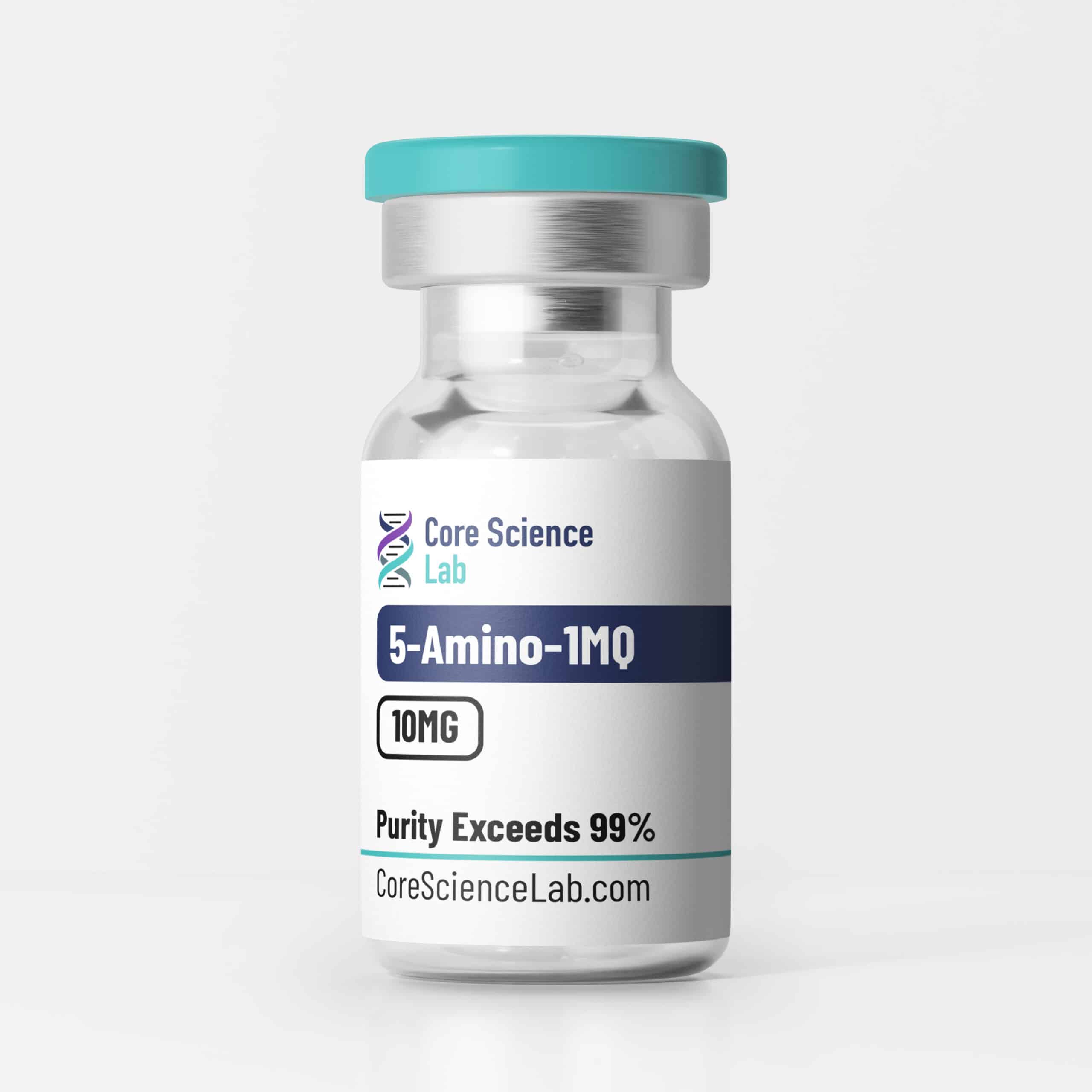
5-Amino-1MQ is strictly for laboratory research and is commonly employed in the following investigational areas:
NAD+ Salvage Pathway Characterization
Research indicates that NNMT activity drains the available pool of nicotinamide, a precursor for NAD+. 5-Amino-1MQ is utilized as a chemical probe to block this drain, allowing researchers to quantify the subsequent restoration of NAD+ levels and measure the activity of NAD+-dependent enzymes, such as PARPs and Sirtuins, in various cell lines.
Adipocyte Biology and Lipogenesis
In vitro studies utilizing differentiated adipocytes employ 5-Amino-1MQ to observe its impact on lipid accumulation and adipogenesis. Investigations focus on how NNMT inhibition alters the expression of transcription factors related to lipogenesis and fatty acid oxidation, providing data on cellular energy homeostasis and metabolic reprogramming.
Muscle Physiology and Bioenergetics
Experimental models involving myoblasts utilize this compound to study muscle satellite cell proliferation and fusion. Researchers quantify changes in mitochondrial respiration rates and oxidative phosphorylation efficiency to understand the role of the NNMT-NAD+ axis in cellular aging and tissue regeneration signaling.
Oncology and Cellular Proliferation
Elevated NNMT expression is observed in various cancer cell lines. 5-Amino-1MQ is used in oncology research to determine the effects of enzymatic inhibition on tumor cell metabolism, specifically looking at the “Warburg effect” and the methylation potential of the cell, which influences epigenetic progression.
The primary mechanism of action for 5-Amino-1MQ in research settings is the competitive inhibition of NNMT.
Published preclinical literature documents investigations of 5-Amino-1MQ across multiple experimental models:
This material is produced via robust chemical synthesis and supplied as a lyophilized (freeze-dried) powder.
Stable at room temperature for up to 90 days. For long-term storage, keep at -20C (-4F) or colder.
Once mixed with a solvent (e.g., bacteriostatic water), the solution must be stored at 4C (39F) and utilized within 30 days. Avoid repeated freeze-thaw cycles, as this degrades the peptide structure.
Referenced Citations
RESEARCH USE ONLY
This product is intended strictly for laboratory research use only. It is not for human or veterinary use. It is not intended for diagnosis, treatment, cure, or prevention of any disease. All purchases are subject to our Terms of Service and Purity Guarantee.
No COAs available for this product.
RESEARCH USE ONLY
This product is intended strictly for laboratory research use only. It is not for human or veterinary use. It is not intended for diagnosis, treatment, cure, or prevention of any disease. All purchases are subject to our Terms of Service and Purity Guarantee.
Reviews
There are no reviews yet.